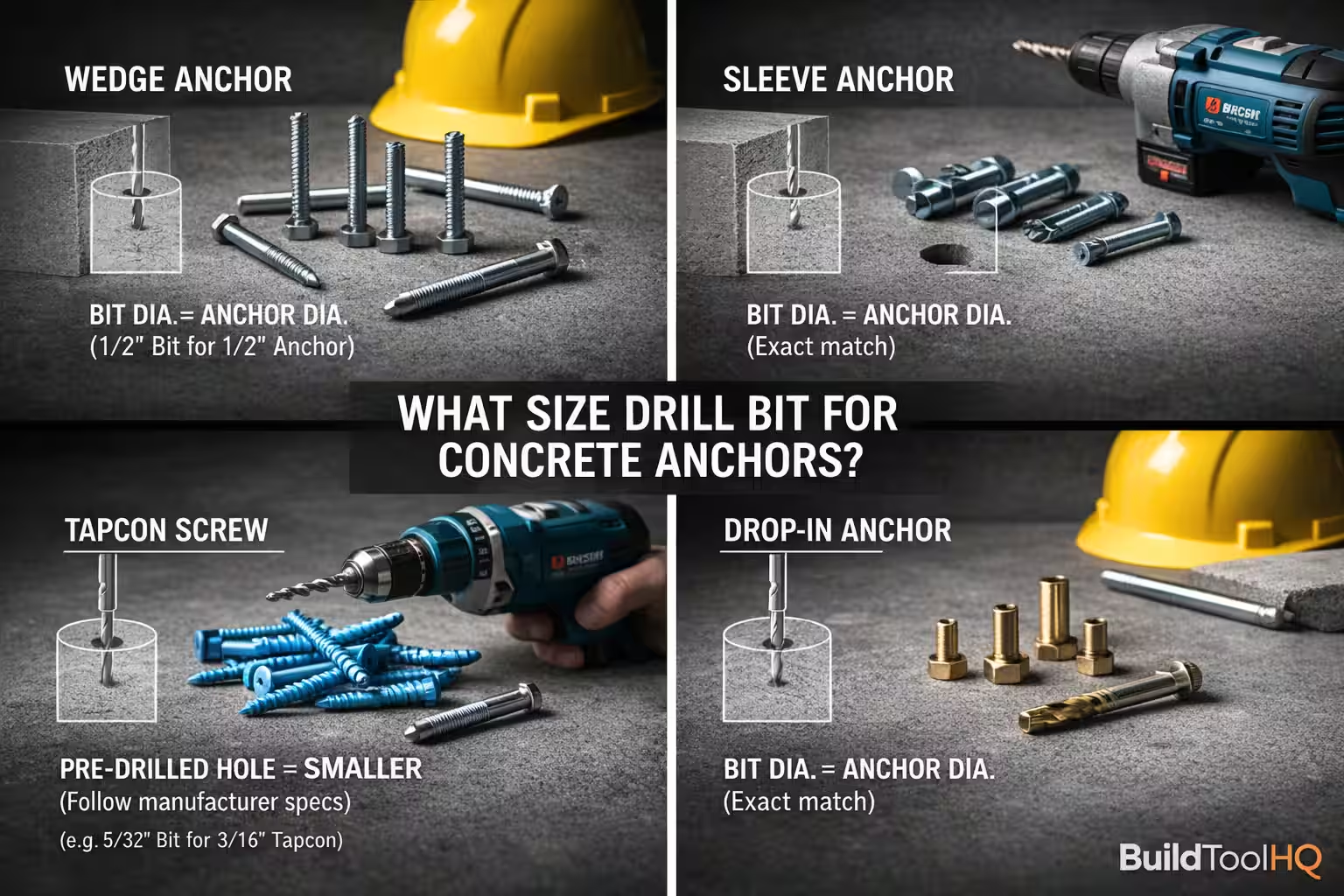
What size drill bit for concrete anchors you use directly affects holding strength, safety, and whether the anchor installs correctly in concrete, brick, or block. Even a high-quality anchor will fail if the hole is too large, too small, or drilled incorrectly.
In this guide, you’ll learn what size drill bit to use for concrete anchors, how bit size varies by anchor type, and how to avoid common drilling mistakes that weaken holding strength.
Why Drill Bit Size Matters for Concrete Anchors
Concrete anchors rely on precise hole dimensions to grip properly. If the hole is oversized, the anchor won’t expand or bite correctly. If the hole is undersized, the anchor may not seat fully — or worse, crack the concrete.
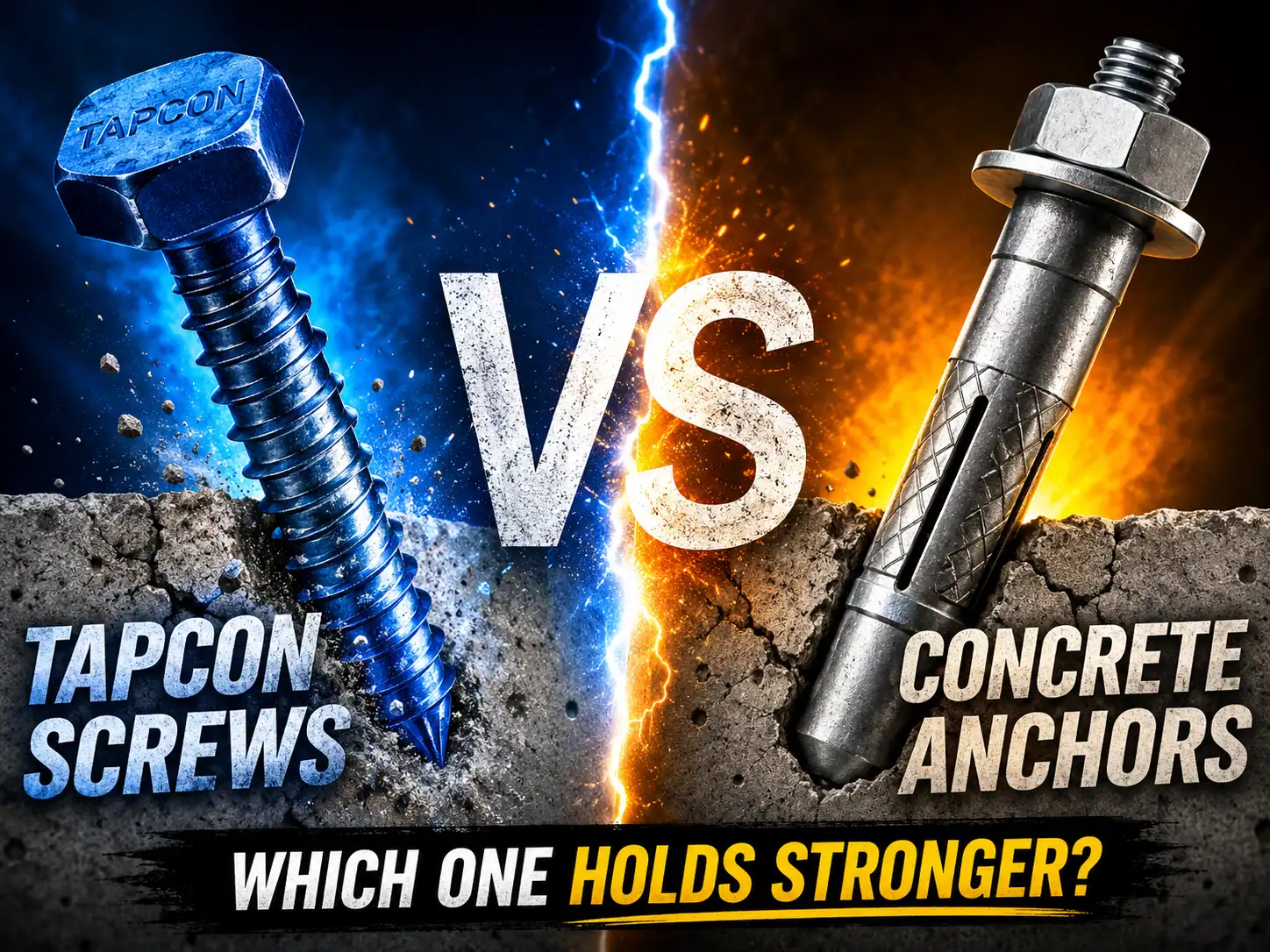
When fastening into concrete, brick, or block, homeowners often face the same critical question: should you use Tapcon screws vs. concrete anchors for your specific home project? While both options are high-performance masonry fasteners, they serve very different structural purposes. 🏗️
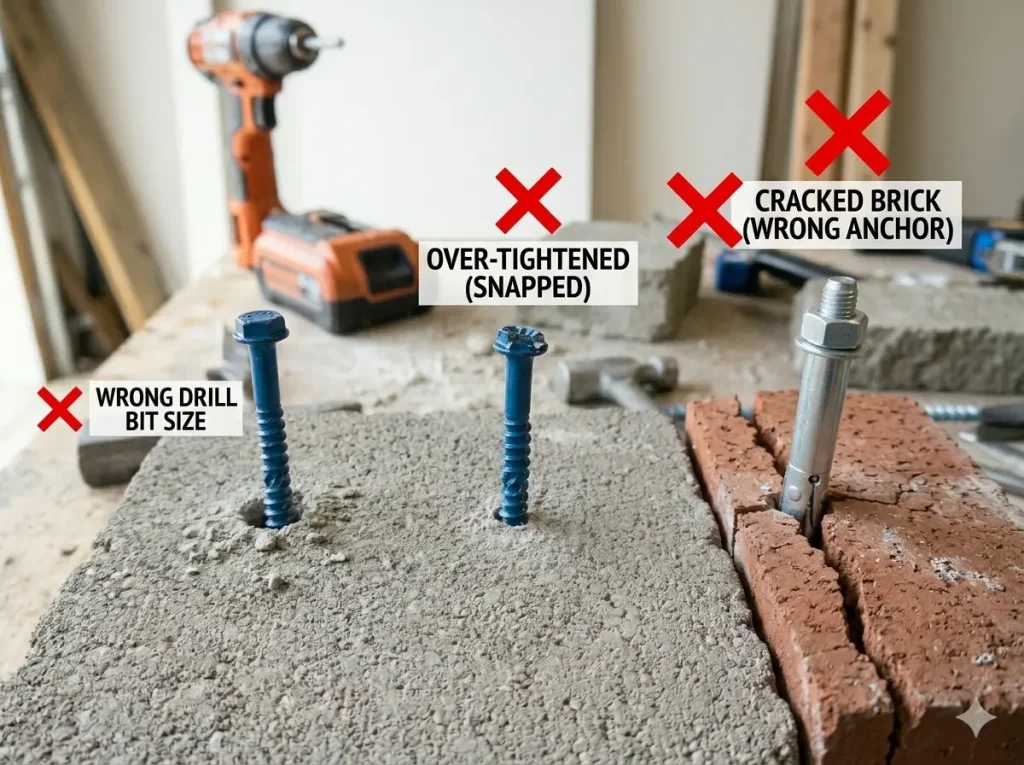
Choosing the wrong fastener doesn’t just lead to a weak mount—it can cause snapped screw heads, permanently damaged masonry, or total installation failure. To achieve a professional-grade result, you must master the mechanics of Tapcon screws vs. concrete anchors. 🧱
What You’ll Master in This Guide: 🔍
✅ The 5 Essential Secrets: Uncovering the truth about load capacity and material density.
✅ Holding Power: A side-by-side comparison of Tapcon screws vs. concrete anchors in solid concrete and hollow block.
✅ Installation Speed: Why one option is significantly faster for multi-point mounting.
✅ Specialized Tooling: The drill bits and drivers required for Tapcon screws vs. concrete anchors.
✅ Failure Prevention: How to avoid “over-torque” and “edge blowout” during installation.
Whether you are mounting a TV on a basement wall or securing a heavy ledger board to a slab, mastering the nuances of Tapcon screws vs. concrete anchors is the only way to ensure your project stands the test of time. ⏳ This guide provides the definitive breakdown of holding power, removal options, and durability, giving you the mastery needed to choose between Tapcon screws vs. concrete anchors with total confidence. 🛠️
Pro Tip: Don’t forget that even the best hardware fails if placed incorrectly. Always check our technical guide on ( Concrete Anchor Spacing and Edge Distance ) to ensure your Tapcon screws vs. concrete anchors don’t crack your masonry! 🛡️
What Are Tapcon Screws?
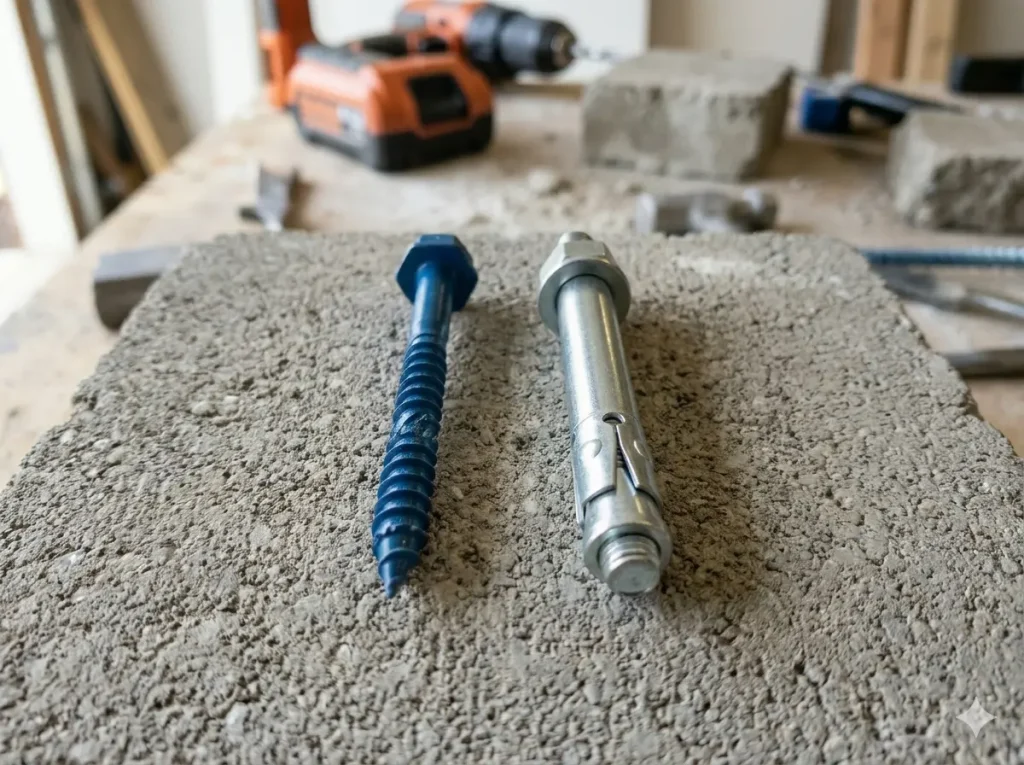
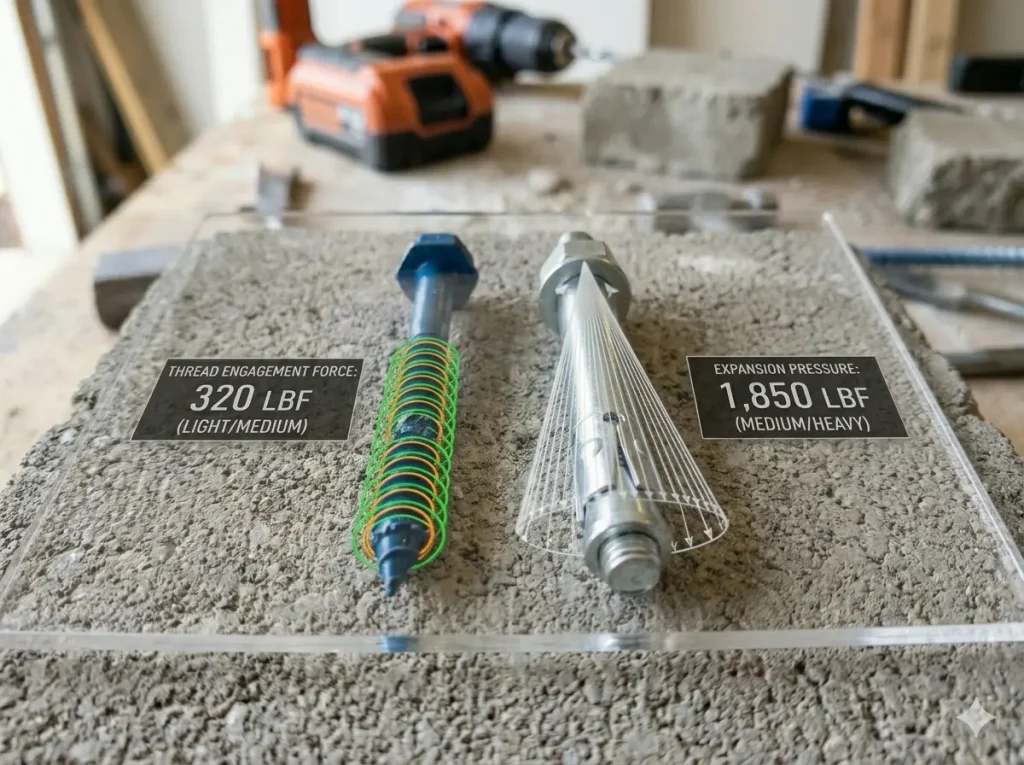
A side-by-side comparison of Tapcon thread-cutting screws and traditional expansion anchors.
Tapcon screws (also called concrete screws) are hardened fasteners designed to cut threads directly into concrete or masonry. Unlike expansion anchors, Tapcons rely on thread engagement, not outward pressure, to hold in place.
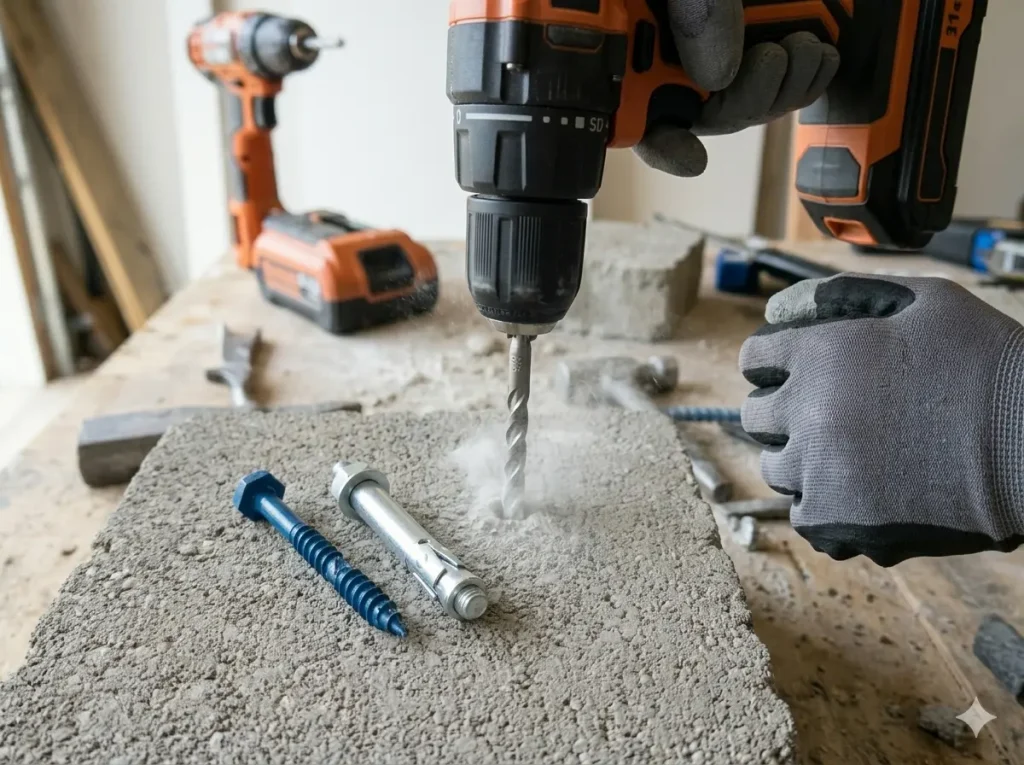
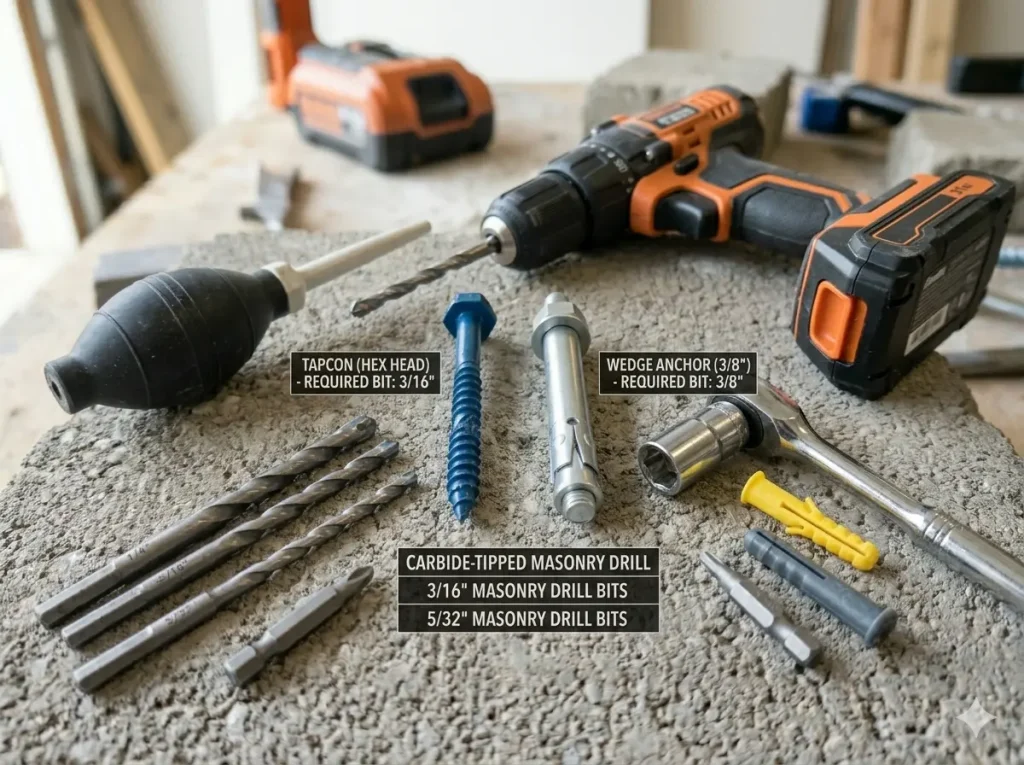
Labeled organization of all required tools and bits: the 3/16″ and 3/8″ masonry bits are key differentiators for Tapcon screws vs. traditional wedge anchors.
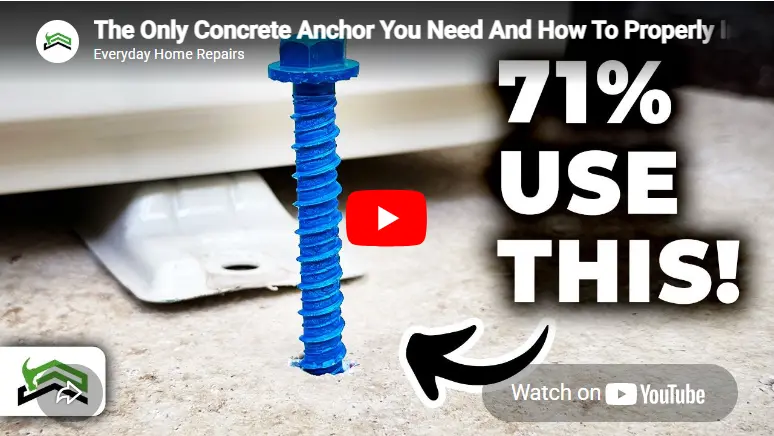
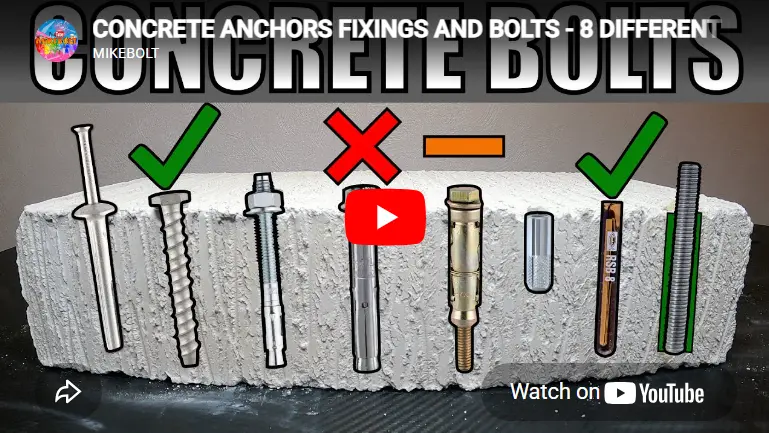
If you are trying to decide between Tapcon screws vs concrete anchors, watching the actual installation process can make your choice much clearer. The video below provides a detailed breakdown of how Tapcon screws vs concrete anchors behave during high-torque applications.
You will see exactly how Tapcon screws are drilled and driven into masonry, along with professional tips for choosing the correct screw length to ensure a secure hold. Understanding the mechanical differences in this Tapcon screws vs concrete anchors demonstration is one of the best secrets to avoiding common installation failures like stripped threads or cracked concrete blocks.
These guides will help you fasten into concrete safely and confidently.
Frequently Asked Questions About Tapcon Screws vs Concrete Anchors
FAQ: Tapcon Screws vs Concrete Anchors
Are Tapcon screws as strong as concrete anchors?
Tapcon screws are strong enough for light to medium-duty applications, but they generally do not match the load capacity of expansion anchors like wedge anchors or sleeve anchors. Concrete anchors create outward pressure inside the hole, which provides stronger holding power for heavy loads such as railings, TV mounts, or structural brackets.
Can Tapcon screws replace concrete anchors?
In some cases, yes. Tapcon screws can replace concrete anchors when the load is relatively light and the installation does not require maximum holding strength. For heavier items or safety-critical installations, traditional expansion anchors are usually the better choice.
Do Tapcon screws work in brick and block?
Yes. Tapcon screws work well in brick, concrete, and concrete block, as long as the correct drill bit size is used. They are often preferred in brick or hollow block because they do not create expansion pressure that could crack weaker masonry materials.
Can Tapcon screws be removed and reused?
Tapcon screws can usually be removed, which makes them useful for temporary mounts or adjustable installations. However, the threads cut into the concrete may wear out after removal, so the same hole may not hold the screw as securely if it is reinstalled.
What size drill bit do Tapcon screws require?
Tapcon screws require a precise masonry drill bit size, which depends on the screw diameter. Using the correct bit size is critical because the screw cuts threads directly into the hole. If the hole is too large, the screw may not hold properly.
When should you use concrete anchors instead of Tapcons?
oncrete anchors are better when: Loads are heavy Safety is critical A permanent installation is needed The fastener must support structural weight Examples include mounting TV brackets, railings, heavy cabinets, or structural supports.
Do Tapcon screws require a hammer drill?
A hammer drill is recommended when drilling into hard concrete, but Tapcon screws can sometimes be installed using a regular drill with a masonry bit in softer materials like brick or block.
Are concrete anchors permanent?
Are concrete anchors permanent? Most concrete anchors are considered permanent fasteners. Once installed, they are difficult to remove without damaging the anchor or the surrounding concrete. This makes them ideal for long-term installations that require maximum strength.
Best concrete anchors for home use are the literal foundation of a safe DIY project. Whether you are mounting a heavy 75-inch TV, installing floating garage shelves, or securing kitchen cabinets into masonry, the difference between a professional result and a structural failure comes down to one thing: selecting the correct fastener. 🧱
Choosing the wrong concrete anchor doesn’t just lead to a loose mount—it can cause permanent edge blowout, shattered brickwork, or catastrophic equipment damage. This guide breaks down the high-performance hardware you need for concrete, brick, and hollow block walls, ensuring your installations remain rock-solid for years. 🛠️
What You’ll Master in This Guide:
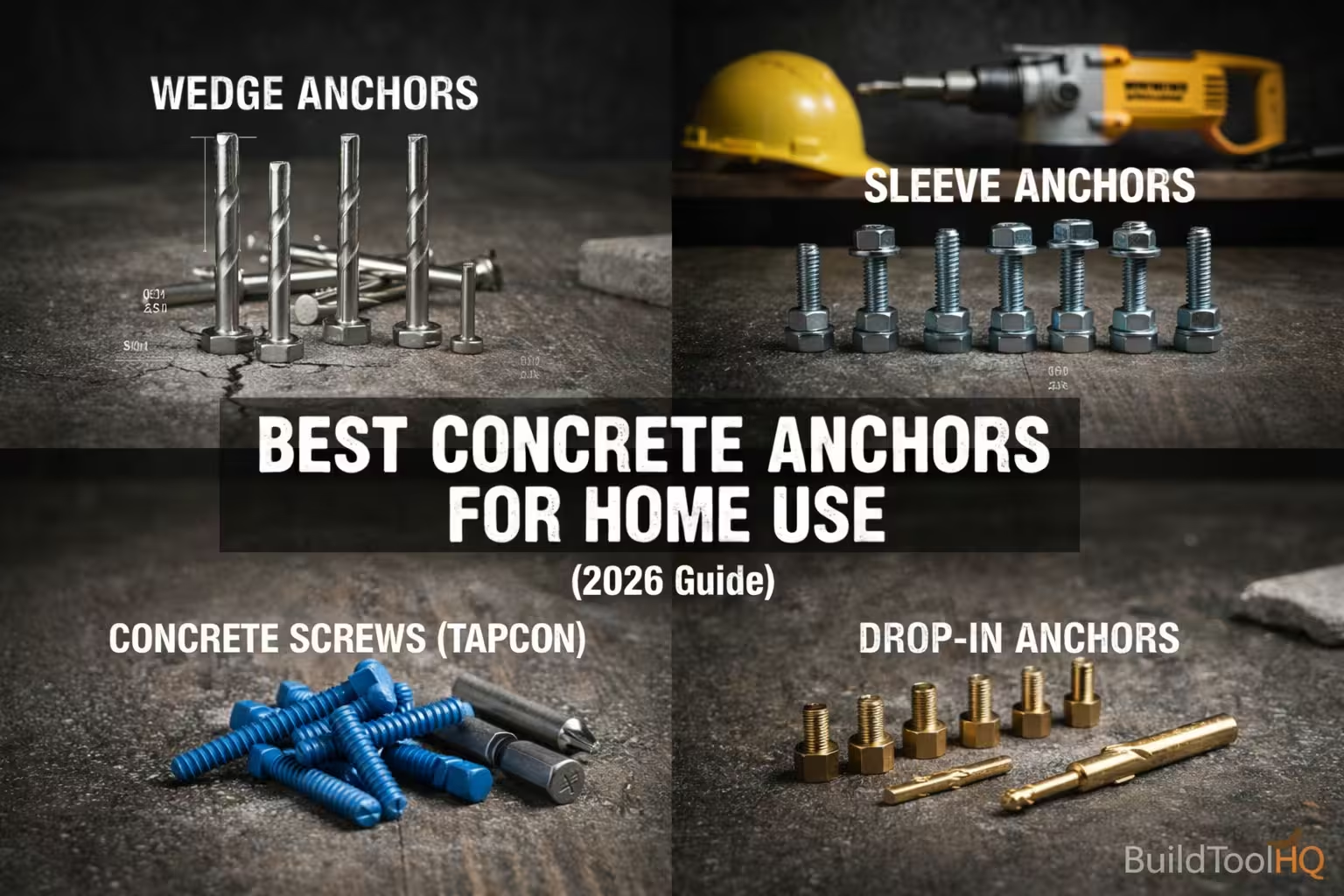
✅ The Top 5 Concrete Anchors: Comparing wedge anchors, sleeve anchors, tapcons, and more.
✅ Material Matching: How to pick the right anchor for poured concrete vs. cinder block.
✅ Load Ratings: Understanding shear vs. tension strength for heavy home fixtures.
✅ Pro Installation: Linking your hardware choice to proper concrete anchor spacing and edge distance and expert drilling techniques.
Pro Tip: Even the world’s strongest anchor will fail if installed too close to a corner. Always cross-reference your hardware choice with our specialized guide on (Concrete Anchor Spacing and Edge Distance Mastery) to avoid critical masonry blowout.
What Are Concrete Anchors? (Defining the Mechanics) ⚙️
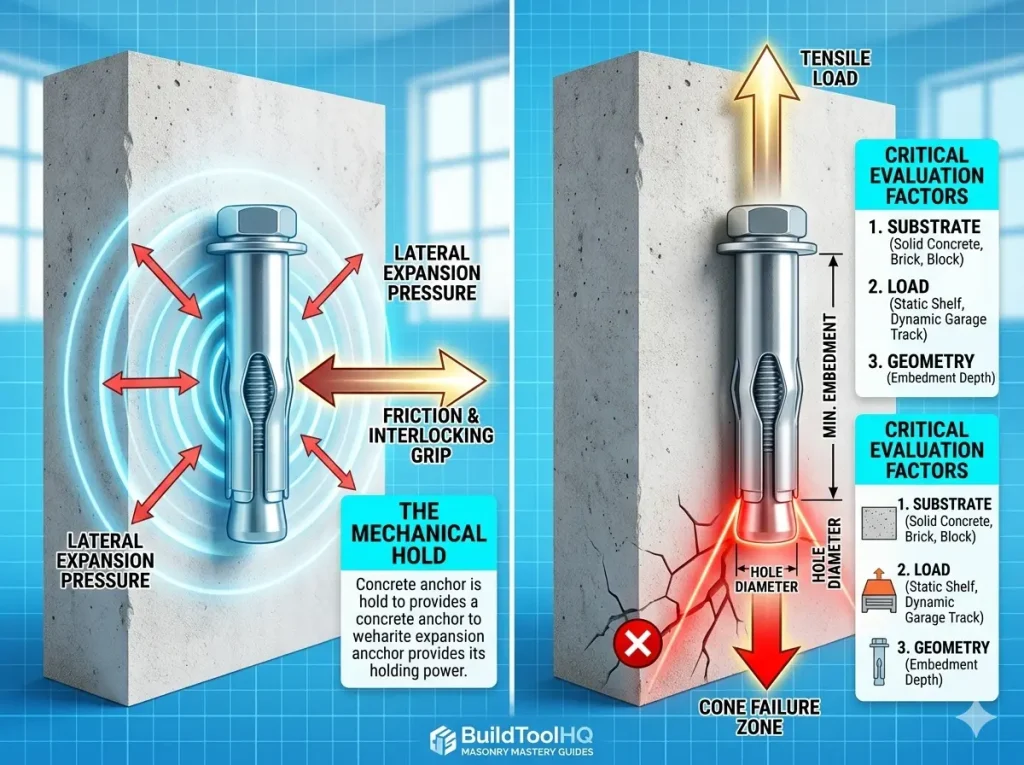
diagram visualizing the mechanical hold and internal forces for the best concrete anchors for home use, including static and dynamic load vectors.
At their core, concrete anchors are specialized masonry fasteners engineered to provide a permanent, high-load attachment point in materials where standard screws would simply strip out. Unlike wood or drywall, masonry is brittle and non-compressive; therefore, the best concrete anchors for home use utilize expansion, keying, or mechanical threading to “bite” directly into the substrate. 🏗️
When you drive an anchor into a pre-drilled hole, it creates a powerful mechanical hold by converting torque into lateral pressure against the masonry walls. This structural bond is what allows a small piece of steel to support hundreds of pounds of tensile and shear force without budging. 🔩
3 Critical Factors to Evaluate Before You Drill: 🔍
Before selecting your hardware, you must analyze these three variables to ensure a safe, long-lasting installation:
The Substrate Material: Are you working with solid poured concrete, clay brick, or hollow cinder block? 🧱 An anchor designed for solid concrete (like a heavy-duty wedge anchor) may shatter a hollow block or fail to grip effectively in soft mortar joints.
The Load Requirement (Static vs. Dynamic): You must calculate the total weight of the item. ⚖️ Are you mounting a static shelf or a dynamic object like a heavy garage door track? Always choose an anchor with a safe working load (SWL) that exceeds your item’s weight by a 4:1 safety factor.
Hole Geometry and Depth: Precision is key to a professional finish. 📏 Every anchor has a specific embedment depth requirement. Drilling too shallow prevents the expansion mechanism from engaging, while drilling too deep can compromise the structural integrity of the masonry unit.
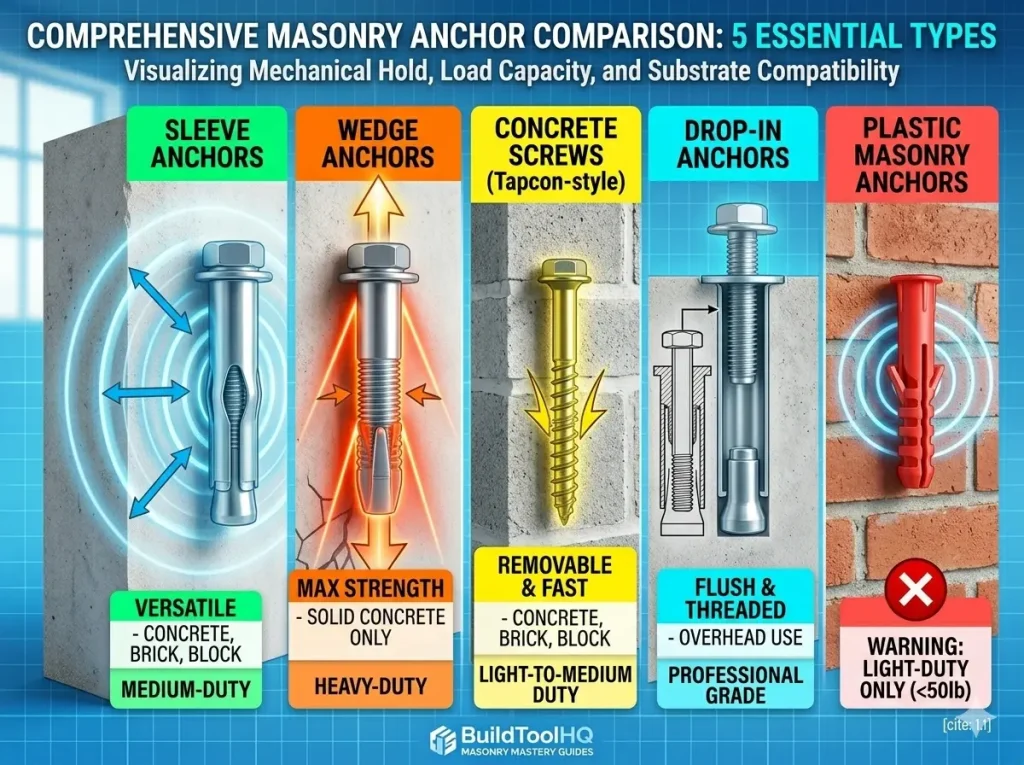
comparison chart illustrating five distinct types of masonry fasteners—Sleeve, Wedge, Drop-In, Tapcon-style, and Plastic Plug—visualizing their load capacity, substrate matching, and internal mechanical hold.
There are several common anchor types used by homeowners, but they are not interchangeable. Using a heavy-duty wedge in a hollow brick or a plastic plug for a TV mount is a recipe for disaster. ⚠️ Each fastener has a specific engineering profile designed for different load capacities and masonry substrates.
Sleeve Anchors: The ultimate “all-rounder” for DIYers. These are highly versatile and offer a reliable mechanical hold in both solid concrete, brick, and cinder block. 🏠
Wedge Anchors: These are the heavy hitters of the masonry world. Engineered for maximum tensile strength, they are for solid poured concrete only and should never be used in brick or block. 💪
Drop-In Anchors: A favorite for overhead or flush-mounted applications. These provide a professional-grade internal thread for bolts, allowing you to remove the fixture while the anchor stays permanent. 🏗️
Concrete Screws (Tapcon-style): These high-performance fasteners cut their own threads into the masonry. They are incredibly fast to install and are the only option that is truly removable, making them perfect for light-to-medium duty projects. ⚡
Plastic Masonry Anchors: These are for light-duty only (think picture frames or small smoke detectors). Never rely on plastic expansion in concrete for items that carry significant weight or safety risks. 🖼️
⚠️ Tip: Always derate manufacturer ratings by 25–30% for home projects.
Concrete Anchors vs. Wall Plugs (The Golden Rule) 📏
A common mistake that leads to failed DIY projects is confusing a standard plastic wall plug with a high-performance mechanical concrete anchor. While they might look similar in a toolbox, their engineering profiles and weight capacities are worlds apart. 🌍 Understanding this distinction is vital for ensuring your heavy home fixtures don’t end up on the floor. 💥
The Load-Bearing Rule of Thumb: ⚖️
Plastic Wall Plugs (Light-Duty): These rely on simple friction and are designed for lightweight masonry or brick applications. 🖼️ Use these exclusively for items like picture frames, light mirrors, or smoke detectors. They lack the tensile strength required to hold structural weight or dynamic loads.
Concrete Anchors (Medium to Heavy-Duty): These are engineered for high-stakes projects like mounting TVs, water heaters, or structural shelving. 📺 Unlike plugs, these fasteners create a high-pressure mechanical hold by expanding steel against the masonry, making them the best concrete anchors for home use when safety is the top priority.
⚠️ Warning: Never substitute a wall plug for a concrete anchor when the item weighs more than a few pounds. Overloading a plastic plug in concrete will eventually lead to “creep,” where the plug slowly slides out of the hole, resulting in a sudden and dangerous failure. 🛡️
How to Install Concrete Anchors Correctly (Summary) 🛠️
Even when you purchase the best concrete anchors for home use, simple installation errors can lead to total fastener failure, property damage, or safety hazards. Avoiding these frequent masonry anchor mistakes is critical to maintaining the structural integrity of your project and ensuring the best concrete anchors for home use provide a permanent mechanical hold. 📉
Top 4 Critical Installation Errors: 🚫
Selecting the Wrong Type for the Substrate: A major risk is choosing the best concrete anchors for home use based on price rather than engineering. For example, using a wedge anchor in hollow cinder block—even if it is rated as one of the best concrete anchors for home use—will result in immediate pull-out. ❌ You must match the hardware to your specific masonry surface.
Improper Embedment Depth: Drilling too shallow prevents the expansion sleeve of the best concrete anchors for home use from fully engaging. Conversely, drilling too deep can cause the bolt to “bottom out.” 📏 Always follow the manufacturer’s minimum embedment depth to ensure the best concrete anchors for home use reach their maximum shear strength.
Overtightening the Anchor Bolt: Excessive torque can crush the concrete internally or snap the bolt of even the best concrete anchors for home use. ⚙️ This compromises the structural bond and creates a hidden weakness, meaning the best concrete anchors for home use may fail unexpectedly under a heavy load.
Ignoring Spacing and Edge Distance: Installing the best concrete anchors for home use too close to the edge of a slab or too close to each other creates cumulative tension. 🧱 This leads to edge blowout, even with the best concrete anchors for home use. Always consult our technical layout guide for safe concrete anchor spacing and edge distance.
Pro Tip: Most failures involving the best concrete anchors for home use aren’t caused by the hardware itself, but by poor hole preparation. 🌬️ Never skip the dust clean-out step, as residual grit acts as a lubricant against the expansion mechanisms of the best concrete anchors for home use.
These guides will ensure your installations are safe, strong, and long-lasting.
Frequently Asked Questions About Concrete Anchors :
What are the best concrete anchors for home use?
The best concrete anchors for home use are usually concrete screws (Tapcon-style), sleeve anchors, or wedge anchors, depending on the weight of the item being installed. Concrete screws are ideal for light fixtures and shelves, while sleeve or wedge anchors are better for heavy loads such as TV mounts or cabinets.
Can you use regular screws in concrete?
No. Regular wood or drywall screws will not hold properly in concrete. Concrete requires specialized anchors or concrete screws designed to grip masonry surfaces and provide a secure hold.
What drill bit should you use for concrete anchors?
Concrete anchors require carbide-tipped masonry drill bits that match the diameter recommended by the anchor manufacturer. Using the wrong drill bit size can reduce the anchor’s holding strength.
Do you need a hammer drill for concrete anchors?
A hammer drill is strongly recommended when drilling into solid concrete. The hammering action helps break the concrete while the drill rotates, making drilling faster and more accurate.
How deep should you drill for concrete anchors?
The hole should usually be drilled slightly deeper than the anchor length to allow dust and debris to settle at the bottom. This helps the anchor seat fully and achieve maximum holding strength.
How much weight can concrete anchors hold?
Concrete anchor strength depends on: Anchor type Diameter and embedment depth Concrete quality Installation accuracy
Heavy-duty anchors like wedge anchors or sleeve anchors can support hundreds of pounds when properly installed.
Can you install concrete anchors in brick or block walls?
Yes. Many concrete anchors can be installed in brick, mortar joints, or concrete block walls, but some anchors—such as wedge anchors—are designed specifically for solid concrete.
Why do concrete anchors fail?
Concrete anchors may fail due to: Incorrect hole size Dust left in the hole Overtightening Installing too close to edges Using the wrong anchor type for the material Proper drilling and installation techniques are essential for a secure hold.
Are concrete screws removable?
Yes. Concrete screws (Tapcon-style anchors) can usually be removed and reinstalled, making them a popular option for DIY homeowners who may need to adjust or relocate fixtures.