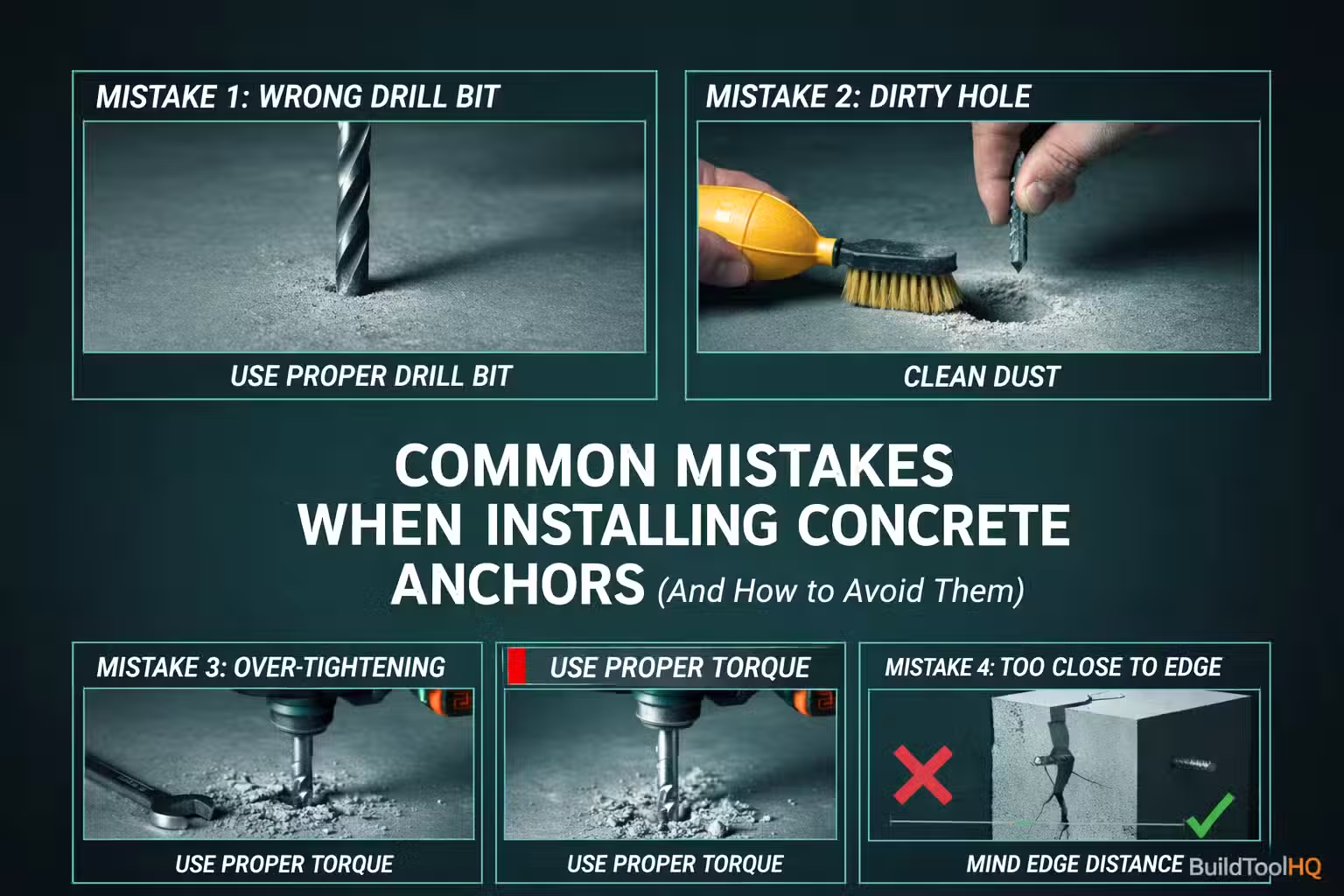
Common mistakes when installing concrete anchors can dramatically reduce holding strength or cause anchor failure, even when using high-quality fasteners. In most cases, anchor problems aren’t caused by the anchor itself—but by avoidable installation errors that compromise safety and performance.
This guide covers the most common mistakes homeowners make when installing concrete anchors and explains how to avoid them using proven best practices.
Why Installation Mistakes Matter
Concrete anchors rely on precise drilling, correct embedment, and proper expansion to achieve their rated strength. Even anchors selected using (Best Concrete Anchors for Home Use – 2026 Guide) can fail prematurely if installation steps are skipped or done incorrectly.
Common consequences of installation mistakes include:
- Reduced load capacity
- Anchor spinning or pull-out
- Cracked or damaged concrete
- Unsafe overhead installations
Mistake #1: Using the Wrong Drill Bit Size
One of the most frequent—and damaging—errors is drilling the wrong hole diameter.
- Oversized holes prevent proper expansion
- Undersized holes cause binding or concrete cracking
Always match the drill bit exactly to the anchor size, as explained in (What Size Drill Bit for Concrete Anchors?).
✅ How to avoid it
Never “eyeball” drill bits. Verify the anchor diameter and use the manufacturer-specified bit.
Mistake #2: Skipping Hole Cleaning
Dust and debris left inside the hole reduce friction and prevent anchors from gripping properly. This mistake is especially common with expansion-style anchors.
This issue is frequently seen with anchors outlined in (Types of Concrete Anchors Explained (Wedge, Sleeve, Drop-In, Tapcon)).
✅ How to avoid it
Vacuum, blow out, or brush the hole thoroughly before inserting the anchor.
Mistake #3: Drilling Too Shallow or Too Deep
Incorrect hole depth directly affects anchor performance:
- Too shallow → anchor won’t seat fully
- Too deep → anchor may not expand as designed
This impacts load capacity and long-term reliability.
✅ How to avoid it
Drill slightly deeper than the anchor length (usually about ¼″) and keep the drill straight.
Mistake #4: Overtightening the Anchor
Many DIYers assume tighter is stronger—but overtightening can:
- Strip threads
- Crack surrounding concrete
- Reduce holding strength
This mistake is especially common with Tapcon screws and wedge anchors.
✅ How to avoid it
Tighten until snug and stop when resistance becomes firm. Use hand tools instead of high-torque impact drivers whenever possible.
Mistake #5: Installing Anchors Too Close to Concrete Edges
Concrete edges are weaker and more prone to cracking. Anchors placed too close to edges increase the risk of:
- Concrete spalling
- Anchor pull-out
Correct spacing is critical and often overlooked.
✅ How to avoid it
Follow edge distance and spacing rules outlined in (Concrete Anchor Spacing & Edge Distance Guide).
Mistake #6: Using the Wrong Anchor for the Load
Not all anchors are designed to handle the same loads. For example:
- Tapcon screws → light-duty applications
- Sleeve anchors → medium loads
- Wedge anchors → heavy structural loads
Using the wrong anchor can result in failure even if installed correctly.
✅ How to avoid it
Match the anchor type to the application using (Concrete Anchor Selection Chart (Homeowner’s Quick Reference Guide)) and verify load limits before installation.
Mistake #7: Installing Anchors in Weak or Damaged Concrete
Cracked, old, or crumbly concrete dramatically reduces anchor performance. Even properly installed anchors may fail if the base material itself is compromised.
✅ How to avoid it
Inspect the surface carefully. If concrete crumbles during drilling, consider relocating the anchor or using alternative mounting methods.
Mistake #8: Ignoring Manufacturer Instructions
Anchor specifications vary by:
- Brand
- Diameter
- Material
- Installation method
Relying on “experience” instead of instructions is a common cause of failure.
✅ How to avoid it
Always follow manufacturer guidelines and compare them with the step-by-step process in (How to Install Concrete Anchors Correctly – Step-by-Step Guide).
When Installation Mistakes Become Safety Hazards
Installation errors are especially dangerous for:
- Overhead anchors
- Wall-mounted TVs and furniture
- Garage storage systems
- Structural attachments
These applications require strict adherence to load limits and best practices.
Final Thoughts
Most concrete anchor failures are completely preventable. By avoiding common mistakes—wrong drill bit size, poor hole cleaning, overtightening, improper spacing, and incorrect anchor selection—you can achieve the full rated strength of your anchors and ensure long-term safety.
For anchor selection, installation, spacing, and load guidance, refer back to (Best Concrete Anchors for Home Use – 2026 Guide).