
When fastening into concrete, brick, or block, homeowners often face the same critical question: should you use Tapcon screws vs. concrete anchors for your specific home project? While both options are high-performance masonry fasteners, they serve very different structural purposes. 🏗️
Choosing the wrong fastener doesn’t just lead to a weak mount—it can cause snapped screw heads, permanently damaged masonry, or total installation failure. To achieve a professional-grade result, you must master the mechanics of Tapcon screws vs. concrete anchors. 🧱
What You’ll Master in This Guide: 🔍
- ✅ The 5 Essential Secrets: Uncovering the truth about load capacity and material density.
- ✅ Holding Power: A side-by-side comparison of Tapcon screws vs. concrete anchors in solid concrete and hollow block.
- ✅ Installation Speed: Why one option is significantly faster for multi-point mounting.
- ✅ Specialized Tooling: The drill bits and drivers required for Tapcon screws vs. concrete anchors.
- ✅ Failure Prevention: How to avoid “over-torque” and “edge blowout” during installation.
Whether you are mounting a TV on a basement wall or securing a heavy ledger board to a slab, mastering the nuances of Tapcon screws vs. concrete anchors is the only way to ensure your project stands the test of time. ⏳ This guide provides the definitive breakdown of holding power, removal options, and durability, giving you the mastery needed to choose between Tapcon screws vs. concrete anchors with total confidence. 🛠️
Pro Tip: Don’t forget that even the best hardware fails if placed incorrectly. Always check our technical guide on ( Concrete Anchor Spacing and Edge Distance ) to ensure your Tapcon screws vs. concrete anchors don’t crack your masonry! 🛡️
What Are Tapcon Screws?
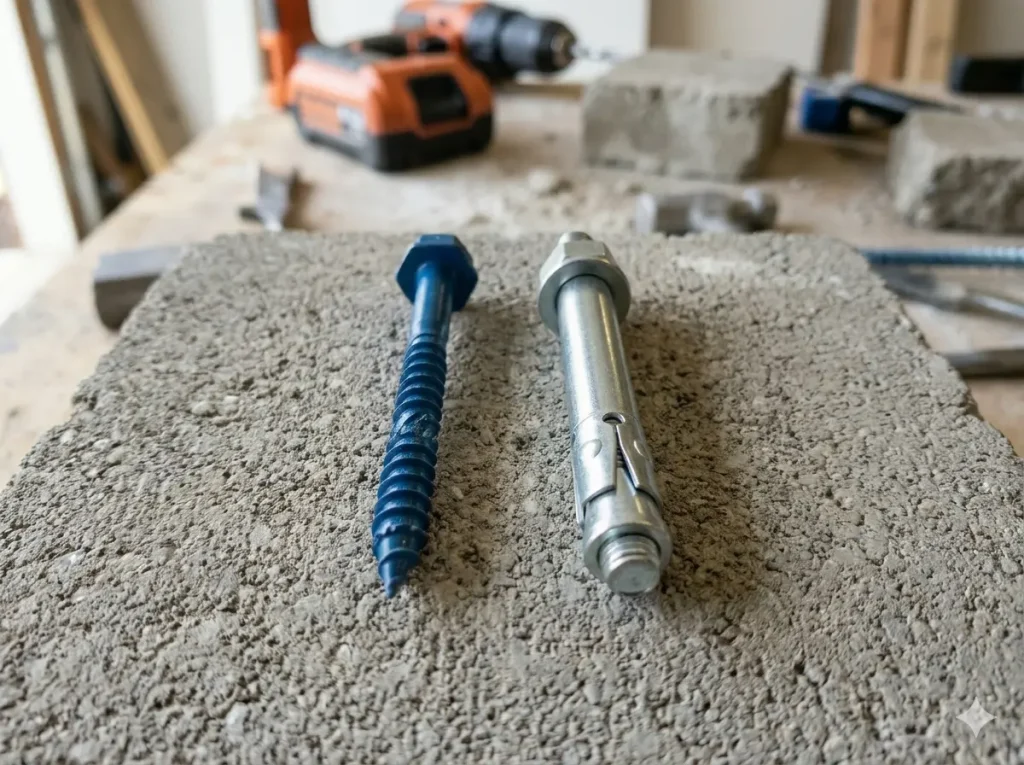
Tapcon screws (also called concrete screws) are hardened fasteners designed to cut threads directly into concrete or masonry. Unlike expansion anchors, Tapcons rely on thread engagement, not outward pressure, to hold in place.
Tapcon screws are commonly used for:
- Shelves
- Light fixtures
- Electrical boxes
- Temporary or adjustable mounts
For a broader overview of fastener options, see (Types of Concrete Anchors Explained – Sleeve, Wedge, Drop-In, Tapcon).
What Are Concrete Anchors?
Concrete anchors include expansion and mechanical fasteners such as:
- Sleeve anchors
- Wedge anchors
- Drop-in anchors
These anchors hold by expanding inside the drilled hole, creating strong outward pressure against the concrete.
If you’re comparing all anchor options first, start with (Best Concrete Anchors for Home Use – 2026 Guide).
Tapcon Screws vs Concrete Anchors: Key Differences
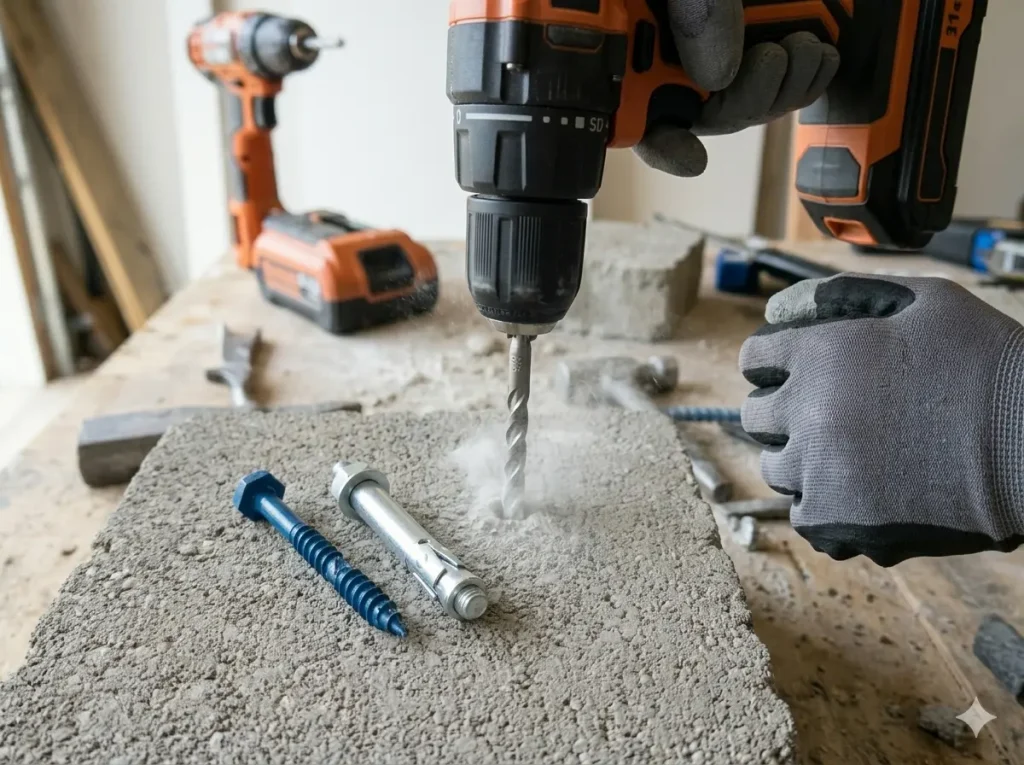
🔩 Installation Method
- Tapcon screws thread directly into the hole
- Concrete anchors expand inside the hole when tightened
Tapcons are generally faster to install, especially for DIYers.
🧱 Load Capacity
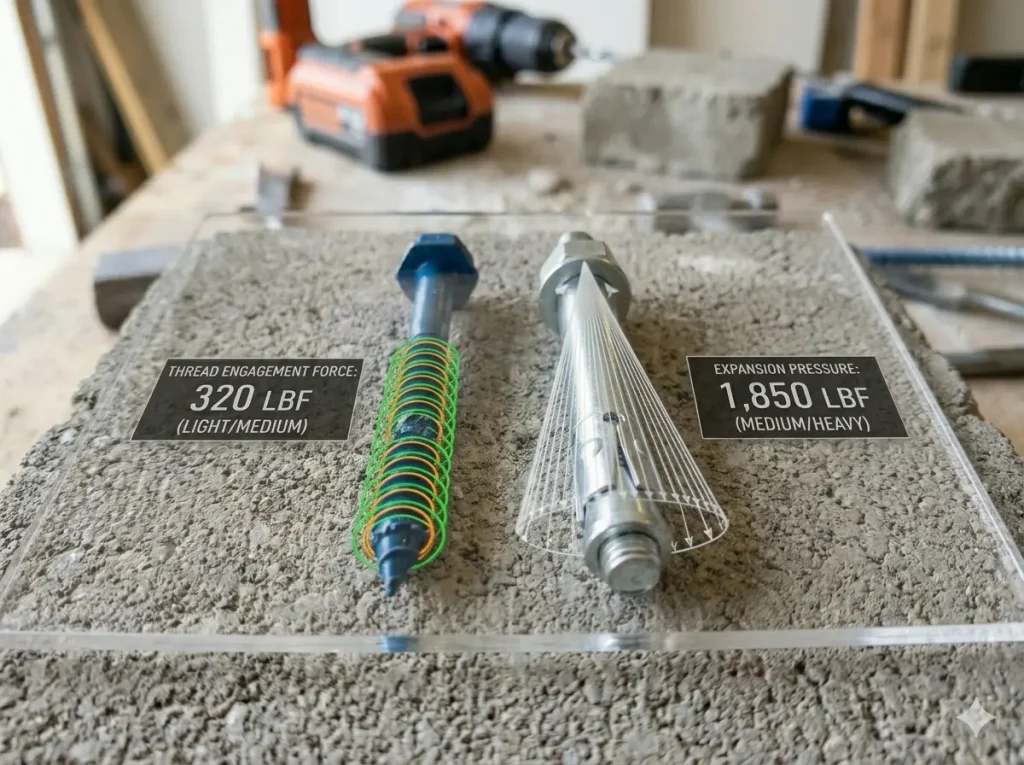
- Tapcon screws: light to medium loads
- Concrete anchors: medium to heavy loads
For exact weight limits, see (How Much Weight Can Concrete Anchors Hold? – Load Ratings Explained).
🔧 Removability
- Tapcon screws: removable and reusable (in some cases)
- Concrete anchors: usually permanent
If you expect to reposition or remove fixtures later, Tapcons have a clear advantage.
🛠️ Tools Required
- Tapcon screws: drill + masonry bit
- Concrete anchors: drill + masonry bit + wrench or setting tool
Correct drilling technique matters — review (How to Drill Into Concrete Safely – Step-by-Step Guide) if you’re unsure.
When to Use Tapcon Screws
Tapcon screws are best when:
- Loads are light to medium
- You want fast installation
- The mount may need removal later
- You’re working in brick or block and want minimal expansion stress
Common Tapcon projects:
- Mounting shelves
- Attaching furring strips
- Installing conduit or brackets
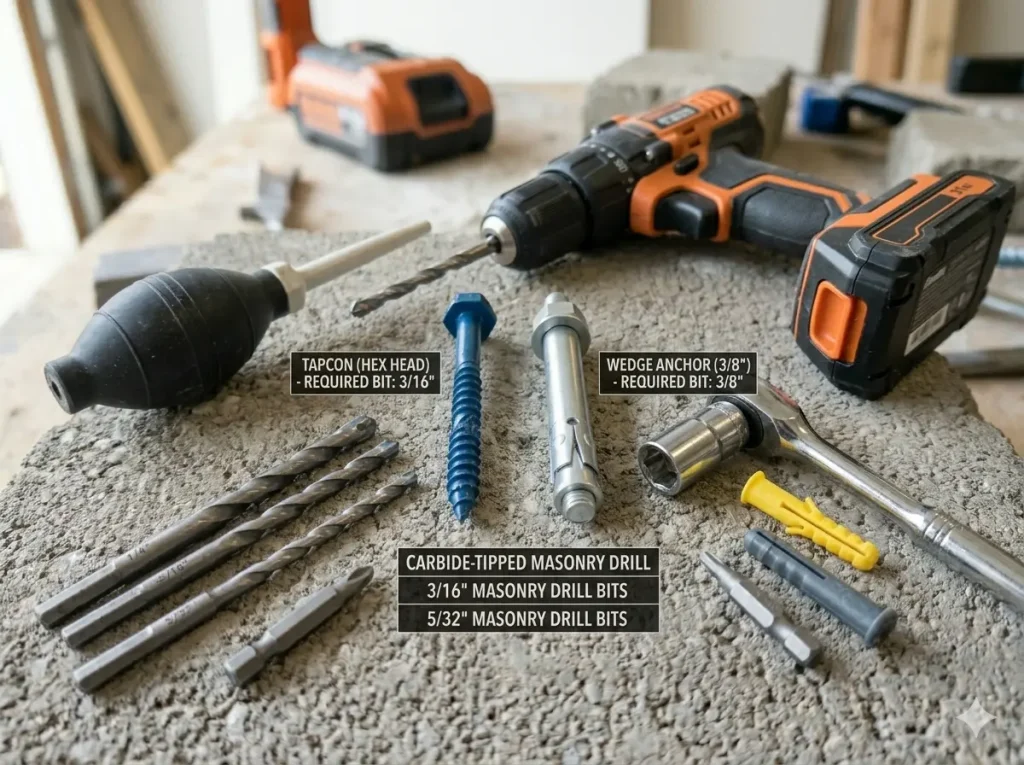
Make sure your bit size is exact — see (What Size Drill Bit Should You Use for Concrete Anchors?) (Tapcons are very size-sensitive).
When to Use Concrete Anchors
Traditional concrete anchors are better when:
- Loads are heavy
- Safety is critical (TVs, handrails)
- Long-term, permanent mounting is required
- You’re anchoring into solid concrete
Concrete anchors are commonly recommended for:
- TV mounts
- Structural brackets
- Railings
- Heavy cabinets
If you’re mounting into different masonry types, read (Best Anchors for Brick vs Concrete vs Block Walls).
Tapcon Screws vs Concrete Anchors: Quick Comparison
| Feature | Tapcon Screws | Concrete Anchors |
|---|---|---|
| Load capacity | Light–Medium | Medium–Heavy |
| Installation | Easy | Moderate |
| Removable | Yes | Usually no |
| Expansion stress | None | Yes |
| Best for | DIY projects | Heavy fixtures |
Common Mistakes to Avoid
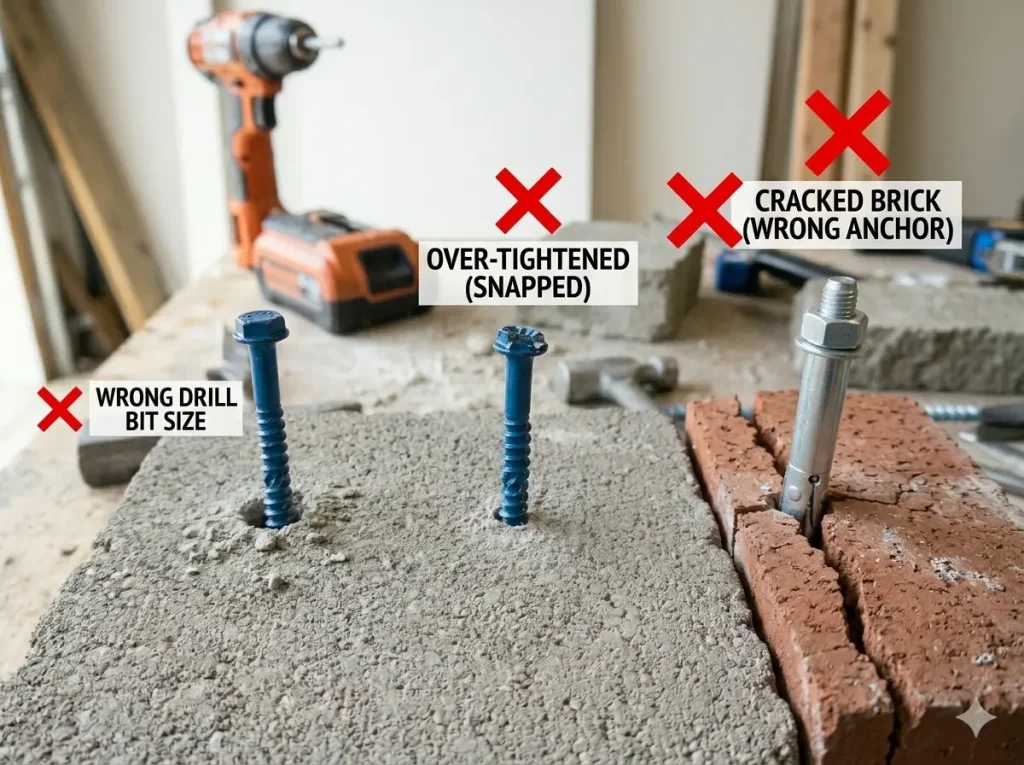
Avoid these frequent errors:
- Using Tapcons for heavy loads
- Over-tightening Tapcon screws
- Using expansion anchors in weak brick
- Drilling incorrect hole sizes
These issues are covered in detail in (Common Concrete Anchor Installation Mistakes – And How to Avoid Them).
Best Drill & Bits for Both Options
Regardless of fastener choice:
- Use carbide-tipped masonry bits
- Drill straight and clean out dust
- Avoid oversized holes
Recommended guides:
- (Best Drill Bits for Concrete and Masonry)
- (Best Drill for Concrete Walls – 2025 Guide)
- (Best Hammer Drill for Home Use – 2025 Guide)
Final Verdict: Which One Should You Choose?
Choose Tapcon screws if:
- You’re mounting lighter items
- You want easy installation
- You may remove the fastener later
Choose concrete anchors if:
- Loads are heavy
- Safety matters
- You want maximum holding power
For mixed DIY projects, anchor kits can be useful — see (Best Concrete Anchor Kits for Homeowners – 2026 Review).
If you are trying to decide between Tapcon screws vs concrete anchors, watching the actual installation process can make your choice much clearer. The video below provides a detailed breakdown of how Tapcon screws vs concrete anchors behave during high-torque applications.
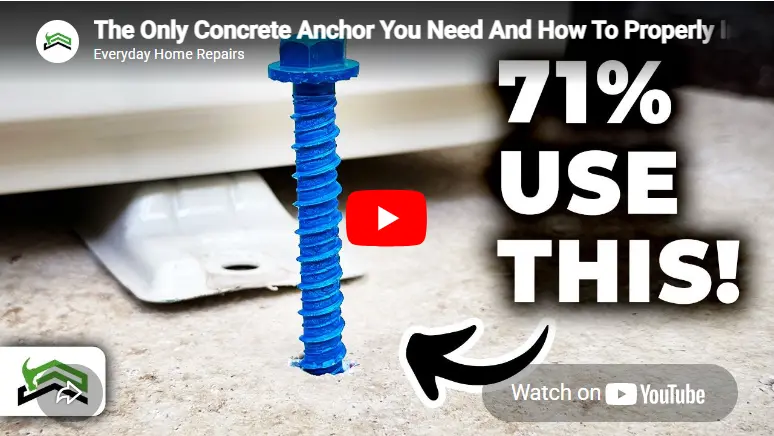
You will see exactly how Tapcon screws are drilled and driven into masonry, along with professional tips for choosing the correct screw length to ensure a secure hold. Understanding the mechanical differences in this Tapcon screws vs concrete anchors demonstration is one of the best secrets to avoiding common installation failures like stripped threads or cracked concrete blocks.
Continue Learning
Next, explore:
- (What Size Drill Bit Should You Use for Concrete Anchors?)
- (How to Install Concrete Anchors Correctly – Step-by-Step Guide)
- (Concrete Anchor Spacing & Edge Distance: How Far Apart Should Anchors Be?)
These guides will help you fasten into concrete safely and confidently.
Frequently Asked Questions About Tapcon Screws vs Concrete Anchors
FAQ: Tapcon Screws vs Concrete Anchors
Are Tapcon screws as strong as concrete anchors?
Tapcon screws are strong enough for light to medium-duty applications, but they generally do not match the load capacity of expansion anchors like wedge anchors or sleeve anchors. Concrete anchors create outward pressure inside the hole, which provides stronger holding power for heavy loads such as railings, TV mounts, or structural brackets.
Can Tapcon screws replace concrete anchors?
In some cases, yes. Tapcon screws can replace concrete anchors when the load is relatively light and the installation does not require maximum holding strength. For heavier items or safety-critical installations, traditional expansion anchors are usually the better choice.
Do Tapcon screws work in brick and block?
Yes. Tapcon screws work well in brick, concrete, and concrete block, as long as the correct drill bit size is used. They are often preferred in brick or hollow block because they do not create expansion pressure that could crack weaker masonry materials.
Can Tapcon screws be removed and reused?
Tapcon screws can usually be removed, which makes them useful for temporary mounts or adjustable installations. However, the threads cut into the concrete may wear out after removal, so the same hole may not hold the screw as securely if it is reinstalled.
What size drill bit do Tapcon screws require?
Tapcon screws require a precise masonry drill bit size, which depends on the screw diameter. Using the correct bit size is critical because the screw cuts threads directly into the hole. If the hole is too large, the screw may not hold properly.
When should you use concrete anchors instead of Tapcons?
oncrete anchors are better when:
Loads are heavy
Safety is critical
A permanent installation is needed
The fastener must support structural weight
Examples include mounting TV brackets, railings, heavy cabinets, or structural supports.
Do Tapcon screws require a hammer drill?
A hammer drill is recommended when drilling into hard concrete, but Tapcon screws can sometimes be installed using a regular drill with a masonry bit in softer materials like brick or block.
Are concrete anchors permanent?
Are concrete anchors permanent?
Most concrete anchors are considered permanent fasteners. Once installed, they are difficult to remove without damaging the anchor or the surrounding concrete. This makes them ideal for long-term installations that require maximum strength.