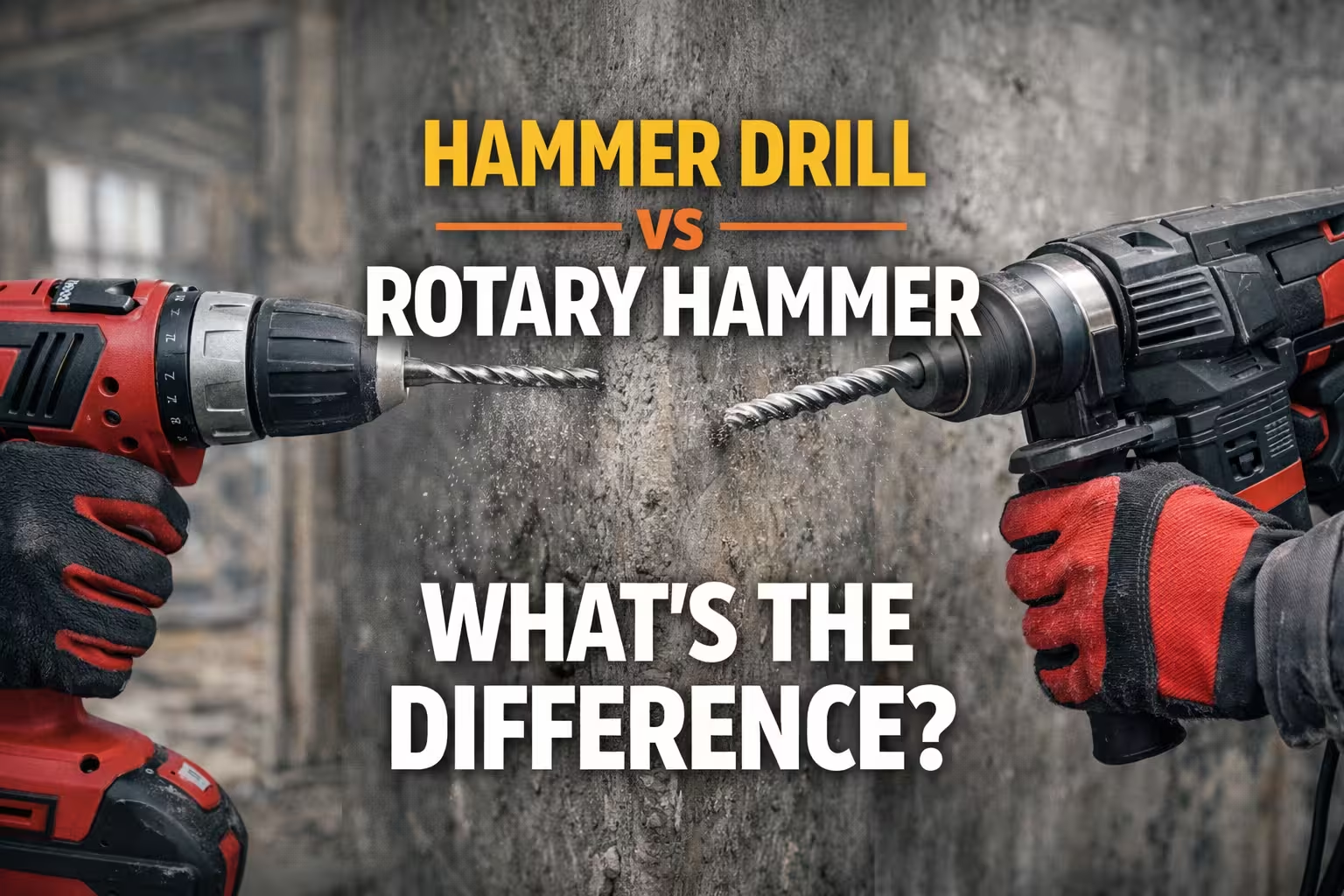
Choosing between a hammer drill and a rotary hammer can be confusing—especially if you’re drilling into concrete, brick, or masonry for the first time.
While both tools are designed for hard materials, they work very differently and are meant for different types of users and projects. Understanding the difference between a hammer drill vs rotary hammer will help you avoid buying the wrong tool and struggling with concrete drilling.
This guide explains how each tool works, when to use one over the other, and which option is best for homeowners, DIYers, and light professional use.
What Is a Hammer Drill?
A hammer drill combines standard rotational drilling with a light hammering action. As the bit spins, the drill rapidly “taps” forward, helping break up concrete and masonry.
Hammer drills are commonly used by homeowners and DIY users because they are versatile and easy to control.
Best uses for a hammer drill:
- Drilling into concrete walls
- Brick and masonry anchors
- Mounting shelves, TVs, and fixtures
- General home renovation work
A hammer drill is the recommended choice for most household concrete drilling tasks. If you’re choosing a tool for home use, see our full guide on Best Hammer Drill for Home Use (2025 Guide)
What Is a Rotary Hammer?
A rotary hammer uses a piston-driven hammering mechanism instead of a simple vibrating motion. This delivers significantly more impact force, allowing the tool to drill through very hard or thick concrete with ease.
Rotary hammers typically use SDS bits and are heavier, more powerful, and more expensive than hammer drills.
Best uses for a rotary hammer:
- Thick or reinforced concrete
- Large-diameter holes
- Repeated heavy drilling
- Structural or professional construction work
While extremely effective, rotary hammers are often unnecessary for basic home projects.
Hammer Drill vs Rotary Hammer: Key Differences
Power and Impact Force
- Hammer drill: Moderate impact, suitable for most concrete walls
- Rotary hammer: High impact force for heavy-duty concrete
Speed and Efficiency
- Hammer drill: Slower on very hard concrete
- Rotary hammer: Faster and more efficient on thick slabs
Bit Type
- Hammer drill: Standard masonry bits
- Rotary hammer: SDS or SDS-Plus bits
Control and Weight
- Hammer drill: Lighter, easier to control
- Rotary hammer: Heavier, more fatigue over time
Cost
- Hammer drill: More affordable
- Rotary hammer: Higher upfront cost
Which One Should You Choose?
For most homeowners and DIY users, a hammer drill is the best option.
Choose a hammer drill if you:
- Drill into concrete occasionally
- Need holes for anchors or screws
- Want one tool for multiple materials
Choose a rotary hammer if you:
- Drill into concrete frequently
- Need large or deep holes
- Work with very hard or structural concrete
If you’re wondering whether a standard drill is enough for masonry work, read Can a Regular Drill Drill Into Concrete? for a detailed explanation.
Common Mistakes When Choosing Between These Tools
Many users buy a rotary hammer when they don’t need one—or struggle with a regular drill when a hammer drill would be ideal.
Common mistakes include:
- Using a regular drill instead of a hammer drill
- Buying a rotary hammer for light DIY tasks
- Using the wrong drill bits for concrete
- Applying too much pressure instead of letting the tool work
To avoid drilling problems and tool damage, review Common Mistakes When Drilling Into Concrete (And How to Avoid Them)
Safety and Technique Considerations
Regardless of which tool you choose:
- Wear eye and hearing protection
- Use masonry-rated drill bits
- Drill at controlled speeds
- Take breaks to prevent overheating
For proper drilling technique, follow How to Drill Into Concrete Safely (Step-by-Step Guide)
Final Verdict: Hammer Drill vs Rotary Hammer
When comparing a hammer drill vs rotary hammer, the right choice depends on your project—not raw power.
- A hammer drill is ideal for most concrete wall drilling at home
- A rotary hammer is best reserved for heavy-duty or professional work
For the majority of DIY and homeowner projects, a hammer drill offers the best balance of power, control, and value.
Leave a Reply