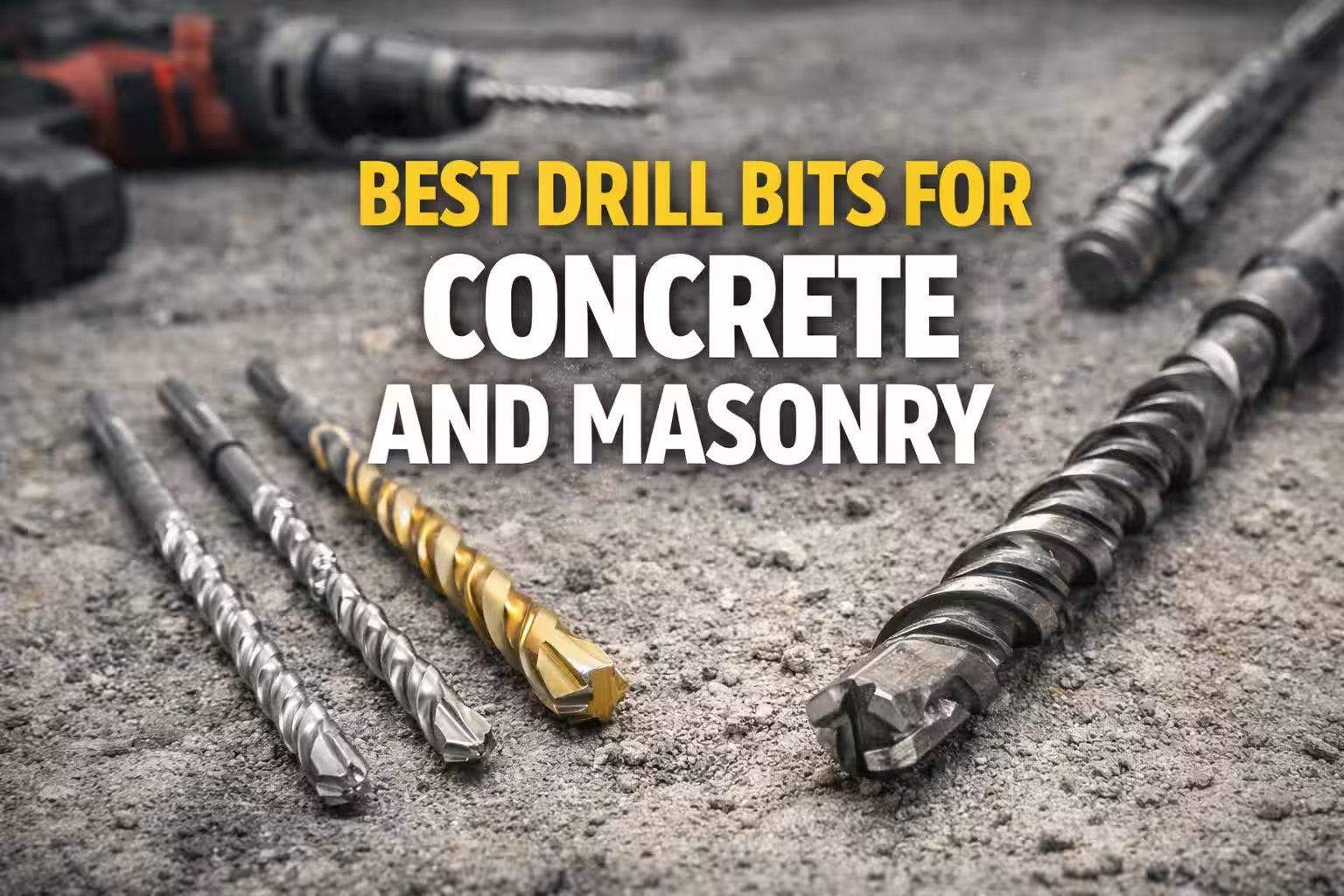
The best drill bits for concrete and masonry are essential if you want clean, accurate holes without damaging your tools. Even the most powerful hammer drill will struggle—or fail entirely—if the drill bit isn’t designed for hard materials like concrete, brick, or block.
Concrete, brick, block, and stone are extremely abrasive materials. Standard wood or metal bits will dull quickly, overheat, or snap. In this guide, you’ll learn which drill bits work best for concrete and masonry, how to choose the right size and type, and how to avoid common drilling mistakes.
If you’re still choosing a drill, start with Best Drill for Concrete Walls (2025 Guide) for a complete overview.
What Are Concrete and Masonry Drill Bits?
Concrete and masonry drill bits are specially designed to handle hard, abrasive surfaces. They feature a carbide tip that crushes and chips concrete instead of cutting it like wood or metal.
These bits are built to withstand:
- High vibration
- Impact force from hammer mode
- Heat generated by friction
Without the correct bit, drilling into concrete becomes slow, inaccurate, and unsafe.
Types of Drill Bits for Concrete and Masonry
1. Standard Masonry Drill Bits
These are the most common bits used for concrete and brick. They have a carbide tip brazed onto a steel shaft.
Best for:
- Concrete walls
- Brick and mortar
- Light to medium anchor holes
Works with:
- Hammer drills
- Regular drills (limited use)
For most homeowners, standard masonry bits paired with a hammer drill are more than sufficient. See Best Hammer Drill for Home Use (2025 Guide) for compatible tools.
2. SDS Drill Bits (SDS / SDS-Plus)
SDS bits are designed specifically for rotary hammers. Instead of being clamped, they lock into the drill and move back and forth for stronger hammering action.
Best for:
- Thick or reinforced concrete
- Large-diameter holes
- Heavy-duty drilling
Works with:
- Rotary hammers only
If you’re unsure whether you need this level of power, compare tools in Hammer Drill vs Rotary Hammer: What’s the Difference?
3. Multi-Material Drill Bits (Limited Use)
Some bits are marketed as “multi-material” and claim to drill through wood, metal, and masonry.
Verdict:
- Acceptable for soft brick or mortar
- Not recommended for concrete
They wear out quickly and lack the durability needed for repeated concrete drilling.
Choosing the Right Drill Bit Size
Selecting the correct size drill bit is critical—especially for anchors.
- Too small → anchor won’t fit
- Too large → anchor won’t hold securely
Always match the bit size to the anchor manufacturer’s recommendation. For a detailed breakdown, see What Size Drill Bit Should You Use for Concrete Anchors?
How Deep Can You Drill with Masonry Bits?
Depth depends on:
- Bit length
- Drill power
- Concrete hardness
Most masonry bits can handle anchor-depth holes easily. For deeper drilling considerations, read How Deep Can You Drill Into Concrete?
Common Mistakes When Using Concrete Drill Bits
Many drilling problems come from incorrect bit use rather than poor tools.
Avoid these mistakes:
- Using wood or metal bits on concrete
- Drilling at high speed instead of steady pressure
- Not clearing dust from the hole
- Applying excessive force instead of letting the bit work
- Skipping hammer mode when needed
More mistakes and fixes are covered in Common Mistakes When Drilling Into Concrete (And How to Avoid Them)
Safety Tips When Drilling with Masonry Bits
Concrete drilling creates dust, heat, and vibration. Follow these safety steps:
- Wear eye protection
- Use hearing protection for extended drilling
- Pause to let bits cool
- Keep the drill straight to avoid bit binding
For a full safety walkthrough, follow How to Drill Into Concrete Safely (Step-by-Step Guide).
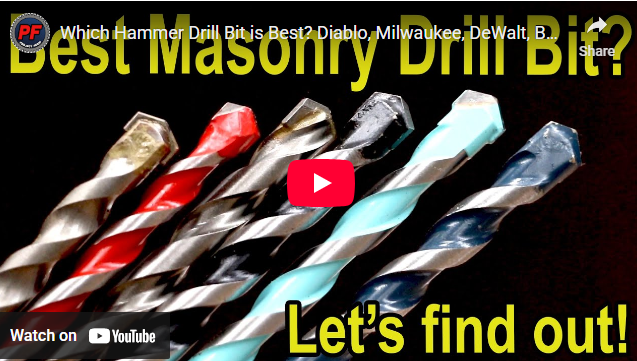
🎥 Which Hammer Drill Bit Is Best? (Real Brand Comparison)
Choosing the right hammer drill bit can make the difference between smooth, fast drilling and frustrating delays. In this head-to-head comparison, some of the most popular brands are put to the test — including Diablo, Milwaukee, DeWalt, Bosch, Irwin, Makita, and Ryobi.
Instead of relying on marketing claims, this video shows real-world drilling performance in concrete and masonry. You’ll see differences in:
- ⚡ Drilling speed
- 🧱 Concrete penetration efficiency
- 🔥 Heat resistance
- 🪨 Durability under repeated impact
- 💰 Value for money
If you’re trying to decide which brand gives the best performance for the price — especially for heavy-duty concrete work — this breakdown will help you make a smarter choice.
Watch the full comparison below:
Final Verdict: Best Drill Bits for Concrete and Masonry
For most homeowners and DIY users:
- Standard carbide-tipped masonry bits are the best choice
- Pair them with a hammer drill for best results
- Reserve SDS bits for heavy-duty or professional concrete work
Using the right drill bit protects your tools, saves time, and produces clean, accurate holes—every time.
Leave a Reply