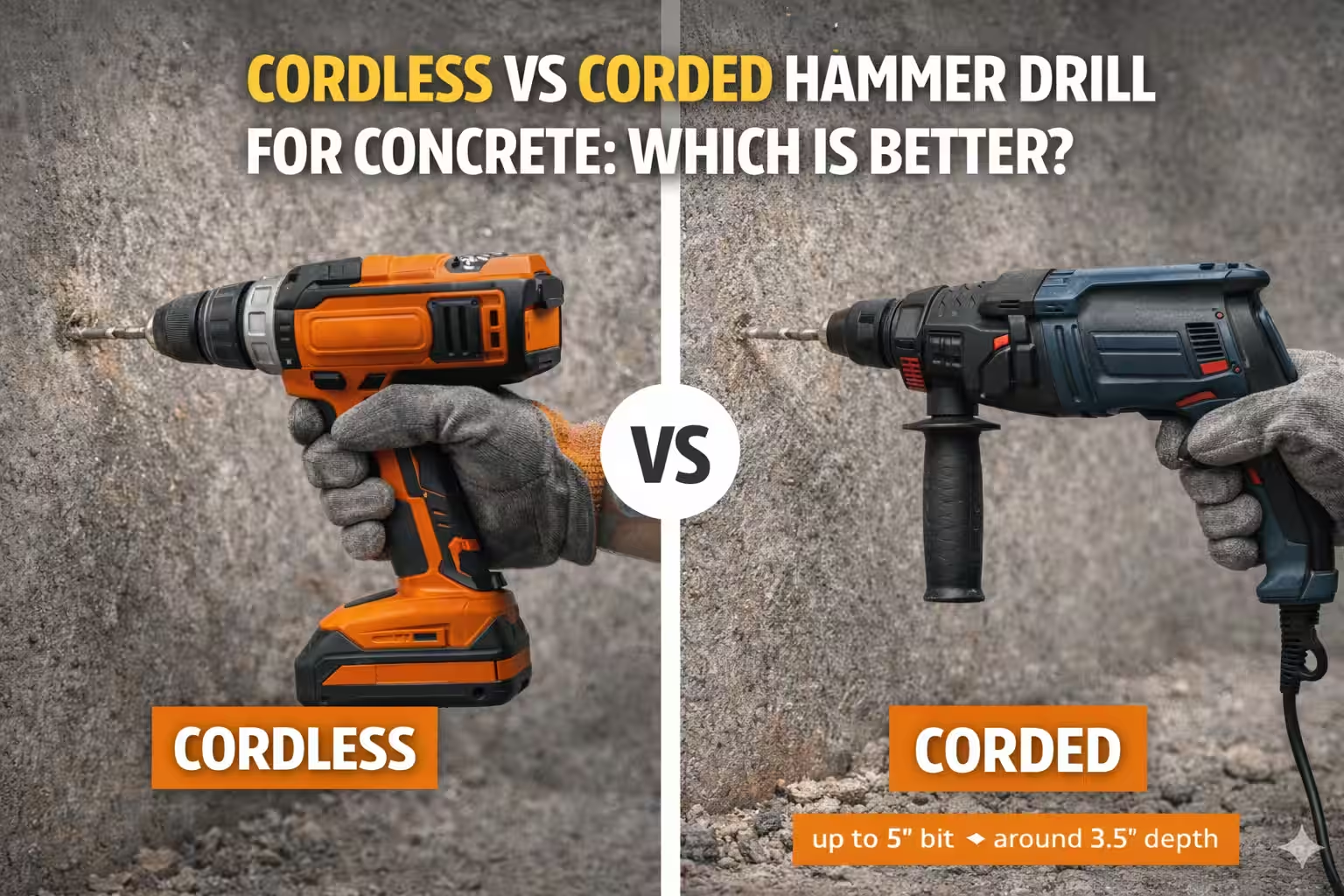
Cordless vs corded hammer drill for concrete is a common comparison for homeowners deciding which tool offers the best balance of power, convenience, and performance. Both types can drill into concrete, but they differ significantly in runtime, strength, and ideal use cases.
This guide compares cordless and corded hammer drills to help you choose the best option for drilling into concrete walls, masonry, and brick—without overspending or buying the wrong tool.
What Is a Cordless Hammer Drill?
A cordless hammer drill is powered by a rechargeable battery and combines rotary drilling with a hammering action. Modern cordless models have improved significantly and are capable of handling many concrete drilling tasks.
Advantages of cordless hammer drills:
- Portability and convenience
- No power cord restrictions
- Suitable for light to medium concrete drilling
- Ideal for quick jobs and tight spaces
Cordless hammer drills are popular with DIY users and homeowners who value flexibility and ease of use.
For recommended home-use options, see
Best Hammer Drill for Home Use (2025 Guide)
What Is a Corded Hammer Drill?
A corded hammer drill plugs directly into a power outlet and delivers consistent power without battery limitations.
Advantages of corded hammer drills:
- Continuous power output
- Better performance for extended drilling
- No downtime for recharging
- Often more affordable than high-end cordless models
Corded hammer drills are well-suited for longer projects or repeated concrete drilling.
Cordless vs Corded Hammer Drill: Key Differences
Power and Performance
- Cordless: Good for small to medium concrete holes
- Corded: More consistent power for harder concrete
Runtime
- Cordless: Limited by battery capacity
- Corded: Unlimited runtime
Portability
- Cordless: Excellent mobility
- Corded: Limited by cord length and power access
Weight and Handling
- Cordless: Heavier due to battery
- Corded: Lighter but less flexible
Maintenance
- Cordless: Battery care and replacement
- Corded: Minimal maintenance
Which Is Better for Drilling Into Concrete Walls?
For most homeowners:
- Cordless hammer drills are sufficient for occasional concrete drilling
- Corded hammer drills are better for longer or more demanding projects
If you’re drilling only a few anchor holes, cordless convenience is hard to beat. If you’re drilling repeatedly or working with very hard concrete, corded power provides better consistency.
For a full overview of drill types, start with
Best Drill for Concrete Walls (2025 Guide)
When You Should NOT Use Either Option
In some cases, neither cordless nor corded hammer drills are ideal.
If you need:
- Large-diameter holes
- Deep drilling into thick concrete
- Structural-level performance
A rotary hammer may be required instead.
Compare options in
Hammer Drill vs Rotary Hammer: What’s the Difference?
Drill Bits Matter More Than Power Source
Regardless of power type, using the correct drill bit is critical.
Concrete drilling requires:
- Masonry drill bits with carbide tips
- Proper bit size matched to anchors
Using the wrong bit reduces efficiency and increases wear.
Learn more here:
Best Drill Bits for Concrete and Masonry
What Size Drill Bit Should You Use for Concrete Anchors?
Safety Considerations for Both Drill Types
Both cordless and corded hammer drills require proper safety practices:
- Wear eye protection
- Use hearing protection for extended drilling
- Drill at controlled speeds
- Clear dust frequently
For proper technique, follow
How to Drill Into Concrete Safely (Step-by-Step Guide)
Common Mistakes When Choosing Between Cordless and Corded
Many users make avoidable mistakes when selecting a hammer drill:
- Choosing cordless for heavy, repeated drilling
- Assuming corded drills are always more powerful
- Ignoring battery capacity and recharge time
- Using the wrong drill bits
More mistakes and solutions are covered in
Common Mistakes When Drilling Into Concrete (And How to Avoid Them)
Frequently Asked Questions
Is a cordless hammer drill strong enough for concrete?
Yes, for light to medium drilling. For heavy-duty work, corded or rotary hammers are better.
Do corded hammer drills drill faster than cordless?
In many cases, yes—especially for continuous drilling into hard concrete.
Can a regular drill replace a hammer drill?
Only in very limited situations.
Can a Regular Drill Drill Into Concrete?
Conclusion: Cordless vs Corded Hammer Drill for Concrete
Choosing between a cordless vs corded hammer drill for concrete depends on how often and how intensely you drill.
- Choose cordless for flexibility and convenience
- Choose corded for consistent power and longer projects
Both options can handle concrete effectively when paired with the right drill bits and proper technique.
Leave a Reply