
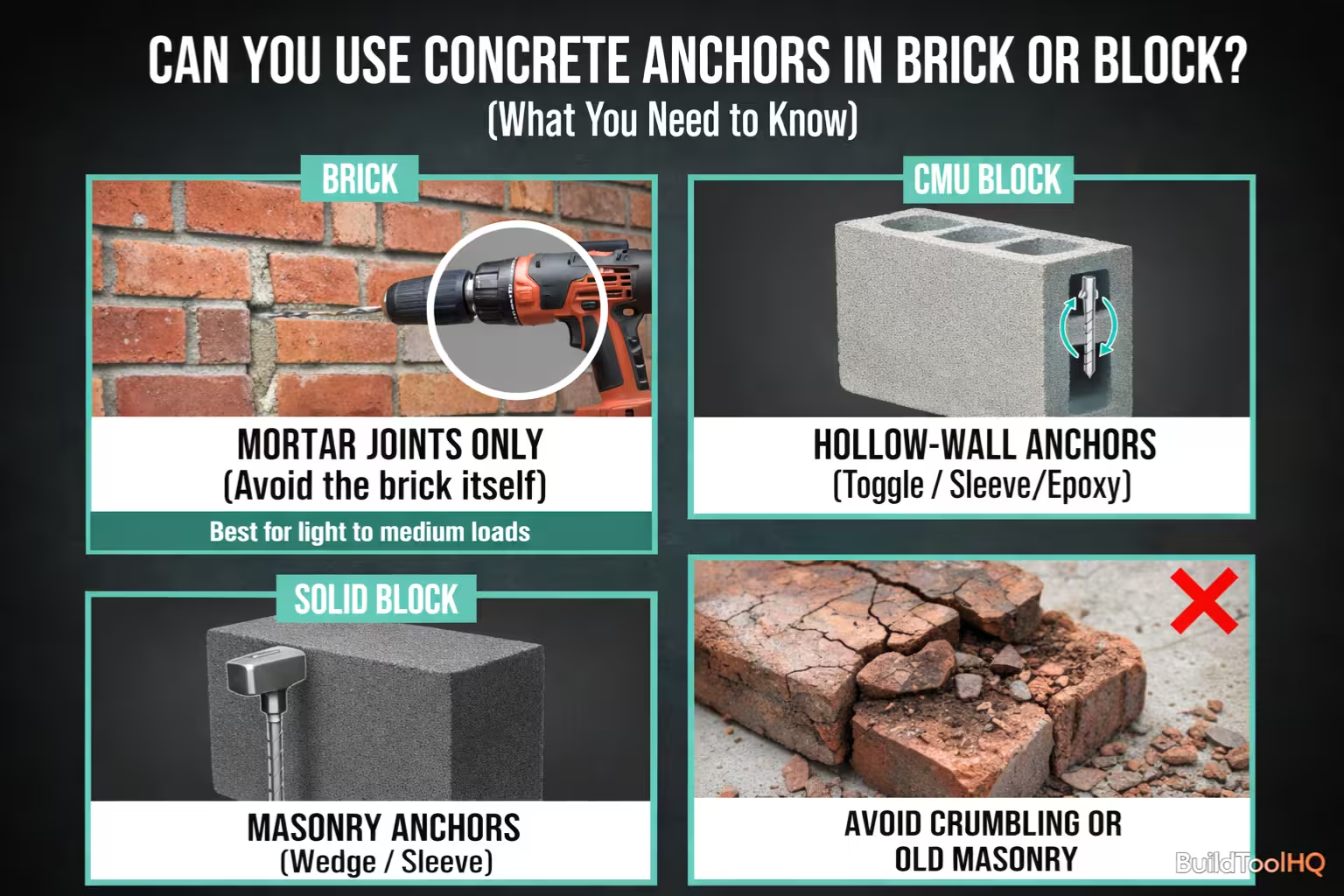
Can you use concrete anchors in brick or block the same way you would in solid concrete? Many homeowners assume the answer is yes, but that assumption often leads to cracked masonry, loose fixtures, or complete anchor failure.
While some concrete anchors can be used in masonry, brick and concrete block behave very differently than poured concrete and require more careful anchor selection.
This guide explains when concrete anchors are safe to use in brick or block, which anchor types work best, and what mistakes to avoid so your installation remains secure and damage-free.
Concrete vs Brick vs Concrete Block: Why Material Matters
Before choosing any anchor, it’s important to understand how these materials differ:
- Concrete: Dense, solid, and strong in compression
- Brick: Brittle, may be solid or hollow, prone to cracking
- Concrete block (CMU): Hollow cores with thinner outer walls
Anchors rated for solid concrete may not perform safely in brick or block, especially when load forces are involved. Understanding these differences is critical before selecting anchors outlined in (Types of Concrete Anchors Explained (Wedge, Sleeve, Drop-In, Tapcon)).
Can You Use Concrete Anchors in Brick?
⚠️ Sometimes — but only with caution
Brick cracks easily under expansion pressure. Expansion-style anchors can split brick faces or damage mortar joints if the wrong anchor is used.
Anchors that MAY work in brick:
- Sleeve anchors (light to medium loads)
- Masonry screws (Tapcon-style)
- Plastic anchors (very light-duty only)
Anchors to AVOID in brick:
- Large wedge anchors
- Heavy expansion anchors
Improper anchor selection in brick is one of the most common failure causes discussed in (Common Mistakes When Installing Concrete Anchors (And How to Avoid Them)).
Can You Use Concrete Anchors in Concrete Block?
⚠️ Only specific anchors work safely
Concrete block is hollow, meaning traditional expansion anchors may expand into empty space instead of gripping solid material.
Best anchor options for concrete block:
- Sleeve anchors with shallow embedment
- Masonry screws
- Toggle or specialty hollow-wall anchors
- Chemical anchors (for higher loads)
Before selecting anchors, compare options using (Concrete Anchor Selection Chart (Homeowner’s Quick Reference Guide)) to ensure compatibility with hollow masonry.
Should You Drill Into Brick or Mortar?
This decision directly affects strength and repairability.
Drilling into brick:
- Stronger hold (if brick is solid)
- Higher risk of cracking
Drilling into mortar:
- Easier to repair
- Lower holding strength
For light-duty applications, mortar may be acceptable. For heavier loads, always verify anchor capacity using (How Much Weight Can Concrete Anchors Hold?) before drilling.
Best Anchor Types for Masonry Applications
| Base Material | Recommended Anchors |
|---|---|
| Solid concrete | Wedge, sleeve, drop-in |
| Brick | Sleeve anchors, masonry screws |
| Concrete block | Sleeve anchors, toggles, chemical anchors |
Correct installation is just as important as anchor choice. Always follow procedures outlined in (How to Install Concrete Anchors Correctly – Step-by-Step Guide).
Installation Tips for Brick and Block
Masonry requires a gentler approach than solid concrete.
- Use smaller-diameter anchors
- Drill slowly to prevent cracking
- Avoid expansion-heavy anchors
- Clean holes thoroughly
- Never overtighten
Overtightening is especially dangerous in brick and block and is covered in detail in (Common Mistakes When Installing Concrete Anchors (And How to Avoid Them)).
Tool Selection Matters More Than You Think
Using the wrong drill or bit increases the risk of cracking brick or damaging block. Hammer drills should be used carefully, and bit size must match the anchor exactly.
If you’re unsure whether your drill is suitable, review (Best Drill for Concrete Walls (2025 Guide)) before starting.
When NOT to Use Concrete Anchors in Masonry
Do not use standard concrete anchors if:
- Brick is cracked, spalling, or weathered
- Block cores are thin or damaged
- Load is structural or overhead
- Manufacturer does not list masonry compatibility
In these situations, professional guidance or specialty anchoring systems are strongly recommended.
Can You Use Concrete Anchors in Brick or Block for Heavy Loads?
For heavy loads such as wall-mounted TVs, cabinets, or overhead fixtures, using concrete anchors in brick or block requires extra caution. Masonry does not distribute expansion forces the same way solid concrete does, which is why anchor type, placement, and spacing are critical.
Always confirm load ratings and spacing rules using (Best Concrete Anchors for Home Use – 2026 Guide) before attempting heavier installations.
Final Thoughts
While some concrete anchors can be used in brick or block, anchors are not interchangeable across materials. Choosing the wrong anchor can result in cracking, failure, or unsafe installations.
Always match the anchor type to:
- The base material
- The load being supported
- The installation method
For anchor comparisons, installation steps, spacing rules, and load guidance, refer back to (How Much Weight Can Concrete Anchors Hold? (Load Ratings Explained)) before starting your project.
Related Concrete Anchor Guides
- (Best Drill for Home Use (2026 Guide))
- (Tapcon Screws vs Concrete Anchors: Which Should You Use?)
- (Best Concrete Anchor Kits for Homeowners (2026 Review))
- (Concrete Anchor Spacing & Edge Distance: How Far Apart Should Anchors Be?)
Leave a Reply