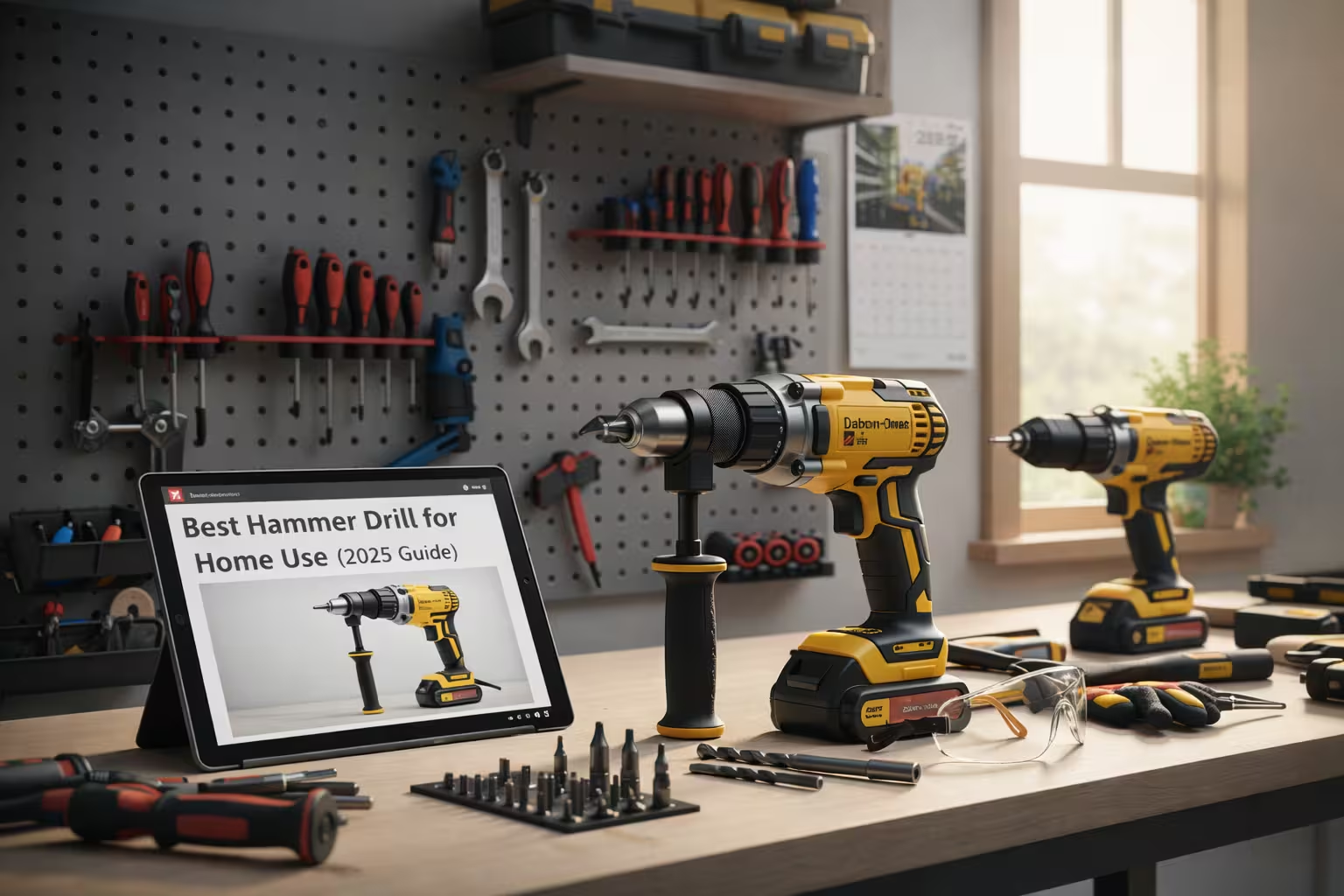
Choosing the best hammer drill for home use depends on power, comfort, and how often you need to drill into concrete, brick, or masonry.
How to Choose the Best Hammer Drill for Home Use
Hammer drills are among the most useful power tools for homeowners who need to drill into tough materials like concrete, brick, or masonry. Although they’re often associated with professional construction work, modern hammer drills are widely used for DIY projects, home renovations, and general maintenance.
This guide is designed for homeowners and DIY users looking for a practical hammer drill for everyday tasks such as mounting shelves, installing anchors, hanging TVs, or drilling into concrete walls—without investing in an oversized or overly complex tool.
What Is a Hammer Drill?
A hammer drill is a power drill that combines rotational drilling with a hammering action. As the bit spins, the drill rapidly pulses forward, helping break up hard materials like concrete and brick.
This hammering motion makes drilling into masonry faster, easier, and more controlled compared to using a regular drill.
If you’re unsure whether a hammer drill is truly necessary for your needs, this is explained in more detail here:
Can a Regular Drill Drill Into Concrete?
Why a Hammer Drill Is Ideal for Home Use
For most homeowners, a hammer drill offers the best balance between power, versatility, and ease of use.
Key benefits for DIY users:
- Handles concrete, brick, and masonry with less effort
- Works as a regular drill when hammer mode is turned off
- Lighter and easier to control than a rotary hammer
- Suitable for occasional to frequent home projects
A hammer drill is often the best upgrade for homeowners who have outgrown a standard drill but don’t need professional demolition-level power.
For a deeper comparison between drill types, see:
Hammer Drill vs Rotary Hammer: What’s the Difference?
Hammer Drill vs Rotary Hammer for Homeowners
Many DIY users wonder whether they should choose a hammer drill or a rotary hammer. The difference matters.
Hammer Drill
- Best for: Concrete walls, brick, masonry anchors
- Typical use: Home renovations and DIY projects
- Size and weight: Compact and manageable
- Learning curve: Easy for beginners
Rotary Hammer
- Best for: Thick concrete, structural drilling
- Typical use: Heavy-duty or professional work
- Size and weight: Larger and heavier
- Learning curve: More advanced
For most homeowners, a hammer drill is the more practical and user-friendly option.
Features to Look for in a Hammer Drill for Home Use
Not all hammer drills are the same. These features matter most for residential projects.
Variable Speed Control
Allows better control when starting holes and drilling into brittle materials.
Dedicated Hammer Mode
Make sure the drill has a true hammer setting that can be turned on or off.
Comfortable Grip and Side Handle
Concrete drilling creates vibration. A stable grip improves accuracy and reduces fatigue.
Chuck Type
Standard keyed or keyless chucks are fine for home use. SDS systems are usually found on rotary hammers.
Power Balance
More power is helpful, but excessive power can make the drill harder to control for smaller tasks.
Drill Bits Matter Just as Much as the Drill
Even the best hammer drill will struggle if the wrong drill bit is used.
Masonry drill bits are specifically designed to withstand impact and grind through concrete rather than cut it.
For a detailed explanation of which bits work best, see:
Best Drill Bits for Concrete and Masonry
Safety Tips for Using a Hammer Drill at Home
Concrete drilling involves dust, vibration, and resistance. Basic safety steps go a long way.
- Wear eye protection to prevent debris injury
- Use hearing protection for extended drilling
- Keep the drill straight and steady
- Let the drill do the work—avoid forcing it
- Take breaks to prevent overheating
Always check for electrical wiring or plumbing before drilling into walls.
Common Mistakes Homeowners Make
Avoiding these mistakes will improve results and protect your tools.
- Using standard drill bits instead of masonry bits
- Applying excessive pressure
- Drilling at full speed immediately
- Ignoring hammer mode settings
- Choosing an oversized tool for small jobs
Good technique matters as much as the drill itself.
Frequently Asked Questions
Is a hammer drill overkill for home use?
No. A hammer drill is one of the most versatile tools a homeowner can own and is suitable for many everyday projects.
Can a hammer drill replace a regular drill?
Yes. Most hammer drills function as standard drills when hammer mode is turned off.
Do I need a hammer drill for brick walls?
Yes. Brick and mortar respond well to hammer drilling and reduce strain on the tool.
Is corded or cordless better for homeowners?
Both work well. Cordless offers convenience, while corded provides continuous power.
Can a hammer drill drill into concrete slabs?
Yes, for light to moderate drilling. For repeated deep holes, a rotary hammer is better.
Conclusion
For homeowners and DIY users, a hammer drill is the best all-around tool for drilling into concrete, brick, and masonry. It offers enough power for demanding tasks while remaining easy to control and versatile for everyday use.
When paired with the correct masonry bits and proper technique, a hammer drill makes concrete drilling faster, cleaner, and far less frustrating—making it an essential upgrade for serious DIY work.
Leave a Reply