
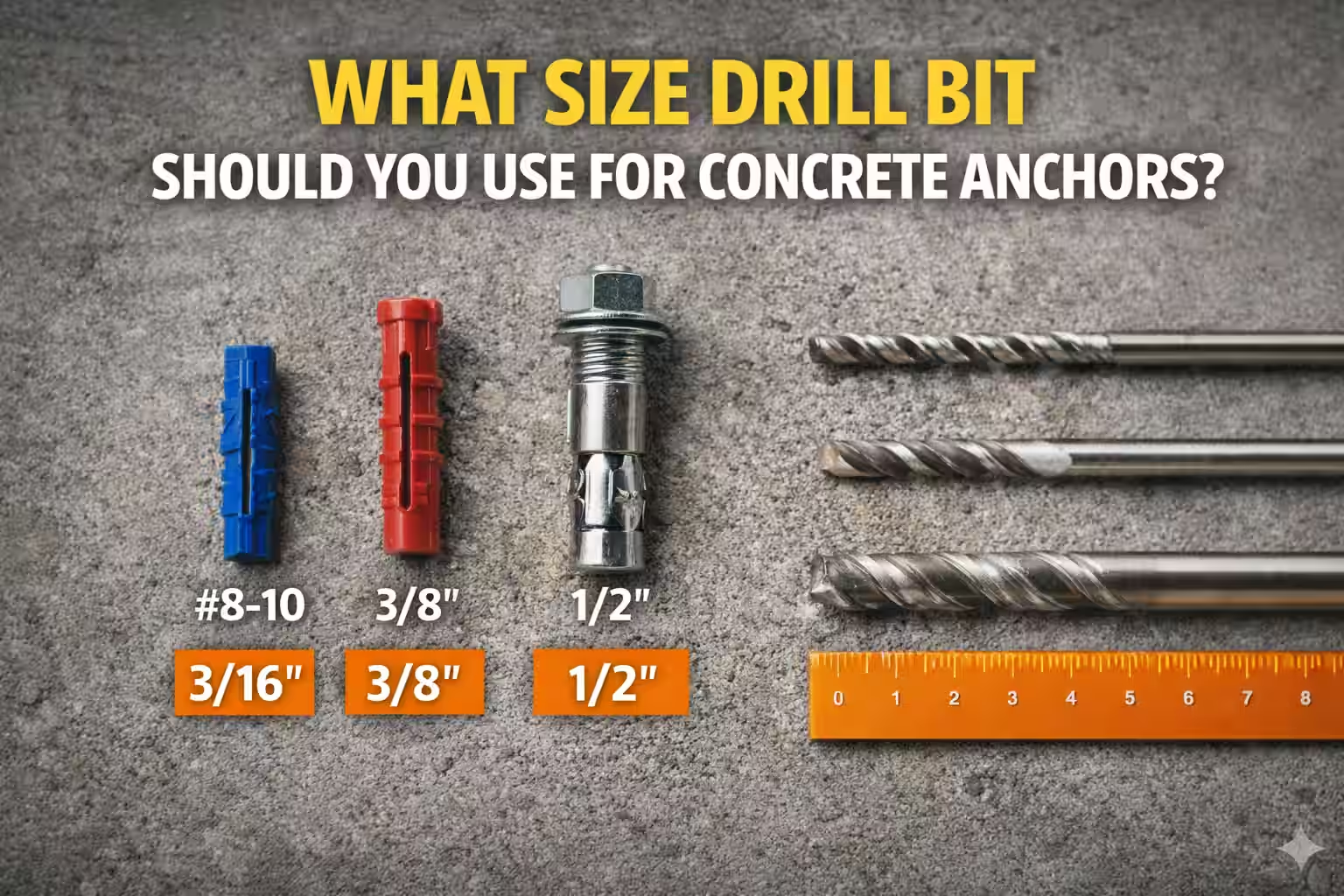
What size drill bit should you use for concrete anchors is one of the most common questions homeowners ask when mounting shelves, brackets, TVs, or fixtures to concrete walls. Choosing the wrong bit size can lead to loose anchors, weak holding power, or damaged concrete.
This guide explains how to choose the correct drill bit size for concrete anchors, how depth affects strength, and which mistakes to avoid for safe, reliable installations.
Why Drill Bit Size Matters for Concrete Anchors
Concrete anchors rely on friction, expansion, or bonding to hold securely inside the hole. If the hole size is incorrect, the anchor cannot perform as designed.
- Hole too small → anchor won’t fit or may crack concrete
- Hole too large → anchor won’t grip and may pull out
- Incorrect depth → reduced holding strength
Using the correct drill bit size ensures the anchor seats properly and supports the intended load.
General Rule: Match the Drill Bit to the Anchor Size
In most cases, the drill bit size should match the diameter of the anchor, not the screw.
For example:
- 1/4-inch anchor → 1/4-inch drill bit
- 3/8-inch anchor → 3/8-inch drill bit
Always follow the anchor manufacturer’s instructions when available.
For an overview of tools suitable for anchor installation, see
Best Drill for Concrete Walls (2025 Guide)
Common Types of Concrete Anchors and Bit Size Requirements
Plastic Expansion Anchors
- Drill bit size = anchor diameter
- Suitable for light-duty applications
Sleeve Anchors
- Drill bit size = anchor diameter
- Used for medium to heavy loads
Wedge Anchors
- Drill bit size = anchor diameter
- Designed for heavy-duty concrete fastening
Drop-In Anchors
- Drill bit size = anchor diameter
- Requires precise depth and clean holes
No matter the anchor type, accuracy matters.
How Deep Should You Drill for Concrete Anchors?
Drilling depth is just as important as diameter.
As a general rule:
- Drill the hole slightly deeper than the anchor length
- Extra depth allows room for dust and debris
Drilling too shallow prevents proper seating, while drilling excessively deep weakens the surrounding concrete.
For a detailed explanation, see
How Deep Can You Drill Into Concrete?
Using the Correct Drill and Bit for Anchor Holes
Concrete anchor holes should be drilled using:
- A hammer drill for most wall applications
- A rotary hammer for thick or reinforced concrete
Use masonry drill bits with carbide tips to handle concrete abrasion.
For bit selection guidance, read
Best Drill Bits for Concrete and Masonry
Common Mistakes When Drilling Anchor Holes
Many anchor failures happen because of simple mistakes:
- Using the wrong drill bit size
- Not drilling deep enough
- Failing to clear dust from the hole
- Using a regular drill instead of a hammer drill
- Applying excessive pressure
Avoid these issues by following proper drilling technique.
Common Mistakes When Drilling Into Concrete (And How to Avoid Them)
Safety Tips When Drilling Anchor Holes
Concrete drilling produces dust and vibration.
Always:
- Wear eye protection
- Use hearing protection for extended drilling
- Drill straight and steady
- Clear dust before inserting anchors
For a full safety walkthrough, follow
How to Drill Into Concrete Safely (Step-by-Step Guide)
Frequently Asked Questions
Should the drill bit be the same size as the anchor?
Yes. In most cases, the drill bit should match the anchor diameter exactly.
Can I use a regular drill for anchor holes?
Only for very soft masonry. For concrete walls, a hammer drill is recommended.
Can a Regular Drill Drill Into Concrete?
What happens if the hole is too big?
The anchor may spin, loosen, or fail to hold weight securely.
Conclusion: Choosing the Right Drill Bit Size for Concrete Anchors
Choosing the correct drill bit size for concrete anchors is essential for safe, secure installations. Matching the bit size to the anchor, drilling to the proper depth, and using the right tools ensures strong holding power and long-lasting results.
When in doubt, measure carefully and drill precisely—concrete offers no second chances.
Leave a Reply