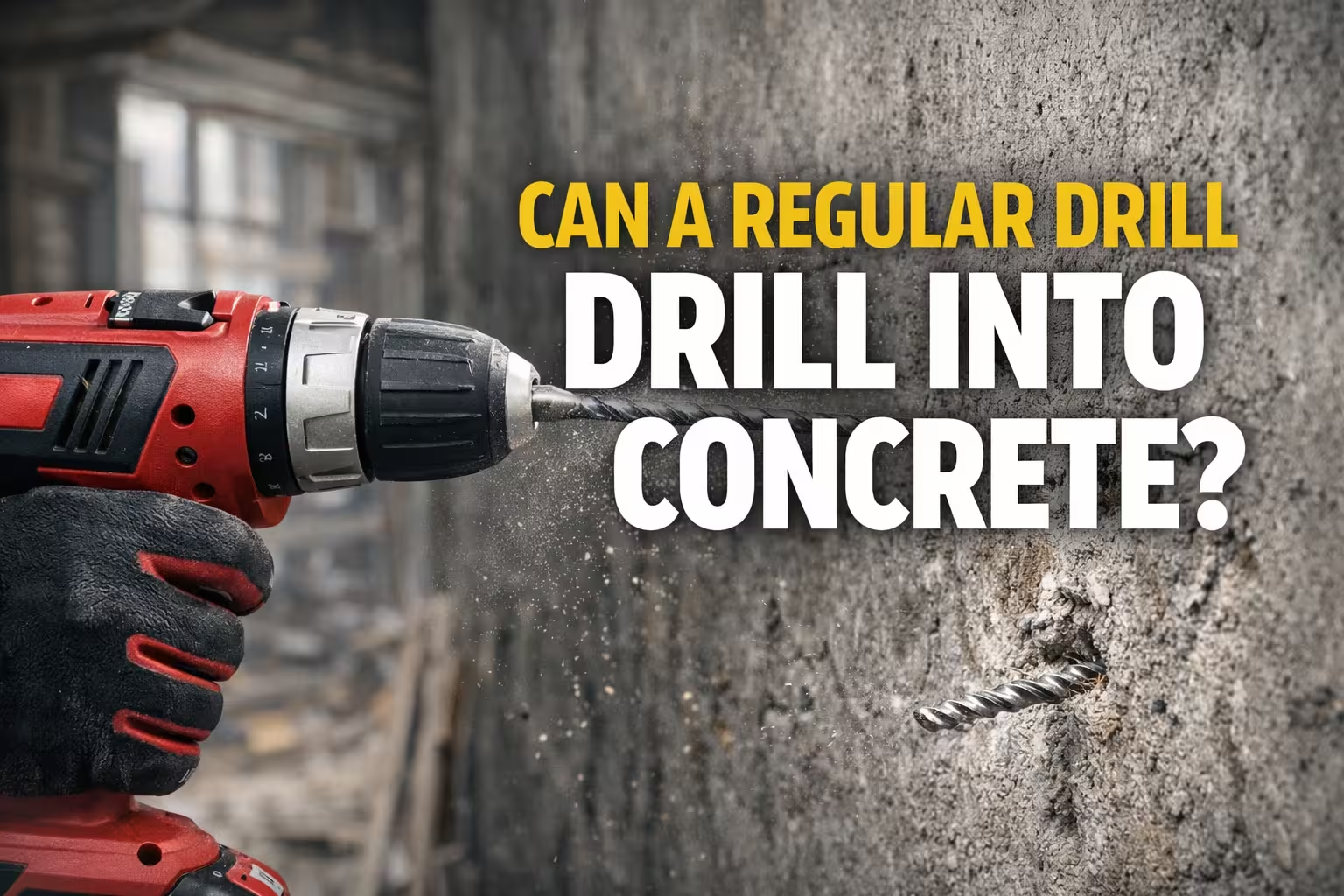
Many homeowners wonder: can a regular drill drill into concrete, especially for small projects like hanging shelves, installing anchors, or mounting light fixtures.
The short answer is yes—but only in limited situations, and it’s usually not the best tool for the job.
In this guide, we’ll explain when a regular drill can work on concrete, why it often struggles, and when you should use a hammer drill instead to avoid frustration or damage.
Can a Regular Drill Drill Into Concrete?
A regular drill can drill into concrete, but only under specific conditions:
- The concrete is relatively soft or old
- The hole is small and shallow
- You use the correct masonry drill bit
- You drill slowly and apply steady pressure
Even then, drilling into concrete with a standard drill is slow, inefficient, and hard on the tool.
For most homeowners, a hammer drill is the safer and more practical choice.
Best Drill for Concrete Walls (2025 Guide)
Why Regular Drills Struggle With Concrete
Concrete is much harder than wood or drywall. It requires more than just rotational force to penetrate effectively.
A regular drill:
- Spins the bit only
- Relies entirely on pressure from the user
- Cannot break up dense material efficiently
As a result, the bit overheats, progress slows dramatically, and the drill motor experiences unnecessary strain.
This is why many DIY users think concrete is “impossible” to drill — when the real issue is using the wrong tool.
When a Regular Drill Might Work on Concrete
There are a few situations where a regular drill can get the job done:
Soft Masonry or Mortar
Mortar joints and softer masonry are easier to drill than solid concrete.
Small Anchor Holes
Very small holes (such as for light-duty plastic anchors) may be possible.
Occasional One-Time Jobs
If you only need one or two shallow holes and don’t own a hammer drill, a regular drill may suffice.
That said, even in these cases, drilling will be slow and physically demanding.
Regular Drill vs Hammer Drill for Concrete
The biggest difference between these tools is how they handle resistance.
Regular Drill
- Rotation only
- Requires high pressure from the user
- Poor efficiency in concrete
Hammer Drill
- Rotation + hammering action
- Breaks up concrete as it drills
- Faster, cleaner, and safer results
For a detailed comparison, see:
Hammer Drill vs Rotary Hammer: What’s the Difference?
What Happens If You Use a Regular Drill on Hard Concrete
Using a regular drill on dense concrete often leads to problems:
- Burned or dull drill bits
- Overheating the drill motor
- Excessive vibration and fatigue
- Crooked or incomplete holes
- Cracked masonry from uneven pressure
Many of these issues can be avoided simply by choosing the right drill.
Common Mistakes When Drilling Into Concrete (And How to Avoid Them)
Do You Need Special Drill Bits for Concrete?
Yes. Whether you use a regular drill or a hammer drill, masonry drill bits are essential.
Concrete drilling requires bits with:
- Hardened carbide tips
- Proper flute design for dust removal
Using wood or metal bits will quickly dull them and may damage the drill.
Best Drill Bits for Concrete and Masonry
Safety Tips When Drilling Concrete With Any Drill
Concrete drilling creates dust, vibration, and resistance. Always follow basic safety precautions:
- Wear eye protection
- Use hearing protection for extended drilling
- Start slowly to prevent bit wandering
- Keep the drill straight and steady
- Take breaks to prevent overheating
For a complete walkthrough, see:
How to Drill Into Concrete Safely (Step-by-Step Guide)
Frequently Asked Questions
Is a regular drill strong enough for concrete anchors?
Only for very small anchors in soft masonry. For most anchors, a hammer drill is recommended.
Can a cordless drill drill into concrete?
Yes, but only if it has a hammer function. Cordless hammer drills work well for light to medium concrete tasks.
Cordless vs Corded Hammer Drill for Concrete: Which Is Better?
How deep can a regular drill go into concrete?
Depth is limited and depends on bit quality and concrete hardness. Most regular drills struggle beyond shallow holes.
How Deep Can You Drill Into Concrete?
Conclusion: Should You Use a Regular Drill on Concrete?
A regular drill can drill into concrete in limited situations, but it is not the ideal tool. For most homeowners and DIY users, a hammer drill provides faster results, less effort, and better safety.
If you plan to drill into concrete more than once, investing in the right drill will save time, protect your tools, and deliver cleaner results.
Leave a Reply