Best Drill Press for Home Use (2026 Guide)
The True Value of a Drill Press in the Home Shop
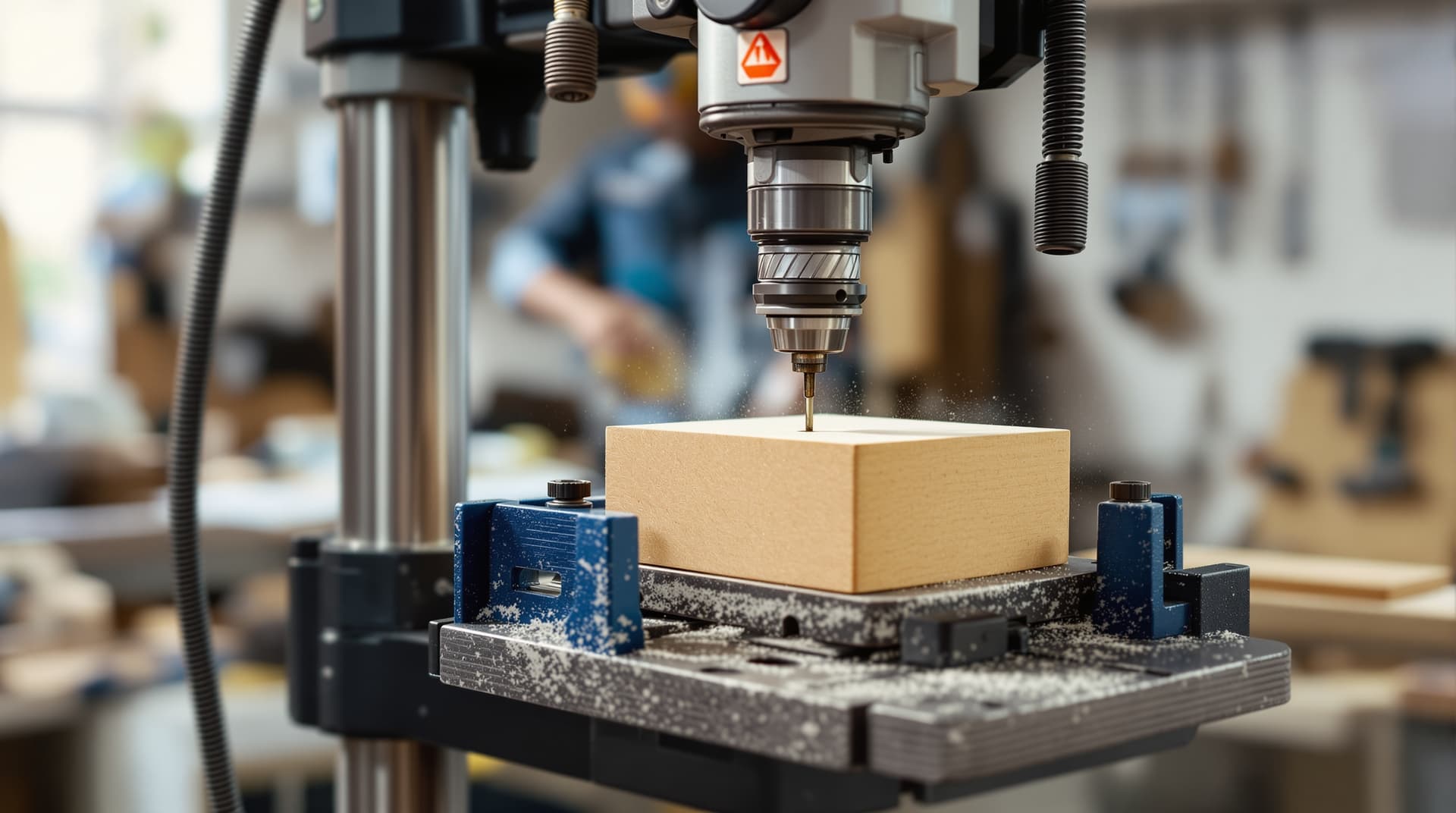
Precision is not optional when you are building cabinetry, fabricating metal brackets, or executing complex joinery. While a standard cordless drill is fine for driving screws and framing, it relies entirely on the operator to maintain a 90-degree angle. A drill press eliminates human error. It delivers perfectly plumb holes, accurate depth control, and the mechanical leverage required to drive large Forstner bits or hole saws through dense materials without bogging down.
Whether you are a serious DIYer or a contractor moving fabrication tasks to a home base, investing in a drill press transforms your capabilities. It provides the torque and stability to work with steel, aluminum, and dense hardwoods safely. By 2026, manufacturers have blurred the lines between industrial floor models and compact benchtop units, offering advanced features like digital variable reluctance (DVR) motors and laser crosshairs at consumer price points.
Overview: Benchtop vs. Floor Standing Models
Drill presses are categorized by their "swing" and their physical footprint. The swing is twice the distance from the center of the chuck to the front of the support column. For example, a 12-inch drill press can drill a hole in the dead center of a 12-inch wide workpiece.
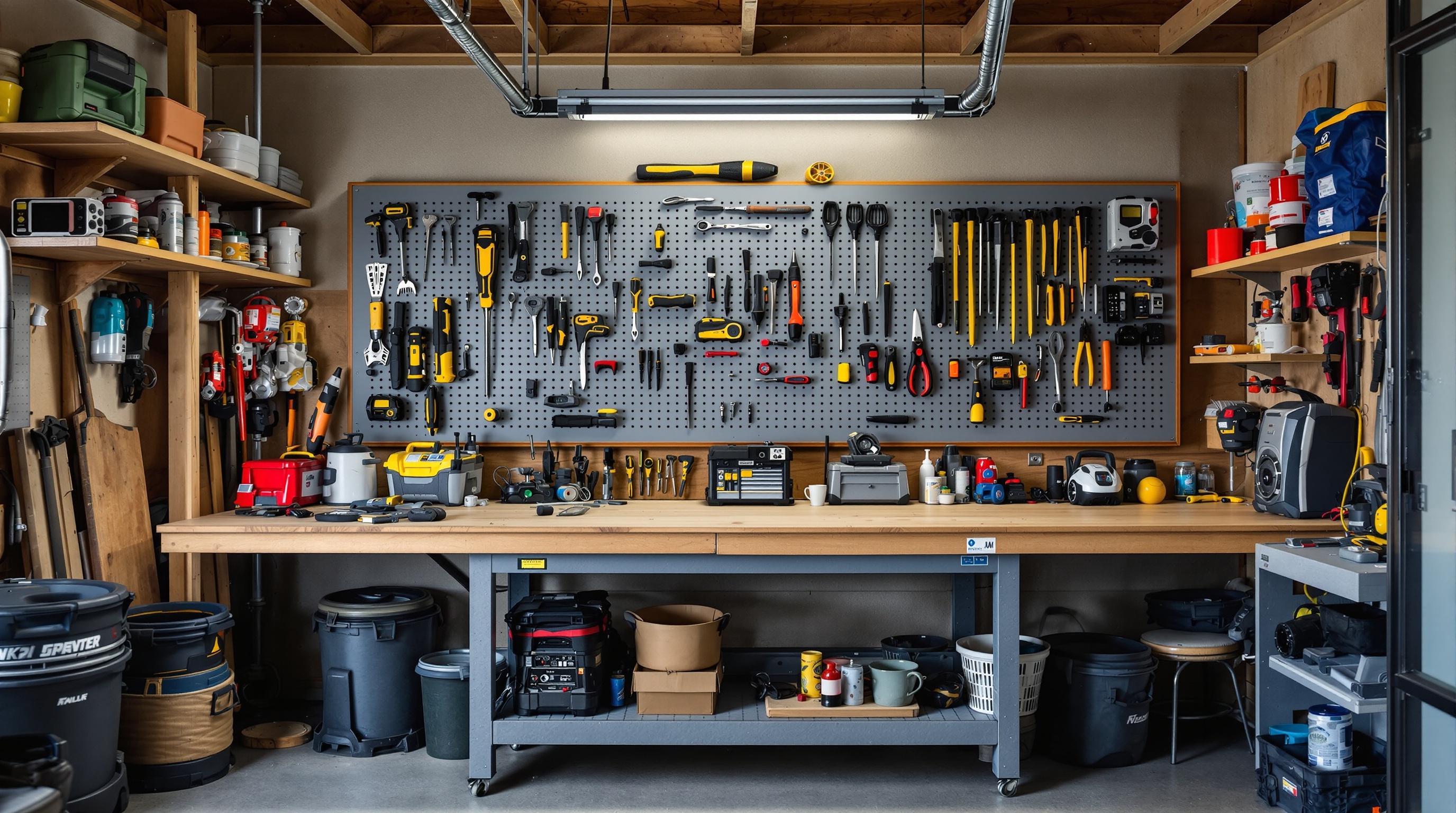
Benchtop Drill Presses: Typically ranging from 8 to 12 inches in swing, these are designed to be bolted to a heavy workbench. They generally feature 1/3 to 1/2 horsepower (HP) motors and are ideal for woodworking, plastics, and light metalwork. They save valuable floor space, making them highly desirable if you are focused on outfitting your garage space affordably and efficiently.
Floor Standing Drill Presses: Ranging from 14 to 20 inches in swing, these machines stand independently on the floor. They boast heavier cast iron construction, massive tables, and motors exceeding 1 HP. Floor models offer significantly more spindle travel (quill stroke) and greater distance between the chuck and the base, accommodating much larger, awkwardly shaped workpieces.
When and Why to Use a Drill Press
You need a drill press when accuracy, repeatability, and power are non-negotiable. Here are the most common applications where this machine outperforms handheld tools:
- Boring Large Diameter Holes: Running a 2-inch Forstner bit in a hand drill is dangerous and sloppy. A drill press handles the torque and keeps the bit perfectly flat, producing a clean, tear-out-free hole.
- Drilling Thick Metal Stock: Drilling through 1/4-inch or thicker steel requires consistent, heavy downward pressure and slow RPMs. A drill press provides the mechanical advantage via the feed handle to cut metal efficiently.
- Exact Depth Control: Using the built-in depth stop allows you to drill repetitive blind holes (holes that do not go all the way through the material) to the exact same depth every single time, which is essential for dowel joinery and counterboring.
- Tapping and Threading: By chucking a tap into an unplugged drill press and turning the chuck by hand, you can start perfectly plumb threads in metal parts.
Top Drill Press Options for 2026
If you are equipping a home shop, you need to balance capacity, power, and price. Here are three distinct categories and the models that dominate them.
Best Value Benchtop: WEN 4214T 12-Inch Variable Speed
For the majority of hobbyists and serious DIYers, the 12-inch WEN 4214T hits the sweet spot. It features a mechanical variable speed drive, meaning you can adjust the speed seamlessly from 580 to 3200 RPM with a simple lever while the machine is running—no manual belt changes required. With a 3-1/8 inch spindle travel and a 2/3 HP motor, it easily handles thick 8/4 hardwoods and aluminum brackets. The digital RPM readout ensures you are spinning at the correct speed for your material.
Best Mid-Range Hybrid: Jet JWDP-12
Jet is a staple in professional woodshops, and their 12-inch benchtop model brings that tight manufacturing tolerance to the home user. It excels in low runout (wobble in the chuck), making it incredibly accurate for fine detail work. It utilizes a robust 1/2 HP induction motor and a heavy cast-iron base and table. The table features a unique X-pattern for flexible clamping and extends to support longer workpieces.
Best High-End / Pro-Sumer: Nova Viking 16-Inch DVR
If budget allows and you want the pinnacle of current technology, the Nova Viking benchtop or floor model is unmatched. It replaces traditional belts and pulleys with a Direct Drive 1 HP DVR (Digital Variable Reluctance) motor. It offers infinite speed adjustments from an ultra-low 150 RPM (perfect for heavy steel) up to 3000 RPM (ideal for small bits in wood). With an massive 4.5-inch quill stroke and built-in sensors that adjust torque dynamically to prevent stalling, this is a true lifetime tool.
Buying Advice: Key Specifications to Watch
Do not buy a drill press based on the brand name alone. Look at the specific mechanical numbers to ensure it meets your fabrication needs.
- Spindle Travel (Quill Stroke): This is arguably the most important spec. It determines how deep you can drill in a single plunge without having to raise the table. Cheap models offer a frustrating 2 inches of travel. Look for an absolute minimum of 2.5 inches, with 3 to 4 inches being ideal.
- Speed Range and Adjustment: Wood needs high speed to prevent tear-out; metal needs low speed to prevent burning up bits. Traditional step-pulley systems require you to open the top housing and manually move belts. Mechanical variable speed is faster, but electronic variable speed (DVR) provides the widest RPM range and instant adjustments.
- Runout (T.I.R.): Total Indicated Runout measures how much the drill bit wobbles off its true axis. High runout results in oversized, oval-shaped holes. Premium models guarantee less than 0.005 inches of runout.
- Table Adjustability: Ensure the table raises and lowers via a rack-and-pinion gear. Manually lifting a heavy cast iron table on a smooth column is tedious and dangerous. The table should also tilt 45 degrees left and right for angled drilling.
Expert Pro Tips for Better Drilling
Owning a quality machine is only half the battle; technique dictates the final result. Always center-punch your marks. A sharp tap with a center punch creates a tiny divot that prevents the drill bit from wandering (walking) when making initial contact with metal or hard plastics.
Match your speed to your material. A common mistake is leaving the drill press set to 1500 RPM for everything. When drilling steel, drop your speed below 500 RPM and use cutting fluid. This is critical for keeping cutting tools from overheating or snapping. For softwoods, increase the speed to 2500 RPM for a cleaner, faster cut.
Workholding is critical. Never rely solely on hand pressure to hold a workpiece. When a bit breaks through the bottom of a material, it can catch and instantly turn your workpiece into a spinning blade. Always use heavy-duty clamps or a dedicated drill press vise bolted to the table. This philosophy of rigid workholding applies across your whole shop, much like mounting a robust workbench vise for heavy manual filing or grinding.
Common Mistakes to Avoid
The most dangerous mistake operators make is "helicoptering." This occurs when drilling sheet metal without clamping it down. The bit grabs the thin metal, rips it from the user's hands, and spins it at hundreds of revolutions per minute. Always clamp sheet metal to a scrap wood backer board.
Another frequent error is failing to clear chips. When drilling deep holes, especially in metal or wet wood, do not plunge the bit entirely in one motion. Practice "peck drilling"—plunging the bit a quarter inch, raising it to clear the debris, and plunging again. Failing to do this traps heat and chips, which binds the bit and destroys its temper.
Finally, using the wrong accessory will ruin your work regardless of the machine's quality. A top-tier drill press cannot compensate for dull, improperly angled tools. Success heavily relies on selecting the proper cutting geometry and material for the specific task at hand.
Conclusion
A drill press is a foundational tool for any serious home shop. It provides the stability, torque, and accuracy that handheld tools simply cannot replicate. When selecting your machine, prioritize spindle travel, low runout, and a speed range that matches your primary materials. Whether you choose a capable 12-inch benchtop model for weekend woodworking or invest in a high-capacity DVR floor press for metal fabrication, bolting a quality drill press to your shop floor will immediately elevate the precision and safety of your work.