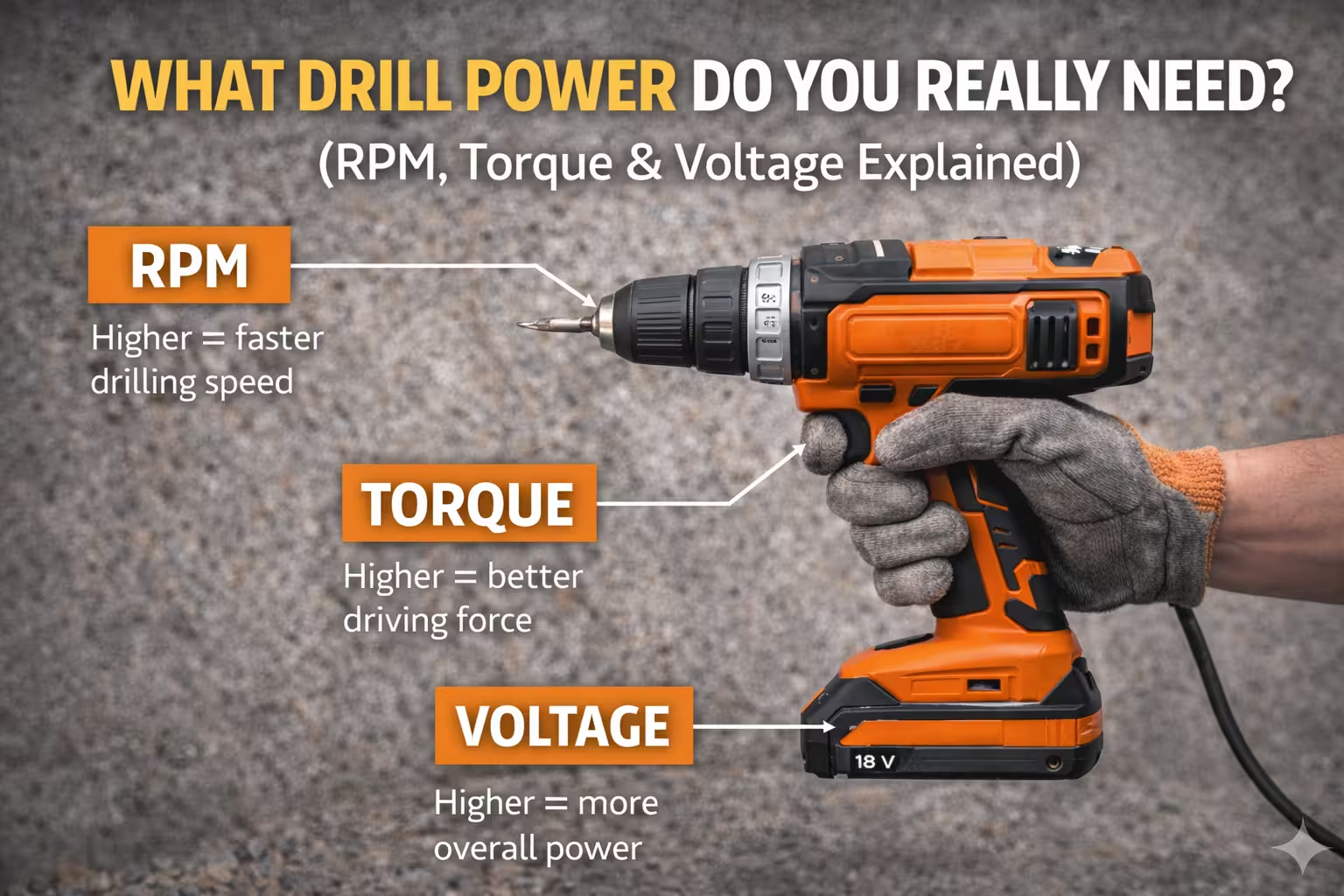
Understanding drill power (RPM, torque, and voltage) is one of the most confusing parts of choosing a drill for home use. Tool specifications often list these numbers without explaining what they actually mean or how they affect real-world performance.
This guide breaks down drill power in simple terms so homeowners can confidently choose a drill that’s strong enough for their projects—without buying an oversized, expensive, or uncomfortable tool.
What Does Drill Power Really Mean?
Drill power is not a single measurement. It’s a combination of three key factors:
- RPM (speed)
- Torque (twisting force)
- Voltage (battery output for cordless drills)
These elements work together. A drill with high RPM but low torque may spin fast but struggle with tougher materials. A drill with high torque but poor speed control may feel powerful but lack precision.
For a full overview of drill types before diving deeper into power specs, see (Best Drill for Home Use (2026 Guide)
RPM Explained: Drill Speed
RPM (revolutions per minute) measures how fast the drill bit spins.
High RPM is best for:
- Drilling small holes
- Wood and drywall
- Plastic and thin metal
- Fast, clean drilling
Low RPM is better for:
- Drilling larger holes
- Driving screws
- Hard materials
- Preventing bit slippage
Most modern drills feature variable speed triggers, allowing you to control RPM by how hard you press the trigger. This flexibility is essential for DIY work.
Using high RPM when drilling large holes or driving screws often causes:
- Stripped screw heads
- Overheating
- Loss of control
Torque Explained: Twisting Force
Torque is the force that turns the drill bit or screw.
High torque is needed for:
- Driving long screws
- Dense materials
- Larger drill bits
- Masonry drilling (with hammer mode)
Low torque works best for:
- Small screws
- Precision work
- Light materials
Many drills include a clutch with adjustable torque settings, which helps prevent overdriving screws and damaging materials.
If you’re unsure how torque differs between drill types, compare them in (Hammer Drill vs Regular Drill: Which One Do You Need?).
Voltage Explained: Cordless Drill Power
Voltage applies primarily to cordless drills and reflects battery output.
Common voltage ranges:
- 12V: Light-duty tasks, compact size
- 18V–20V: Ideal for most homeowners
- 24V+: Heavy-duty or professional use
Higher voltage generally means more power, but it also increases:
- Tool weight
- Battery size
- Cost
For most homeowners, 18V–20V cordless drills offer the best balance of power, comfort, and versatility.
To compare cordless and corded options more clearly, see (Cordless vs Corded Drill: 7 Key Differences for Home Use (2026 Guide)
How Much Drill Power Do Homeowners Really Need?
Most homeowners do not need maximum power.
A drill with:
- Variable speed
- Adjustable torque
- Mid-range voltage
- Optional hammer mode
can handle:
- Furniture assembly
- Shelves and cabinets
- Wall anchors
- Light masonry drilling
- General home repairs
Choosing more power than necessary often results in a drill that feels heavy, awkward, and tiring to use.
When More Drill Power Actually Matters
Higher drill power becomes important when you:
- Drill into concrete or brick frequently
- Use large hole saws
- Drive long structural screws
- Work with dense materials
In these cases, a hammer drill or a higher-torque model makes sense. Learn more in (Best Hammer Drill for Home Use (2026 Guide)
Common Drill Power Mistakes Homeowners Make
Many DIY users run into problems because of these mistakes:
- Choosing the highest voltage without considering weight
- Ignoring torque settings
- Using high RPM for all tasks
- Buying professional-grade tools unnecessarily
These mistakes often lead to fatigue, poor results, or wasted money. More examples are covered in (Common Drill Mistakes Homeowners Make (And How to Avoid Them)
Frequently Asked Questions
Is higher voltage always better?
No. Higher voltage adds power and weight. Most homeowners are best served by 18V–20V drills.
Does RPM matter more than torque?
Both matter. RPM controls speed, torque controls force. Balanced performance is more important than extreme numbers.
Can low-power drills still handle DIY projects?
Yes. Many home projects require control and precision rather than raw power.
Conclusion: Choosing the Right Drill Power
You don’t need the most powerful drill to succeed with home projects. Understanding RPM, torque, and voltage helps you choose a drill that’s strong enough without being bulky, expensive, or difficult to control.
For homeowners, balanced power and comfort matter far more than maximum specifications.
Leave a Reply