
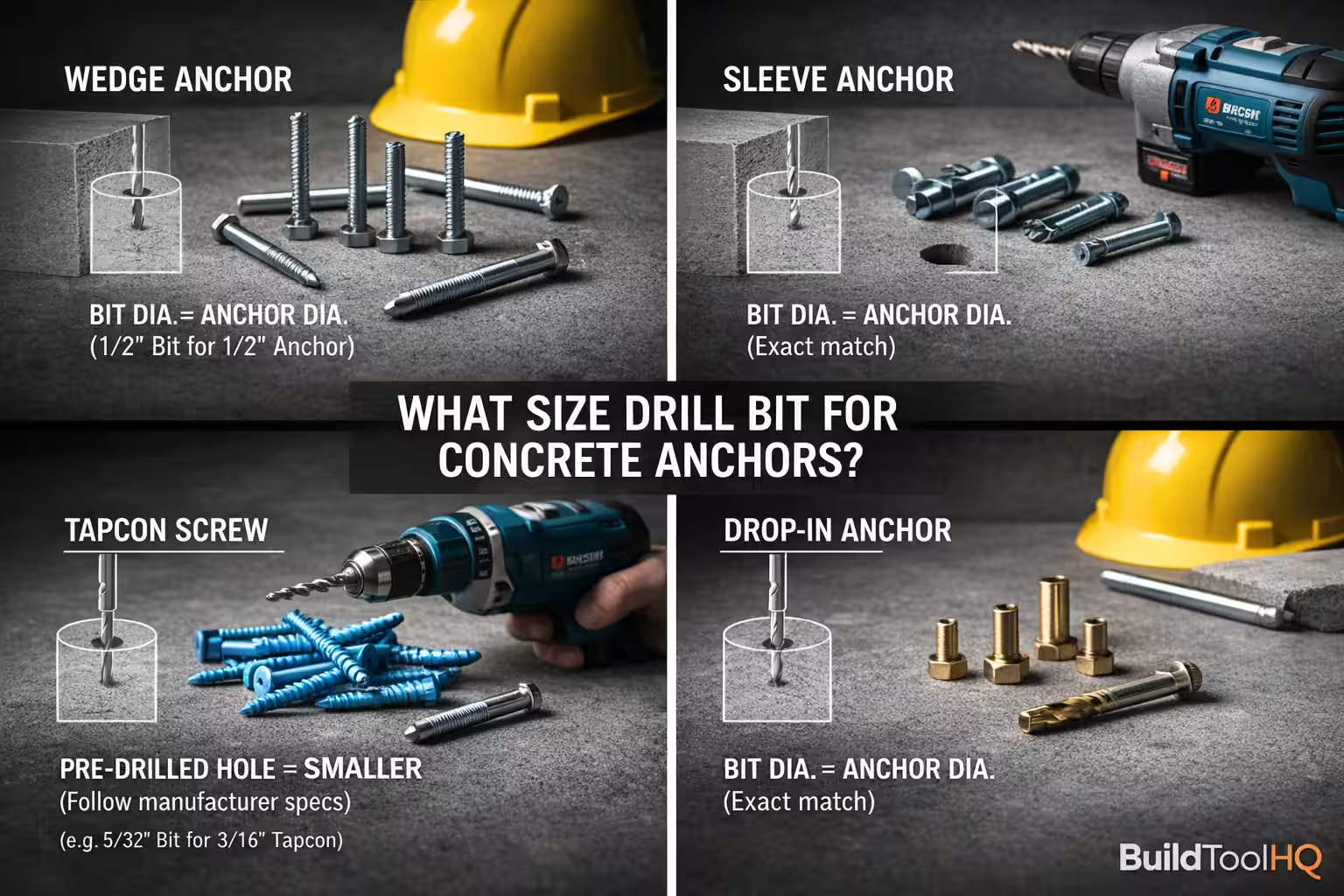
What size drill bit for concrete anchors you use directly affects holding strength, safety, and whether the anchor installs correctly in concrete, brick, or block. Even a high-quality anchor will fail if the hole is too large, too small, or drilled incorrectly.
In this guide, you’ll learn what size drill bit to use for concrete anchors, how bit size varies by anchor type, and how to avoid common drilling mistakes that weaken holding strength.
Why Drill Bit Size Matters for Concrete Anchors
Concrete anchors rely on precise hole dimensions to grip properly.
If the hole is oversized, the anchor won’t expand or bite correctly.
If the hole is undersized, the anchor may not seat fully — or worse, crack the concrete.
If you’re still choosing which anchor to use, start with (Best Concrete Anchors for Home Use – 2026 Guide) before drilling.
General Rule: Drill Bit Size = Anchor Diameter
For most concrete anchors, the rule is simple:
The drill bit size should match the anchor diameter exactly.
Examples:
- 3/8″ anchor → 3/8″ masonry bit
- 1/2″ anchor → 1/2″ masonry bit
This applies to most expansion anchors and drop-in anchors.
Drill Bit Size by Anchor Type
Different anchor types have slightly different requirements. Here’s how they break down.
Sleeve Anchors
Drill bit size: Same diameter as the anchor
Example:
- 3/8″ sleeve anchor → 3/8″ masonry bit
Sleeve anchors rely on even expansion along the sleeve, so hole accuracy is critical.
Sleeve anchors are commonly discussed in (Types of Concrete Anchors Explained – Sleeve, Wedge, Drop-In, Tapcon).
Wedge Anchors
Drill bit size: Same diameter as the anchor
Hole depth: Slightly deeper than anchor length
Wedge anchors expand aggressively at the base, so:
- Hole must be straight
- Dust must be cleared
- Depth must allow full expansion
Incorrect drilling is a common issue covered in (Common Concrete Anchor Installation Mistakes – And How to Avoid Them).
Drop-In Anchors
Drill bit size: Exact anchor diameter
Special note: Requires a setting tool
Drop-in anchors sit flush with the surface and depend on internal expansion, making precise hole size non-negotiable.
These anchors are often used for heavier loads discussed in (How Much Weight Can Concrete Anchors Hold? – Load Ratings Explained).
Tapcon Screws (Concrete Screws)
Tapcon screws are different.
Drill bit size:
- Determined by the screw size, not the head size
- Always follow manufacturer specs
Common examples:
- 3/16″ Tapcon → 5/32″ masonry bit
- 1/4″ Tapcon → 3/16″ masonry bit
This difference is why Tapcons are often misinstalled. For a full comparison, see (Tapcon Screws vs Concrete Anchors: Which Should You Use?).
Plastic Masonry Anchors
Drill bit size: Matches anchor body diameter
Plastic anchors are forgiving but not strong, and they should only be used for lightweight projects.
For anchor selection by surface, see (Best Anchors for Brick vs Concrete vs Block Walls).
How Deep Should You Drill?
As a rule:
- Drill at least 1/4″ deeper than the anchor length
- This allows space for dust and full expansion
Failing to drill deep enough is one of the most common DIY mistakes.
Drill Bit Type Matters Too
Always use:
- Carbide-tipped masonry bits
- Sharp bits only
- Hammer drill mode for concrete
Recommended guides:
- (Best Drill Bits for Concrete and Masonry)
- (Best Drill for Concrete Walls – 2025 Guide)
- (Best Hammer Drill for Home Use – 2025 Guide)
Step-by-Step: Drilling the Perfect Anchor Hole
- Mark the hole location
- Select the correct masonry bit
- Drill straight at a steady speed
- Drill slightly deeper than anchor length
- Clear dust with air or vacuum
- Insert anchor or screw
For a full walkthrough, see (How to Drill Into Concrete Safely – Step-by-Step Guide).
Common Drill Bit Size Mistakes to Avoid
Avoid these errors:
- Guessing bit size instead of measuring
- Using worn or dull bits
- Skipping dust removal
- Using wood or metal bits on concrete
These mistakes reduce holding strength and are often blamed on the anchor itself.
Final Recommendation
If you remember only one thing:
Use the exact drill bit size recommended for your anchor type — every time.
Correct drilling improves:
- Holding power
- Safety
- Long-term durability
For choosing the right fastener overall, return to (Best Concrete Anchors for Home Use – 2026 Guide).
Continue Learning
Next guides :
Leave a Reply