
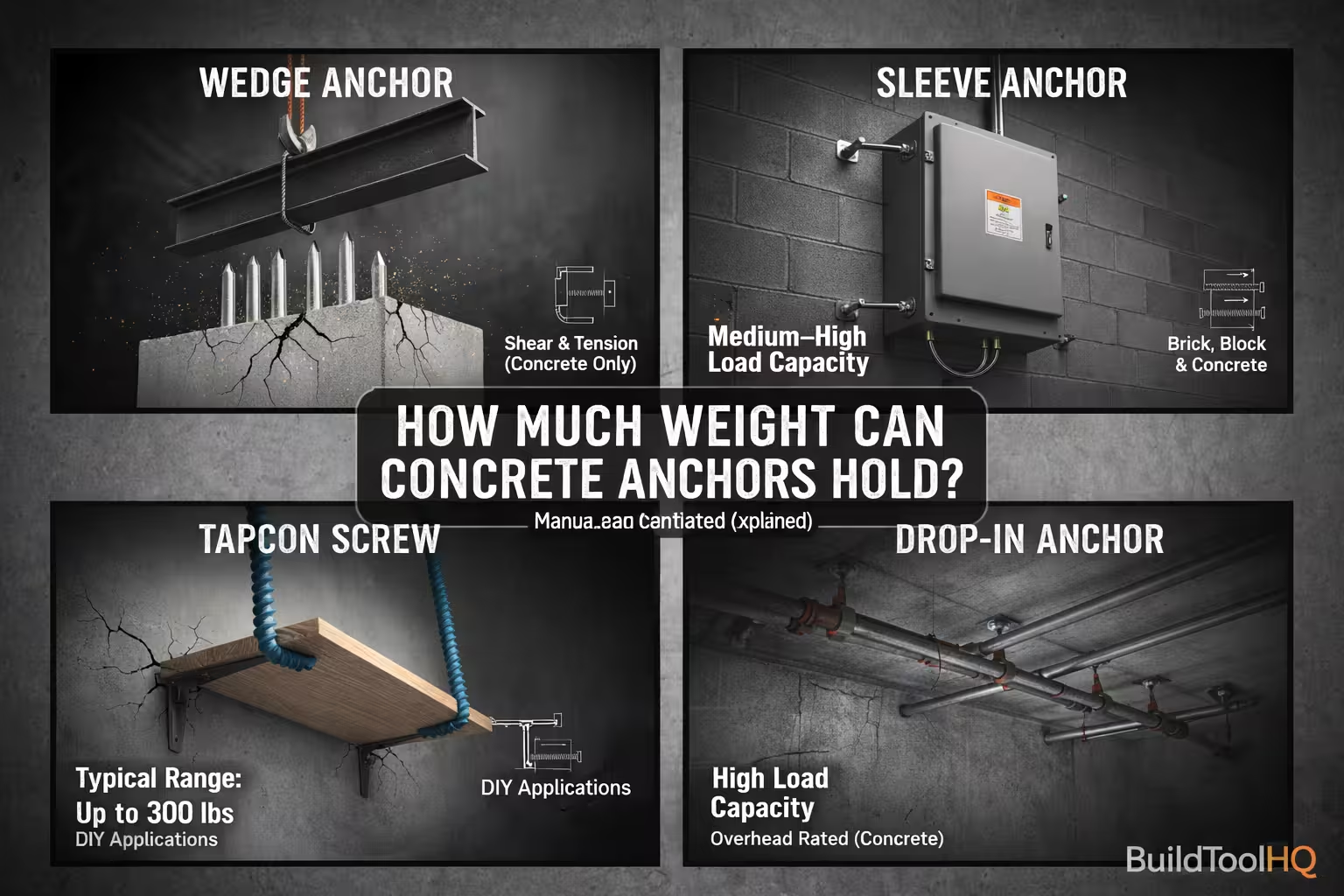
If you’ve ever asked How Much Weight Can Concrete Anchors Hold, you’re not alone. Homeowners, DIYers, contractors, and installers ask this question every day before mounting shelves, TVs, railings, cabinets, gym equipment, or structural fixtures.
The truth is that How Much Weight Can Concrete Anchors Hold depends on several scientific factors: anchor type, diameter, embedment depth, concrete strength, spacing, edge distance, installation quality, and the direction of force.
That means there is no one-size-fits-all answer.
Ready to calculate your specific load limits? Try our free👉 Concrete Anchor Load Calculator.
In this complete guide, we’ll explain How Much Weight Can Concrete Anchors Hold using real engineering principles, comparison tables, safety margins, and practical examples.
For top product picks first, visit 👉 (Best Concrete Anchors for Home Use (2026 Guide)).
Quick Answer: How Much Weight Can Concrete Anchors Hold 🏆
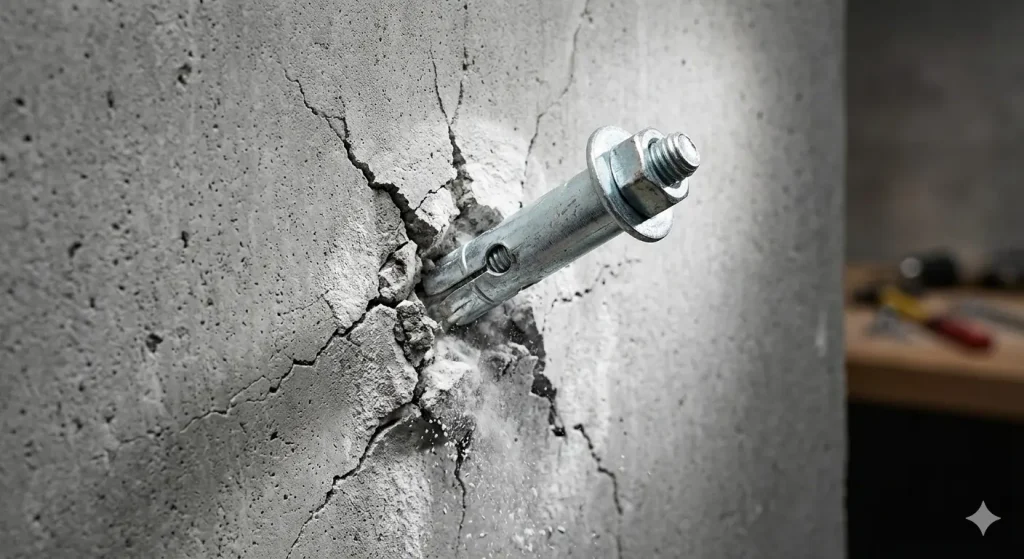
Most properly installed concrete anchors can hold anywhere from:
| Anchor Type | Approx Light Duty | Medium Duty | Heavy Duty |
|---|---|---|---|
| Plastic Anchor | 10–30 lbs | ❌ | ❌ |
| Tapcon Screw | 50–250 lbs | 300+ lbs | Depends |
| Sleeve Anchor | 100–400 lbs | 500+ lbs | Moderate |
| Wedge Anchor | 250–1,000+ lbs | 2,000+ lbs | Excellent |
| Drop-In Anchor | 200–800 lbs | 1,500+ lbs | Strong |
So when asking How Much Weight Can Concrete Anchors Hold, the real answer is: it depends on the anchor system and installation conditions.
Why There Is No Single Number 🔬
Many people search How Much Weight Can Concrete Anchors Hold expecting one exact answer. But load ratings are affected by multiple variables:
Main Variables:
- Anchor diameter
- Anchor length
- Embedment depth
- Concrete PSI strength
- Distance from edge
- Spacing between anchors
- Static vs dynamic load
- Shear vs pull-out force
- Proper torque during install
- Cracked vs non-cracked concrete
That’s why two anchors of the same size may hold different loads in different slabs.
Tensile Load vs Shear Load Explained 📐
To understand How Much Weight Can Concrete Anchors Hold, you need to know the two main force directions.
| Load Type | Meaning | Example |
|---|---|---|
| Tensile Load | Pulling straight out | Hanging shelf |
| Shear Load | Sideways force | Wall bracket |
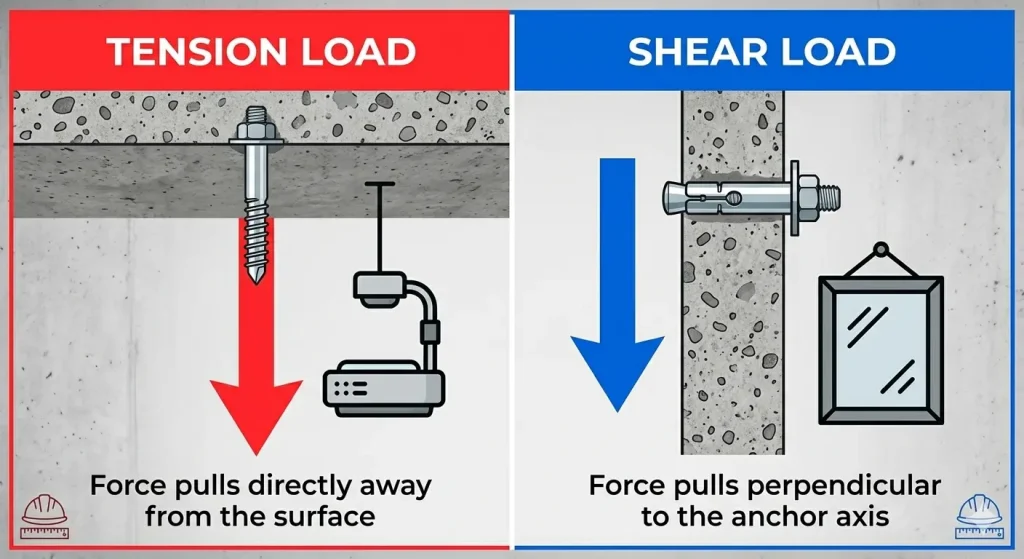
Example:
A wedge anchor may hold:
- 1,200 lbs tensile
- 2,000 lbs shear
This is why How Much Weight Can Concrete Anchors Hold depends on how the force is applied.
Anchor Type Matters Most ⚙️
One of the biggest factors in How Much Weight Can Concrete Anchors Hold is anchor type.
Common Anchor Types:
| Anchor Type | Strength Level | Best Use |
|---|---|---|
| Tapcon | Medium | Shelves, brackets |
| Sleeve Anchor | Medium-High | Fixtures |
| Wedge Anchor | High | Heavy loads |
| Drop-In Anchor | High | Machinery |
| Plastic Plug | Low | Very light duty |
Learn more in 👉 (Types of Concrete Anchors Explained (Wedge, Sleeve, Drop-In, Tapcon))
How Much Weight Can Concrete Anchors Hold by Diameter 📏
Larger anchors generally hold more weight.
| Diameter | Typical Capacity Range |
|---|---|
| 1/4″ | Light to medium |
| 3/8″ | Medium to heavy |
| 1/2″ | Heavy |
| 5/8″+ | Very heavy |
When researching How Much Weight Can Concrete Anchors Hold, diameter is one of the first specifications engineers check.
Embedment Depth Changes Everything 🧱
Embedment depth means how deep the anchor sits in solid concrete.
Shallow embedment = less holding power.
Deeper embedment = stronger load capacity.
Example:
A 3/8″ wedge anchor at 2″ depth may hold far less than the same anchor at 3.5″ embedment.
That means How Much Weight Can Concrete Anchors Hold is directly tied to drilling depth and proper hole cleaning.
Need proper drilling specs? Read 👉 (What Size Drill Bit for Concrete Anchors?)
Concrete Strength (PSI) Matters 🔬
Concrete is not all the same.
| Concrete PSI | Typical Strength |
|---|---|
| 2,500 PSI | Light residential |
| 3,000 PSI | Standard |
| 4,000 PSI | Strong residential |
| 5,000+ PSI | Commercial |
Higher PSI concrete resists breakout forces better.
So if you ask How Much Weight Can Concrete Anchors Hold, concrete strength is a major part of the answer.
Edge Distance Can Reduce Strength ⚠️
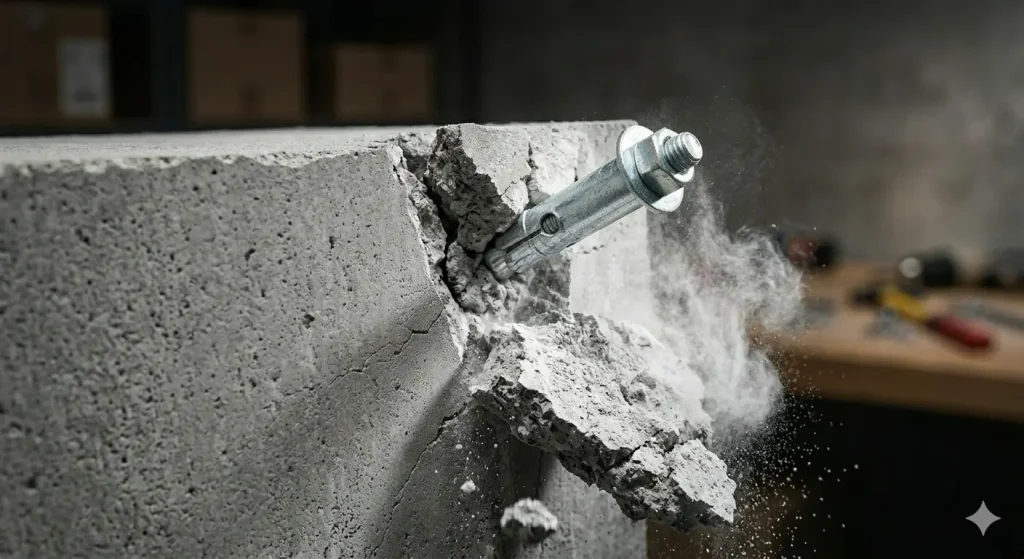
Anchors placed too close to an edge may crack concrete under load.
Example:
An anchor near slab edge may fail long before its rated load.
This is why professional installers always calculate edge spacing.
Read 👉(Concrete Anchor Spacing & Edge Distance Guide)
Whenever people ask How Much Weight Can Concrete Anchors Hold, edge distance is often overlooked.
Spacing Between Anchors 🧰
Two anchors installed too close together can weaken each other.
Instead of doubling capacity, poor spacing may reduce total strength.
Example:
4 anchors badly spaced ≠ 4x strength.
This is another reason How Much Weight Can Concrete Anchors Hold depends on layout, not just anchor size.
Cracked vs Non-Cracked Concrete 🪨
Concrete with existing cracks may have lower holding power.
Examples:
- Old basement floors
- Exterior freeze/thaw slabs
- Expansion crack zones
A cracked slab may significantly reduce anchor performance.
So the question How Much Weight Can Concrete Anchors Hold changes if concrete condition is poor.
Indoor vs Outdoor Anchors 🌧️
Moisture, corrosion, and freeze cycles matter.
Outdoor Recommendations:
- Stainless steel anchors
- Hot-dip galvanized hardware
- Corrosion-resistant fasteners
Rust can weaken anchor systems over time. Long-term durability is part of How Much Weight Can Concrete Anchors Hold.
Real Homeowner Examples 🏠
TV Wall Mount
Load: 70 lbs static
Recommended: Multiple Tapcons or sleeve anchors
Garage Shelf
Load: 200 lbs distributed
Recommended: Sleeve or wedge anchors
Stair Rail
Load: Human impact force
Recommended: Wedge anchors
Home Gym Rack
Load: Dynamic shock load
Recommended: Heavy wedge anchors
This shows why How Much Weight Can Concrete Anchors Hold must include real-world usage, not just numbers.
Dynamic Load vs Static Load ⚡
Static load = weight sitting still.
Dynamic load = movement, vibration, shock.
Examples of dynamic load:
- Pull-up bars
- Garage racks with movement
- Railings
- Machinery
Dynamic loads need larger safety margins.
When asking How Much Weight Can Concrete Anchors Hold, dynamic force is critical.
Safety Factor Rule 📊
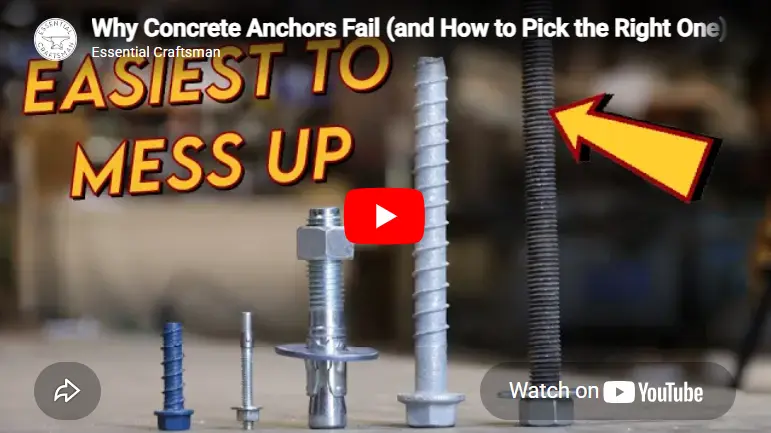
A responsible approach to load ratings is critical. If you are struggling with the engineering concepts of anchor selection, or want to see a demonstration of safety factors in the real world, the best resource on the internet is Essential Craftsman. In the video below, Scott explains precisely why safety factors matter and how to visualize failure so you can make confident, safe anchor selections.
Professionals rarely load anchors to maximum rating.
Example:
If an anchor is rated 1,000 lbs ultimate load:
Recommended working load may be:
- 250 lbs
- 333 lbs
- 500 lbs depending on standard
That’s why searching How Much Weight Can Concrete Anchors Hold should focus on safe working load—not maximum failure load.
Tapcon vs Wedge Anchor Comparison 🔩
| Feature | Tapcon | Wedge Anchor |
|---|---|---|
| Easy Install | Excellent | Good |
| Removable | Yes | No |
| Light Loads | Great | Good |
| Heavy Loads | Moderate | Excellent |
| Cost | Lower | Medium |
Read 👉 (Tapcon Screws vs Concrete Anchors: Which Should You Use?)
This comparison helps answer How Much Weight Can Concrete Anchors Hold for common homeowner projects.
Common Installation Mistakes ❌
Even strong anchors fail if installed poorly.
Mistakes:
- Wrong hole size
- Dust left in hole
- Under-tightening
- Over-tightening
- Too close to edge
- Too shallow embedment
- Weak concrete zone
Avoid these with 👉 (How to Install Concrete Anchors Correctly (Step-by-Step Guide))
Also read 👉 (Common Concrete Anchor Mistakes (And How to Avoid Them))
Many failures blamed on anchors are actually installation errors affecting How Much Weight Can Concrete Anchors Hold.
Can Anchors Work in Brick or Block? 🧱
Yes—but capacities are often lower than solid concrete.
Hollow block especially changes load ratings.
Read 👉 (Can You Use Concrete Anchors in Brick or Block?)
This matters because How Much Weight Can Concrete Anchors Hold in brick is usually different than poured concrete.
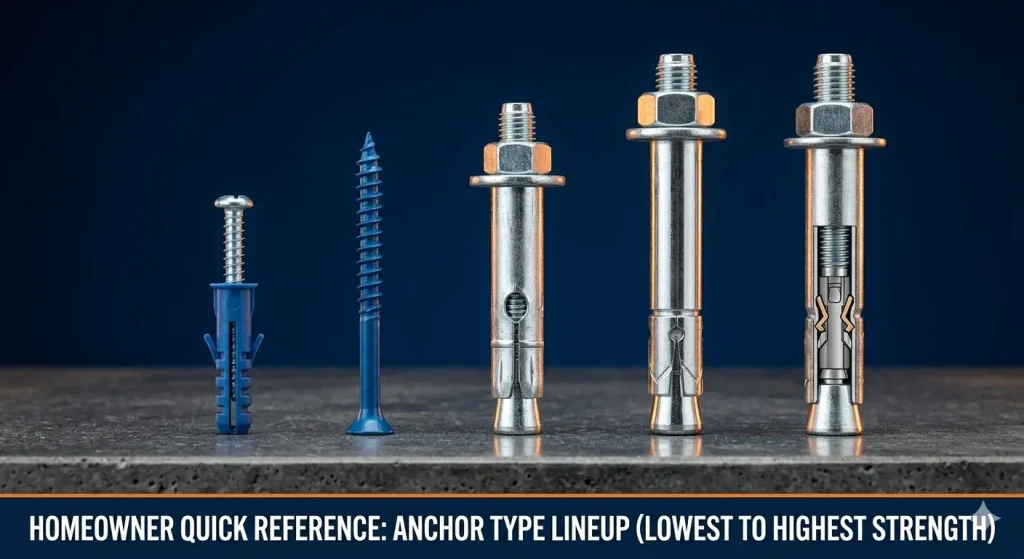
Homeowner Quick Reference Table 🏆
| Weight Needed | Suggested Anchor |
|---|---|
| Under 50 lbs | Tapcon / light anchor |
| 50–150 lbs | Tapcon / sleeve |
| 150–400 lbs | Sleeve / wedge |
| 400–1,000 lbs | Wedge anchor |
| 1,000+ lbs | Engineered system |
Need shopping help? See 👉 (Best Concrete Anchor Kits for Homeowners (2026 Review))
And 👉 (Concrete Anchor Selection Chart (Homeowner’s Quick Reference Guide))
FAQ: How Much Weight Can Concrete Anchors Hold 🤔
Can one anchor hold 500 lbs?
Yes, many wedge anchors can under proper conditions.
Can Tapcons hold heavy shelves?
Yes, when properly sized and installed.
Are four anchors stronger than two?
Usually yes—but only with proper spacing.
What causes anchor failure?
Bad concrete, poor installation, overload, corrosion, edge breakout.
Is bigger always better?
Not always. Proper design matters more than size alone.
Final Verdict: How Much Weight Can Concrete Anchors Hold 🏁
So, How Much Weight Can Concrete Anchors Hold?
The honest answer is anywhere from 10 lbs to several thousand pounds, depending on:
- Anchor type
- Diameter
- Depth
- Concrete PSI
- Edge distance
- Spacing
- Installation quality
- Load direction
- Safety factor
For light home projects, Tapcons or sleeve anchors may be perfect. For serious loads, wedge anchors or engineered systems are often best.
The smartest way to answer How Much Weight Can Concrete Anchors Hold is not guessing—it’s choosing the right anchor, installing it correctly, and using safe working loads.
Leave a Reply