Drywall Screw Gun: How Depth Control Works and Which One to Buy
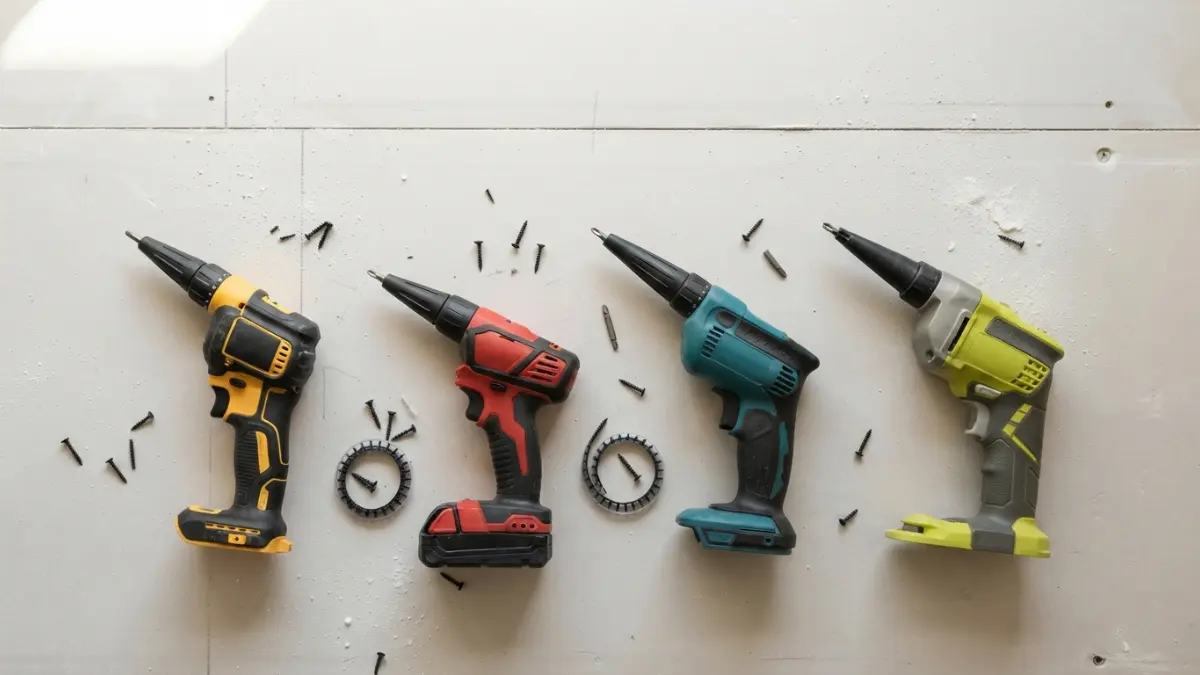
Quick answer: Buy the gun that matches a battery platform you already own — with one exception. The four cordless models here run $111 to $164 and the spread on speed is small enough not to decide anything. What does decide it is the collated magazine: each one fits a single gun, and the price ranges from $82 on the DeWalt to $250 on the Makita, with none at all for the Ryobi. If you expect to hang real volume, that is worth switching platforms for.
| If you want | Tool | Why |
|---|---|---|
| The most control | DeWalt DCF630B | Four modes plus a high/low speed split |
| Long ceiling days | Milwaukee 2866-20 | 2.5 lb, 64 sheets per charge on the big pack |
| Quiet work in occupied rooms | Makita XSF03Z | Push Drive runs silent between screws |
| The lowest price | Ryobi P225 | Cheapest here and fastest at 4,700 RPM |
| Hanging 20+ sheets | DeWalt + DCF6202 | Cheapest collated path at $82 |
All four are bare tools — no battery or charger. The DCF6202 is an attachment for the DeWalt, not a standalone tool.
Author: Thomas Leroy, Construction & Renovation Specialist
Fifteen years of hands-on residential construction and renovation, using most of the power tools on the market across a wide range of brands. A drywall screw gun is one of the few tools where the argument for buying it is mechanical rather than a matter of preference — it does something a drill cannot, and the reason is in the nose cone. Every figure below comes from the manufacturer’s own specification or the live listing, and where the published numbers contradict what the roundups say, this page says which.
Why a Drill Cannot Do This Job
A drill drives until you stop it. Depth depends entirely on trigger control, and that has to be repeated correctly a few hundred times per room.
A screw gun does not work that way. The nose cone sets a mechanical stop: the clutch disengages the instant the cone contacts the board, so the screw lands at the same depth every time regardless of how long you hold the trigger. That is the entire tool. Everything else — RPM, modes, battery platform — is secondary to a mechanism that removes human judgement from the one thing humans get wrong.
The target is 1/32″ below the surface. Deep enough to leave a dimple that compound can fill, shallow enough that the paper stays intact.
That last part is why it matters more than it sounds. In gypsum board the paper facing carries the pull-through resistance, not the core. Drive a screw through the paper and the fastener is holding compressed gypsum, which crumbles. The screw is still there, still tight to the touch, and it is doing almost nothing. Length does not help. Depth beats length, and a nose cone is how you get depth right without thinking about it.
Trigger, Push-Start and Lock-On
Three ways to actually run one of these, and every tool on this page implements a different subset.
| Mode | How it works | Use it for |
|---|---|---|
| Trigger | Conventional — squeeze to spin | Single screws, awkward angles, backing one out |
| Push-Start | Motor starts only when the screw contacts the board | Production hanging; quieter and saves battery |
| Lock-On | Trigger locks on, motor free-spins or waits on contact | Full walls and ceilings without holding the trigger |
DeWalt’s DCF630B is the only tool here with a high/low speed split on top of those modes, switched from a selector on the housing. That matters on steel — light-gauge and heavy-gauge stud want different speeds, and it is the only gun on this page that lets you change one without changing the other.
Milwaukee’s Auto Start and Makita’s Push Drive are the same idea under different names: lock the trigger, and the motor spins only when a fastener engages. Makita claim up to 50% more runtime per charge from that alone, and the practical difference on site is noise — the tool is silent between screws.
The Four Guns, Compared
How the product picks on this page work. Some links are affiliate links, and BuildToolHQ earns a commission if you buy through them, at no extra cost to you. It does not change what gets recommended. Every product here was checked against its live listing for current rating, price and availability, and anything discontinued or wrong for the job was left out. Where no product genuinely fits, we say so instead of linking something close enough. As an Amazon Associate, BuildToolHQ earns from qualifying purchases. Editorial policy · Full disclosure


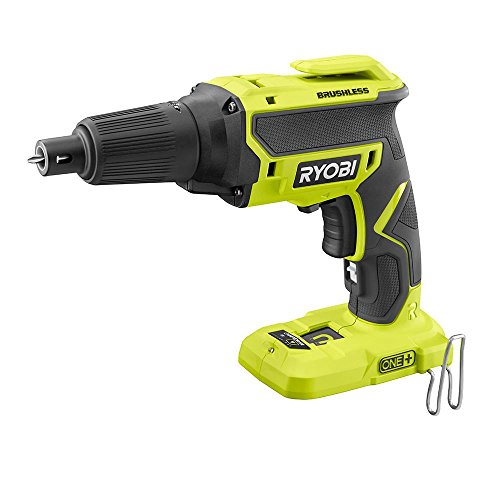
Hanging drywall with a drill works until it doesn’t. Some screws sit proud and telegraph through the finish. Some tear straight through the paper and hold nothing at all. You cannot see the difference until the compound is on and the light hits the wall at an angle, and by then it is a repair rather than an adjustment.
A screw gun fixes that mechanically. The four tools below run from $111 to $164, all brushless, all cordless, and the spread on speed is smaller than you would expect — the cheapest is the fastest. What separates them is depth consistency, mode control, and one decision most buyers do not know they are making until later.
Speed Is Not the Spec That Separates These
The cheapest tool on this page is the fastest. The Ryobi P225 runs 4,700 RPM against Milwaukee’s 4,500 and DeWalt’s 4,400, and Makita sits lowest at 4,000.
That ordering should tell you how much weight to put on the number. Every gun here drives faster than a person can place screws, so the ceiling figure is not the constraint — the constraint is you, picking up the next screw. Which is exactly why the collated magazines below change the maths and a few hundred RPM does not.
Where speed genuinely matters is steel stud. Heavier gauge needs more RPM to start the screw cleanly without walking, and that is the one application where the difference between 4,000 and 4,700 is worth caring about.
Real Specs by Brand
From each manufacturer’s published specification and the live listing.
| Spec | DeWalt DCF630B | Milwaukee 2866-20 | Makita XSF03Z | Ryobi P225 |
|---|---|---|---|---|
| Speed | 4,400 RPM | 4,500 RPM | 0–4,000 RPM | 4,700 RPM |
| Motor | Brushless | Brushless POWERSTATE | Brushless BL | Brushless |
| Modes | 4 (hi/lo, push, lock) | Auto Start | Push Drive lock-on | Trigger |
| Weight | — | 2.5 lb | — | — |
| Runtime claim | — | 64 sheets / XC5.0 27 / CP2.0 | +50% per charge | — |
| Collated option | DCF6202, $82 | 49-20-0001, $99 | 199145-0, $250 | none found |
| Platform | 20V MAX | M18 | 18V LXT | 18V ONE+ |
| Price | $132 | $164 | in cart | $111 |
Empty cells are figures the manufacturer does not publish. Milwaukee is the only one of the four to state runtime in sheets, and the second figure — 27 sheets on the compact battery — appears on the same listing but almost never in a review.
The Collated Decision Is Made When You Buy the Gun
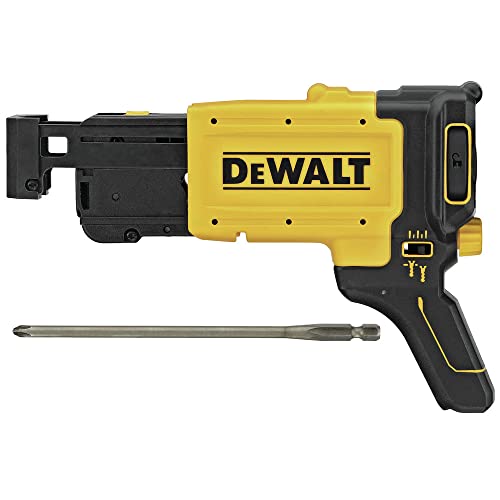
A collated magazine feeds screws from a plastic strip. You stop picking up a screw, placing it on the bit and steadying it — push, drive, the strip advances, push again. On volume it roughly doubles hanging speed, and on a 40-sheet house that is the difference between one day and two.
Every magazine is proprietary and fits one gun. There is no universal option, no adapter, and no aftermarket path worth recommending. So the decision about whether you can ever go collated is made the moment you choose a screwgun — and the prices are nothing like each other.
| Gun | Magazine | Price | As % of the gun |
|---|---|---|---|
| DeWalt DCF630B | DCF6202 | $82 | 62% |
| Milwaukee 2866-20 | 49-20-0001 | $99 (refurb listing) | 60% |
| Makita XSF03Z | 199145-0 | $249.89 | more than the gun |
| Ryobi P225 | none found | — | — |
Prices at the time of writing. The Milwaukee magazine’s Amazon listing is currently a renewed unit with a three-week delivery window rather than a new part.
Corded Is Slower, Not Faster
This one runs against most of what is written about drywall guns. Every buyable corded DeWalt screwgun — the DW257, DW268 and DW276 — runs 2,500 RPM. The cordless tools on this page run 4,000 to 4,700.
The 4,000 RPM DW272 exists but currently has no buy box, and roundups citing a “5,300 RPM” corded DeWalt do not match any model that can actually be purchased. Makita’s corded FS6200 does reach 6,000 RPM, so the genuinely fast corded screwgun is Makita’s, not DeWalt’s.
What corded actually buys is not speed. It is unlimited runtime, no voltage sag from the first screw to the last, a metal gear housing, and on the Versa-Clutch models an adjustable torque limit. For a production crew running shifts that is a real argument. For anyone hanging a room, a modern brushless cordless gun is both faster and less trouble.
Who Should Buy Which
- You already own a battery platform. Buy that brand’s gun. The differences here are real but smaller than a charger and a spare battery — with one exception, below.
- You expect to hang more than about 20 sheets. DeWalt, for the $82 magazine. This is the exception to the rule above: if collated matters to you, it is worth switching platforms for.
- You are hanging ceilings all day. Milwaukee at 2.5 lb, and the 64-sheet runtime on the big pack means fewer battery swaps overhead.
- You work in occupied buildings. Makita. Push Drive keeps it silent between screws, which matters more than it sounds in a finished house.
- Steel stud framing. The Ryobi’s 4,700 RPM starts screws cleanly in heavier gauge, and DeWalt’s high/low switch lets you match the gauge.
- One room, once. Ryobi, and accept there is no collated path later.
- Production crew running shifts. Look at corded for the unlimited runtime and metal gear case — but know you are trading away roughly half the RPM.
Common Mistakes
Pro Tips
Related Guides
- Drywall Cut-Out Tool — the tool for cutting the openings, and the cut direction that stops it wandering off the box
- Drywall Screw Size Chart — length by board thickness, ASTM C1002 types, and spacing tables
- Screw Size Chart — gauge, diameter and pilot holes across every screw type
- Best Cordless Oscillating Multi-Tool — the tool for cutting openings in board already on the wall
- Impact Driver vs Drill — why neither of them is the right answer for drywall
- Best Cordless Brad Nailer — same four brands compared on trim work
Frequently Asked Questions
Do I really need a drywall screw gun, or will a drill work?
What happens if a drywall screw goes in too deep?
How deep should a drywall screw be set?
Is a higher RPM screw gun better?
Are collated screw gun magazines interchangeable between brands?
How much does a collated attachment cost?
Is a corded drywall screw gun faster than cordless?
How far apart should drywall screws be?
Free Tool · AI-Powered
Plan your whole project in 2 minutes
Tell our AI Foreman what you are building and get a complete tool list, materials shopping list, step-by-step plan, and mistakes to avoid.
Try the AI Foreman →
Thomas Leroy
Founder of BuildToolHQ, drawing on years of hands-on building, fabrication, and technical work, plus deep product and manufacturer research. Every guide is built on real documentation and real product research — not recycled advice — so tradespeople and serious DIYers get the same technical knowledge professionals use every day.
More about Thomas