Hammer Drill vs Regular Drill: Which One Do You Need?

Author: Thomas Leroy, Construction & Renovation Specialist
Fifteen years of hands-on residential construction and renovation, using most of the power tools on the market across a wide range of brands. Where a spec comes from a manufacturer sheet rather than my own hands, the page says so.
Quick answer: A hammer drill does everything a regular drill does — switch the hammer off and it is a drill/driver. What it adds is rapid percussion for brick, block and concrete, which is what actually breaks up masonry rather than pushing harder. So if you are buying one drill and expect to hit masonry occasionally, buy the hammer drill. If you only work in wood, metal and drywall, a plain drill/driver is lighter and cheaper. Drilling concrete regularly? Neither — an SDS rotary hammer is a different class of tool.
The short version: the Milwaukee 2904-20 is the most capable hammer drill here, the DeWalt DCD771C2 is the plain drill most people actually buy, and if you only ever drill wood the cheaper one is not a compromise.
| Regular drill | Hammer drill | |
|---|---|---|
| Wood, metal, drywall | Excellent | Excellent, hammer off |
| Driving screws | Excellent | Fine, hammer off |
| Brick and block | Slow and painful | What it is built for |
| Concrete | Small holes only, softer mix | Good up to about 1/2" |
| Hammer action | None | Yes, switchable |
| Weight and price | Lighter, usually cheaper | Heavier, a little more |
| Buy it if | You never touch masonry | You want one drill for both |
Drilling concrete regularly, or anything over about 1/2"? Neither of these is the right tool — see hammer drill vs rotary hammer.
Curious about real torque, BPM, and weight by brand? Jump to the full spec tables →
✓ Specs verified directly from DeWalt, Milwaukee, Bosch, and Makita — not third-party estimates.
Both tools look nearly identical from across a job site — same pistol grip, same chuck, same trigger. The difference is entirely in what happens when you pull that trigger, and it decides which materials each one can actually drill. Here’s how they compare, side by side, with real numbers behind it.
What is a regular drill?
A regular drill (also called a standard drill or drill driver) rotates a bit to cut into material. It’s designed primarily for wood, metal, plastics, and light construction tasks. Regular drills provide variable speed, clutch settings for screw driving, and sometimes high torque modes. They use straight rotational force and depend on the bit geometry and cutting speed to remove material. For most homeowners, this is the first power tool they ever buy — and often the only one they need. A quality regular drill will drive screws, bore pilot holes, and handle every everyday task that doesn’t involve masonry. The tradeoff is straightforward: without a hammer mechanism, it can’t break up brick, block, or concrete — pushing harder only dulls the bit and stresses the motor.
What is a hammer drill?
A hammer drill adds a rapid forward-and-back percussion to the rotational motion. The hammering action helps break up hard, brittle materials — most commonly masonry, brick, block, and light concrete. The mechanism either uses an internal cam-and-slider that creates impact or, in higher-end tools, a pneumatic action (in rotary hammers) that delivers stronger blows.

Hammer drill vs rotary hammer (important distinction)
- Hammer drill: Best for occasional drilling into brick, block, and small concrete anchors. Uses mechanical impacts while rotating.
- Rotary hammer: Uses a piston-driven pneumatic mechanism. Far more efficient for large-diameter holes in concrete and continuous heavy-duty work. Often uses SDS-plus or SDS-max bits.
Can a Hammer Drill Be Used as a Regular Drill?
Yes, and this is the part most comparisons skip. Every modern hammer drill has a mode collar — switch it off the hammer setting and the percussion mechanism disengages completely. What is left is an ordinary drill/driver: same chuck, same clutch, same variable speed. It drills wood, drills metal, drives screws.
That is why the comparison is not really a choice between two tools. It is a choice between one tool that does both jobs and one that does the common job slightly lighter and cheaper.
The hammer drill gives you: masonry capability you will eventually want, and a tool that still does everything the plain drill does.
The plain drill gives you: less weight in the hand all day, a smaller head for tight cabinets, and usually a lower price for the same motor quality.
If you already own a good drill/driver and never touch masonry, there is no reason to replace it. If you are buying your first, buy the hammer drill — the premium is small and the day you need it, nothing else will do.
Key differences and direct comparisons
| Regular Drill | Hammer Drill | Rotary Hammer | |
|---|---|---|---|
| Action | Rotation only | Rotation + mechanical impacts | Rotation + pneumatic piston impacts |
| Materials | Wood, metal, plastic | Brick, block, light concrete | All masonry, heavy concrete |
| Bits | Twist / spade bits | Carbide-tipped masonry bits | SDS-Plus / SDS-Max bits |
| Typical max hole | N/A (no masonry) | 1/2"–5/8" concrete | 3/4"+ concrete |
| Weight & control | Lightest | Moderate | Heaviest, often needs side handle |
| Price range | $80–$200 | $90–$220 | $150–$400+ |
Price ranges reflect typical mid-tier 20V-class cordless and comparable corded tools.
When to use each tool
- Use a regular drill when: drilling and driving in wood, metal, plastics, or when installing screws and fasteners. For pilot holes, cabinet work, stud-fastening and light carpentry tasks, a drill driver is faster and cleaner.
- Use a hammer drill when: drilling into masonry, brick, or light concrete for anchor bolts, masonry screws, or conduit. For holes up to 1/2"–5/8" in concrete and intermittent work, a hammer drill is the practical choice.
- Use a rotary hammer when: drilling multiple holes in concrete, larger diameters (3/4" and up), or chiseling tasks. For pro-level concrete work, rotary hammers are faster and reduce operator fatigue.
Can a Regular Drill Get Through Concrete?
Yes — within limits, and the limits are narrow. A standard drill with a sharp carbide-tipped masonry bit will make a small hole in concrete. It is slower, harder on the tool and harder on you, but for a handful of holes it is a real option rather than a myth.
Where it works: holes under 1/4″ in diameter, no deeper than about 1″, in older or softer concrete, block, or mortar joints. Hanging a light fixture, fitting a small plastic anchor, drilling into a mortar line rather than the brick itself.
Where it does not: anything 3/8″ or larger, poured structural concrete, holes deeper than an inch, or more than a few holes in one session. At that point the drill is not cutting so much as polishing, and the heat destroys both the bit and the drill’s clutch.
If you are going to try it, three things make the difference:
- Use a carbide-tipped masonry bit. A standard twist bit is the wrong steel for concrete — it dulls within seconds and glazes the hole.
- Peck, do not lean. Short bursts with the bit withdrawn between them clears dust and lets the tip cool. Constant pressure just generates heat.
- Stop if the dust stops. No dust means the bit is no longer cutting. Pushing harder from that point damages the tool, not the concrete.
The honest summary: a regular drill can do it once. A hammer drill does it in a fraction of the time and will still be working afterwards. If you have more than three or four holes to make, borrow or hire the right tool.
Final decision guide
If your typical work is wood, metal, framing, or general screw driving, a regular drill/driver is the correct tool. If you occasionally need to drill into brick or block for anchors or conduit, choose a hammer drill with a solid motor and masonry bits — see our picks for home use. If you regularly drill multiple holes in concrete, or need large diameters and chiseling, invest in a rotary hammer (SDS-plus or SDS-max). Buy the tool that matches your workload rather than the occasional task.
Choosing correctly reduces downtime, bit costs, and operator fatigue. For contractors, the right investment is often a quality drill driver for finishing and a separate rotary hammer for heavy masonry—two tools that together cover nearly every job on site.
Buying advice — what professionals should look for
- Power: For corded drills look for 7–10 amp motors for heavy drilling. For cordless, choose 18V/20V brushless platforms with high torque ratings; consider 36V/40V systems for sustained concrete work.
- Modes and controls: Variable speed trigger, adjustable clutch, clear hammer-on/off switch, and a torque selector are what separate a drill you keep from one you replace.
- Chuck type: Keyed chucks hold masonry bits better on heavy loads, but quick-change chucks are faster for driving. For rotary hammers, choose SDS-plus or SDS-max depending on bit size requirements.
- Build and ergonomics: Side handle, depth stop, and vibration reduction matter for accuracy and fatigue management.
- Battery and drivetrain: Prefer brushless motors for efficiency and longer runtime. Buy into a battery platform you’ll use across other tools.
- Warranty and service: Professional jobs need rapid service and long warranties. Check availability of replacement parts and bits in local markets.
- Dust management: If you’ll drill concrete indoors, prioritize tools with compatible vacuum attachments or buy a dust shroud.
Recommended Tools by Category
For most homeowners, a combo drill/driver with hammer mode covers everything — you don't need to buy a separate hammer drill and regular drill.
Hammer Drills
A hammer drill is an ordinary drill with one addition: a pair of ridged discs behind the chuck that force it forward and back as it spins, tapping the bit into the material thousands of times a minute. That tapping is what breaks up masonry — rotation alone just polishes it. Switch the hammer action off and you have a normal drill/driver for wood and metal, which is why most people only need this one tool rather than two.
If you already own batteries on one of these platforms, start there — the tool is rarely the reason a job goes badly. If you own none of them, the differences that actually matter are chuck size, whether a battery and charger are in the box, and how much the thing weighs after an hour overhead.
How the product picks on this page work. Some links are affiliate links, and BuildToolHQ earns a commission if you buy through them, at no extra cost to you. As an Amazon Associate we earn from qualifying purchases. It does not change what gets recommended. Every product here was checked against its live listing for current rating, price and availability, and anything discontinued or wrong for the job was left out. Where no product genuinely fits, we say so instead of linking something close enough. Editorial policy · Full disclosure
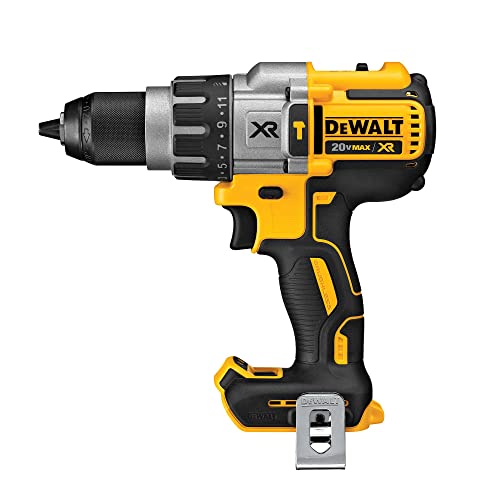


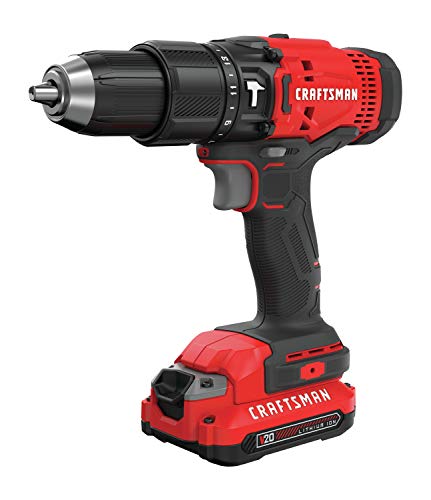


On the power figures. DeWalt and Craftsman publish Unit Watts Out; Milwaukee, Makita and Bosch publish inch-pounds. The two do not convert, so 820 UWO is not "less than" 1,400 in-lb — they are different measurements. Compare within a unit, not across. Specs verified against dewalt.com, milwaukeetool.com, boschtools.com and makitatools.com.
The Other Two Tools
An impact driver is not an alternative to either drill here — it hammers rotationally to drive long screws, and it has a hex chuck rather than a keyless one. If you are choosing between a drill and an impact driver rather than between two drills, that is a different question: impact driver vs drill.
An SDS-Plus rotary hammer is a different class of tool again — a piston strikes the bit rather than two discs clicking past each other, which is why it goes through concrete several times faster. If you drill concrete regularly or need holes much over 1/2", that is what to buy: hammer drill vs rotary hammer, and our SDS-Plus picks.
If You Want the Plain Drill Instead
Everything above adds a hammer mode you may never switch on. If you work in wood, metal and drywall and masonry is somebody else’s problem, a plain drill/driver is lighter, shorter and usually cheaper for the same build quality. These four are ordered the same way — by how many people have bought and rated them.
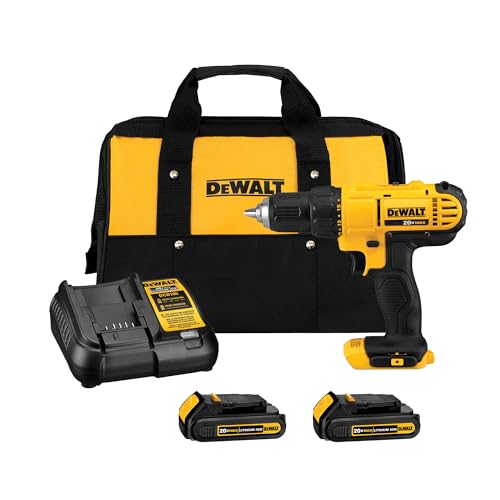


Same caveat as above. DeWalt and Craftsman publish Unit Watts Out; Makita and Milwaukee publish inch-pounds. The two do not convert. Figures from dewalt.com, craftsman.com, makitatools.com and milwaukeetool.com.
Real Specs by Brand
Numbers pulled directly from each manufacturer’s official spec sheets — useful once you’ve picked a category and want to compare real output between brands.
Regular Drill/Driver
| Brand / Model | Platform | Max Torque | No-Load Speed | Weight |
|---|---|---|---|---|
| DeWalt DCD771C2 | 20V MAX | 300 UWO* | 0-450 / 0-1,500 RPM | 3.6 lbs (w/ battery) |
| Craftsman CMCD700C1 | V20 | 280 UWO* | 0-350 / 0-1,500 RPM | 3.1 lbs (w/ battery) |
| Makita XFD10Z | 18V LXT | 480 in-lbs | 0-600 / 0-1,900 RPM | 3.9 lbs (bare tool) |
| Milwaukee 2903-20 | M18 FUEL | 1,400 in-lbs | 0-2,100 RPM | 3.21 lbs (bare tool) |
*Two scales again. DeWalt and Craftsman publish Unit Watts Out; Makita and Milwaukee publish inch-pounds. They do not convert. None of the drills in this section has a hammer mode — that is the whole point of the section above.
Hammer Drill
| Brand / Model | Power | Max Torque | BPM | No-Load Speed | Weight |
|---|---|---|---|---|---|
| DeWalt DCD996B | Cordless 20V MAX | 820 UWO* | 0-38,250 | 0-450 / 0-1,300 / 0-2,000 RPM | 4.3 lbs (bare tool) |
| Milwaukee 3404-20 | Cordless M12 | 400 in-lbs | 25,500 | 0-1,550 RPM | 2.6 lbs (bare tool) |
| Milwaukee 2904-20 | Cordless M18 | 1,400 in-lbs | 0-33,000 | 0-2,100 RPM | 4.91 lbs (bare tool) |
| Craftsman CMCD711C2 | Cordless V20 | 280 UWO* | 25,500 | 0-350 / 0-1,500 RPM | 5.42 lbs (kit) |
| Makita XPH16Z | Cordless 18V LXT | 970 in-lbs | 0-8,250 / 0-27,000 | 0-550 / 0-1,800 RPM | 4.9 lbs (w/ battery) |
| Bosch GSB18V-1330CN | Cordless 18V | 1,330 in-lbs | 0-30,000 | 0-550 / 0-2,200 RPM | 4.6 lbs (bare tool) |
*The torque column is not one scale. DeWalt and Craftsman publish Unit Watts Out, Milwaukee, Makita and Bosch publish inch-pounds. The two do not convert, so compare within a unit rather than down the column. Figures from dewalt.com, milwaukeetool.com, boschtools.com and makitatools.com.
Which Bit Does the Job Need?
Buying the drill is the easy half. The bit is what actually cuts, and the wrong one will waste a good tool — a masonry bit in wood tears the hole, a twist bit in concrete is finished after two holes, and the size has to match the anchor rather than the screw.
The selector below matches bit type and size to your material, your drill and what you are fixing. Free, no signup.
Pro tips from contractors
- Start every masonry hole with the hammer off to create a pilot and reduce bit walking, then switch hammer on for full depth.
- Use a punch or center punch on tile or glazed surfaces before drilling to prevent bit walk and cracking.
- Match bit type to the job: carbide-tipped masonry bits for hammer drills; SDS-plus or SDS-max for rotary hammers. Don’t use wood or metal bits in hammer mode on masonry.
- Corded hammer drills generally give constant power for repetitive concrete drilling; high-capacity cordless (18V/20V, brushless) tools can match corded performance for moderate workloads. For extensive concrete work, prefer corded or high-voltage cordless with battery belt systems.
- When drilling metal, use cutting oil and appropriate speeds. Disable hammer mode (don’t use the percussion action on metal).
- For anchor holes in clean, reinforced concrete, periodically withdraw the bit to clear dust and prevent glazing of the carbide tip; use a vacuum or compressed air for dust control and OSHA compliance when needed.
Common Mistakes
Frequently Asked Questions
Do I need a hammer drill for home projects?
A hammer drill is worth having if masonry is more than a rare one-off. For wood, metal, drywall, and plastic, a regular drill is sufficient. A combination drill/hammer drill (most modern cordless drills) gives you both modes in one tool and is the best choice for homeowners.
What does hammer mode do on a drill?
Hammer mode adds a rapid in-out hammering action (thousands of times per minute) to the standard rotation. This hammering action breaks up the concrete ahead of the bit, allowing the carbide tip to remove material efficiently. Without hammer mode, the bit just grinds and generates excessive heat.
Can a regular drill drill into concrete?
For small holes it can. A standard drill with a sharp carbide-tipped masonry bit will make holes under 1/4 inch and about an inch deep in softer concrete, block or mortar joints. It struggles badly at 3/8 inch and above, poured structural concrete, or more than a few holes before the heat destroys the bit.
What is the difference between a hammer drill and an impact driver?
A hammer drill hammers forward, along the axis of the bit, to chip masonry away. An impact driver hammers rotationally, delivering bursts of twisting force to drive long screws. An impact driver is the wrong mechanism for concrete, and a hammer drill is the wrong one for long structural fasteners. They are complements, not alternatives.
Can a hammer drill replace an SDS rotary hammer?
For holes up to 1/2 inch in standard concrete, a hammer drill is adequate. For larger holes, harder concrete, or volume drilling, an SDS rotary hammer is significantly more effective. SDS hammers use a different and more efficient hammering mechanism and accept specialized bits that outperform standard hammer drills.
What drill bit do I need for concrete?
You need a carbide-tipped masonry bit for a standard or hammer drill, or SDS-Plus bits for an SDS rotary hammer. Do not use standard HSS twist bits on concrete - they overheat and fail almost immediately. The bit diameter should match your anchor pilot hole specification.
Can I drive Tapcon screws with a regular drill?
You can drive the screw with a regular drill, but the pilot hole is the problem. Tapcons need an exact undersized hole in concrete, and a regular drill struggles to produce one cleanly. Use a hammer drill with the matched carbide bit for the hole, then drive the screw in rotary mode.
Is a hammer drill safe for drywall and wood?
Yes - always drill drywall and wood in regular drill mode with hammer mode off. Using hammer mode in soft materials causes the bit to punch through violently, damages the material, and can cause injury. Modern drills have a clear mode selector, so verify the mode before drilling.
Related Guides
- Hammer Drill vs Rotary Hammer - When to upgrade to an SDS rotary hammer
- Impact Driver vs Drill - Which one do you actually need?
- Best Masonry Drill Bits - Right bits for your hammer drill
- How to Drill Into Concrete Safely - Step-by-step technique guide
- Drill Bit Size for Concrete Anchors - Every anchor, every bit size
- Drill Bit Selector - Instant bit recommendation for any material
Free Tool · AI-Powered
Plan your whole project in 2 minutes
Tell our AI Foreman what you are building and get a complete tool list, materials shopping list, step-by-step plan, and mistakes to avoid.
Try the AI Foreman →
Thomas Leroy
Founder of BuildToolHQ, drawing on years of hands-on building, fabrication, and technical work, plus deep product and manufacturer research. Every guide is built on real documentation and real product research — not recycled advice — so tradespeople and serious DIYers get the same technical knowledge professionals use every day.
More about Thomas