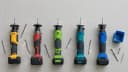
Hammer Drill vs Rotary Hammer: Which One Do You Actually Need?

If you’re planning to drill into concrete, brick, block, or masonry, you’ve probably searched Hammer Drill vs Rotary Hammer and wondered which tool is actually right for the job. At first glance, these tools may seem similar because both are designed for drilling hard materials. However, the truth is that they operate using completely different internal mechanics, excel in different applications, and deliver vastly different levels of impact energy.
Using the wrong tool for the job doesn't just waste your time—it burns up bits, ruins materials, and can prematurely destroy the tool's motor. Whether you are a general contractor hanging ledger boards, an electrician running conduit through a foundation, or a serious DIYer installing basement shelving, understanding the fundamental differences between a hammer drill and a rotary hammer is critical.
Quick answer: A hammer drill is enough for occasional wood, metal, and light masonry work, including holes up to about 1/2" in concrete. If you're setting anchors in poured concrete regularly, need holes larger than 1/2", or need to chisel, step up to an SDS rotary hammer — it hits far harder and drills much faster.
What is a Hammer Drill?
A hammer drill is essentially a standard drill with a mechanical hammering mechanism built in. Inside the gear housing, there are two metal discs with interlocking ridges (often called a cam-action mechanism). As the drill chuck spins, these ridges click against each other, causing the chuck to rapidly bounce forward and backward.
This action delivers thousands of light, rapid blows per minute (BPM) to the material. A typical professional 18V or 20V hammer drill, like the Milwaukee M18 Fuel or DeWalt 20V Max XR, can deliver upwards of 32,000 BPM. Because they feature standard three-jaw chucks, they accept standard smooth-shank or hex-shank masonry bits, and you can switch off the hammering action to drill into wood, metal, or plastic just like a standard drill.
If you are comparing a hammer drill to a regular drill, the primary advantage is versatility. A single tool can handle standard drilling, driving fasteners, and light masonry work.
When to Use a Hammer Drill
Hammer drills are best suited for light to medium-duty masonry work. Because their impact energy is relatively low, they rely on high RPM and brute force from the user to penetrate hard surfaces.
- Drilling Brick and Hollow Block: Perfect for standard residential masonry, mortar joints, and cinder block.
- Small Diameter Holes: Ideal for drilling holes up to 3/8-inch in diameter for Tapcon screws or small plastic anchors.
- Light Concrete Work: Capable of drilling into green or softer concrete, though progress will be significantly slower than with a rotary hammer.
What is a Rotary Hammer?
A rotary hammer is a dedicated concrete and masonry tool that operates on an entirely different principle: an electro-pneumatic piston mechanism. Instead of mechanical gears clicking together, a rotary hammer uses a motor to drive a piston, which compresses air in a cylinder. This air pressure propels a striker that violently impacts the back of the drill bit.
This pneumatic action generates massive impact energy, measured in Joules (or foot-pounds), rather than just relying on sheer speed. For example, a standard 1-inch SDS-Plus rotary hammer, like the Bosch GBH18V-26D Bulldog, typically delivers around 2.6 Joules of impact energy (1.9 ft-lbs EPTA)—hitting much harder, albeit at a lower BPM (around 4,000 to 5,000 BPM), than any mechanical hammer drill.
Rotary hammers also use specialized chucks—most commonly SDS-Plus for medium duty and SDS-Max for heavy duty. These bits feature slots on the shank, allowing the bit to slide back and forth independently of the chuck. If you want to maximize the efficiency of this tool, selecting the right masonry and SDS bits is non-negotiable.
When to Use a Rotary Hammer
Rotary hammers are built for heavy-duty, high-volume concrete drilling and demolition.
- Solid Poured Concrete: Effortlessly drills through old, fully cured, high-PSI concrete where a standard hammer drill would stall.
- Large Diameter Holes: The go-to tool for drilling holes 1/2-inch to 1-1/2 inches (or larger with core bits) for heavy-duty wedge anchors or rebar doweling.
- Chiseling and Demolition: Most rotary hammers feature a "hammer-only" mode that stops the rotation, allowing you to attach a bull point or flat chisel to remove tile, chip away thinset, or break up small concrete slabs.
Key Differences: Head-to-Head Comparison
To summarize the technical distinctions, here is how the two classes of tools stack up against one another in real-world metrics:
- Mechanism: Hammer drills use mechanical cam-action (gears); rotary hammers use electro-pneumatic pistons (compressed air).
- Chuck Style: Hammer drills feature standard 3-jaw chucks (slip-prone under heavy load). Rotary hammers feature slotted SDS chucks that lock the bit in place while allowing forward/backward movement.
- Power Measurement: Hammer drill power is largely gauged by RPM and BPM. Rotary hammer power is gauged by Impact Energy (Joules), which dictates how hard the tool actually hits the concrete.
- Modes of Operation: A hammer drill usually has two modes (Drill, Hammer-Drill). A rotary hammer usually has three (Drill, Hammer-Drill, Hammer-Only/Chiseling).
- Physical Strain: Hammer drills require the user to push hard to penetrate concrete. Rotary hammers pull themselves into the material—you simply guide the tool.
Pro Tips for Drilling Concrete and Masonry
Even with the right tool in hand, drilling into masonry requires proper technique. Professional tradespeople follow specific protocols to maximize efficiency and extend tool life.
First, clear the dust. Concrete dust in the hole creates friction, which slows down the drilling process and generates massive amounts of heat. Pull the bit out slightly every few seconds while the tool is running. This allows the flutes of the drill bit to evacuate the crushed concrete powder. Excessive heat destroys the carbide tip of your bit; following this step is critical for preventing your drill bits from burning or breaking on the job site.
Second, let the tool do the work. This is especially true when using an SDS rotary hammer. Pushing down with all your body weight actually compresses the air chamber too much, short-stroking the internal piston and reducing the tool's impact energy. Apply only enough pressure to keep the bit seated firmly against the concrete.
Finally, when you are drilling pilot holes for mechanical fasteners, hole tolerance is everything. Always drill the hole 1/4-inch to 1/2-inch deeper than the anchor length to account for dust accumulation at the bottom. Before you begin, spend time determining the correct size drill bit for concrete anchors, as an oversized hole will cause wedge anchors to spin, and an undersized hole will cause Tapcons to snap off during installation.
Common Mistakes to Avoid
Many contractors and serious DIYers make critical errors when transitioning between these two tools. One of the most common mistakes is trying to use a standard 18V hammer drill to drill 5/8-inch holes in a cured concrete foundation. Not only will this take an excruciating amount of time, but the continuous high-heat friction will likely melt the brazing on your carbide bit and burn out the drill's motor.
Another frequent error is using a rotary hammer on fragile materials. Because a rotary hammer hits with extreme force, using one on hollow cinder block or delicate brick can blow out the back side of the material entirely. If you are setting different types of concrete anchors in hollow block (like toggle bolts or sleeve anchors), a standard hammer drill offers the finesse required to preserve the structural integrity of the masonry wall.
Buying Advice: Which Tool Do You Really Need?
Choosing between a hammer drill and a rotary hammer comes down to the frequency of your masonry work and the diameter of the holes you need to drill.
For the General DIYer and Woodworker: Buy a high-quality 18V/20V cordless hammer drill. If 95% of your work involves wood, metal, and drywall, and you only occasionally need to drill a 1/4-inch hole in brick to hang a hose reel or a TV mount, a standard hammer drill is more than sufficient. You do not need to invest in a dedicated SDS tool.
For the Commercial Contractor, Electrician, or Plumber: Buy an SDS-Plus rotary hammer. If your daily tasks involve setting anchors in poured concrete slabs, running conduit through foundation walls, or chipping tile, an SDS-Plus rotary hammer (typically in the 1-inch or 1-1/8-inch capacity range) is mandatory. It will pay for itself in labor savings within the first week.
For Heavy Demolition and Foundation Work: Step up to an SDS-Max rotary hammer. When drilling holes larger than 1-1/4 inches, driving ground rods, or doing heavy concrete chipping, the larger SDS-Max platform delivers the 8.0+ Joules of impact energy required to break through aggregate efficiently.
Conclusion
While both tools spin a bit and punch into masonry, the hammer drill and rotary hammer live in two different worlds of performance. A hammer drill is a highly versatile, everyday power tool with a mechanical rattling function for light brick and block work. A rotary hammer is a dedicated, heavy-hitting pneumatic powerhouse built for solid concrete and demolition. By evaluating the density of your material, the size of the holes you are drilling, and the volume of work ahead of you, you can select the right tool to get the job done quickly, safely, and professionally.
Planning a concrete drilling project?
The AI Foreman gives you a complete tool list, materials, and step-by-step plan for any concrete project — free, instant, no signup.
Hammer Drill vs Rotary Hammer: At a Glance
| Feature | Hammer Drill | SDS Rotary Hammer |
|---|---|---|
| Impact mechanism | Cam (spring-loaded) | Electropneumatic piston |
| Impact energy | Not rated — very low | 1.5–8+ joules |
| Chuck type | Standard keyless | SDS-Plus or SDS-Max |
| Drilling speed (3/8" hole, 3" deep) | 45–60 seconds | 10–15 seconds |
| Effective max hole | 1/2" | 1-1/8" (SDS-Plus) |
| Chiseling capability | No | Yes (hammer-only mode) |
| Price range | $80–$250 | $150–$500+ |
Frequently Asked Questions
What is the difference between a hammer drill and a rotary hammer?
A hammer drill uses a cam mechanism to create a hammering action while rotating - it is a standard drill with hammer mode added. A rotary hammer (SDS) uses a piston mechanism that delivers much greater impact energy and uses dedicated SDS-Plus or SDS-Max bits that lock into the chuck.
Which is better for drilling into concrete - hammer drill or rotary hammer?
For holes up to 1/2" in standard concrete, a hammer drill is sufficient and more portable. For holes larger than 1/2", very hard concrete, or high-volume work, an SDS rotary hammer is significantly faster and more effective. Professionals almost always use SDS for concrete.
Can I use regular bits in a rotary hammer?
No - SDS rotary hammers require SDS-Plus or SDS-Max bits with a special shank that locks into the chuck. Standard round-shank bits cannot be used. SDS bits are available in all common masonry sizes.
Is a hammer drill worth it for occasional home use?
Yes - a hammer drill is the right choice for most homeowners. It handles standard concrete drilling, costs less than an SDS hammer, and the same drill works for wood, metal, and other materials. Only upgrade to SDS if you regularly drill large-diameter holes or work with very hard concrete.
Related Guides
- Best Masonry Drill Bits (2026) — SDS-Plus vs standard carbide compared
- Drill Bit Size for Concrete Anchors — Match your bit to your anchor
- Can a Regular Drill Drill Into Concrete? — When it works and when it won't
- Drill Bit Selector — Find the right bit for any anchor or material
- Best SDS-Max Rotary Hammer 2026 — For larger diameters, core drilling, and demolition work
Looking for the best SDS rotary hammer to buy? See our 2026 buying guide: Best SDS Rotary Hammers (2026).
Related guide: Best Drill for Concrete Walls: What to Buy in 2026
Free Tool · AI-Powered
Plan your whole project in 2 minutes
Tell our AI Foreman what you are building and get a complete tool list, materials shopping list, step-by-step plan, and mistakes to avoid.
Try the AI Foreman →
Thomas Leroy
Founder of BuildToolHQ, drawing on years of hands-on building, fabrication, and technical work, plus deep product and manufacturer research. Every guide is built on real documentation and real product research — not recycled advice — so tradespeople and serious DIYers get the same technical knowledge professionals use every day.
More about Thomas